Chin tucks alone won’t fix forward head posture—and anyone clicking on posture correction videos already knows this.
That’s the blunt message from a posture correction expert who’s developed a four-minute daily routine that addresses the real root causes of forward head posture.
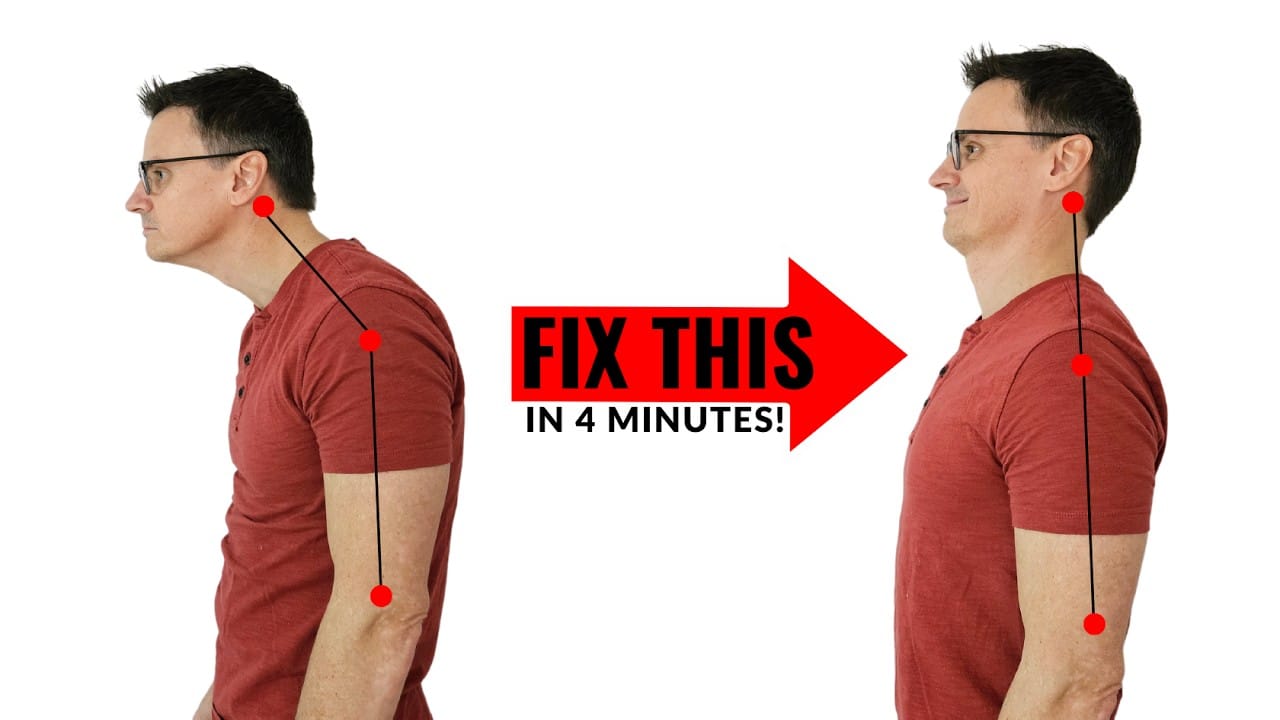
Most people discover they have forward head posture in one of two ways: seeing an unflattering side profile photo or having someone point it out directly.
But there’s a simple self-assessment anyone can do right now to check their alignment—and a comprehensive routine that actually works.
Jump to:
The Side Profile Test That Reveals Everything
Checking for forward head posture requires nothing more than a smartphone camera and honest self-assessment.
The expert recommends taking a side selfie and looking at where the ear aligns relative to the shoulder. Ideally, the ear should line up with the middle part of the shoulder—creating a straight vertical line.
When the ear sits forward of this alignment, that’s forward head posture. And it’s far more common than most people realize.
Why Traditional Chin Tucks Fall Short
Chin tucks have become the go-to recommendation for forward head posture, appearing in countless physical therapy protocols and online guides.
But isolated chin tucks miss the bigger picture entirely.
Forward head posture isn’t just about neck position—it involves shoulder blade positioning, thoracic spine extension, and the entire posterior chain of muscles. Addressing only one component leaves the underlying dysfunction intact.
The Complete Four-Minute Routine
Phase One: Neck Mobility Warm-Up (30-40 Seconds)
Before strengthening weak muscles, warming up the neck tissues prevents strain and prepares the body for corrective work.
The warm-up includes four movement patterns, each performed for approximately 10 seconds:
- Neck rotation: Pull shoulders back, sit tall, and rotate head side to side
- Flexion and extension: Tuck chin toward chest, then extend head backward
- Protraction and retraction: Push head forward, then pull it back
- Lateral flexion: Tilt ear toward shoulder on both sides, visualizing the ear pulling toward the ceiling rather than twisting the torso
This entire sequence should be repeated twice before moving to strengthening exercises.
Phase Two: Enhanced Chin Tuck With Shoulder Blade Activation (1 Minute)
This movement transforms the basic chin tuck into something far more effective by incorporating upper back engagement.
Start by clasping hands together in front of the body. Pull shoulder blades back together while externally rotating the shoulders. Slightly extend the head, then perform the chin tuck—pulling the head straight back.
If you’re doing this properly, you’re going to feel it in between your shoulder blades.
People with tight pectoral and anterior shoulder muscles will feel significant chest opening during this movement—a sign those areas need both stretching and that the posterior muscles require strengthening.
Hold each repetition for 10 to 15 seconds, completing three sets total. This phase takes approximately one minute.
Phase Three: Towel-Resisted Neck Extension (1 Minute)
While physical therapy offices use specialized head weights for this exercise, a simple towel provides effective resistance at home.
Place the towel on the upper back portion of the head and grasp both ends. Let arms pull down with gravity—without engaging muscles, this natural weight will pull the head forward.
Resist this pull by extending the thoracic spine upward and pushing the arms forward in a triceps extension motion.
You’re really going to feel the back of your neck and even in your thoracic spine.
Hold for 10 to 15 seconds before resting, repeating three times total. Many people immediately notice they’re standing taller after completing this exercise because of the posterior muscle engagement.
This movement works equally well seated or standing.
Phase Four: Thoracic Spine Extension (30 Seconds Minimum)
This final component addresses what the expert calls the most commonly missed element in forward head posture correction: hyperkyphosis or excessive forward flexion of the upper thoracic spine.
A yoga block works perfectly for this stretch, though rolled towels or foam rollers provide similar benefits.
Lie down with the prop positioned at the mid-thoracic spine, creating a pivot point. Open the chest and allow the body to fall back over the block, letting everything relax and stretch.
Knees can remain bent for increased mid-back traction, or legs can straighten based on comfort preference.
While 30 seconds hits the minimum effective duration, this passive stretch can safely be held up to 15 minutes for those who want deeper tissue release—though this obviously extends the routine beyond four minutes.
Programming For Maximum Results
The expert recommends repeating the entire four-exercise sequence twice back-to-back. For accelerated results, the complete routine can be performed twice daily.
But there’s one factor that matters more than exercise selection or volume.
The key to posture correction is consistency.
Forward head posture develops over months or years of sustained poor positioning—often from desk work, smartphone use, and sedentary habits. Reversing these adaptations requires regular, repeated corrective stimulus.
Sporadic effort produces sporadic results. Daily practice creates lasting change.
Understanding The Biomechanical Chain
What makes this routine effective is its comprehensive approach to the interconnected issues causing forward head posture.
The neck doesn’t exist in isolation. When the upper back rounds forward (thoracic kyphosis), the head must compensate by jutting forward to keep the eyes level. When shoulder blades protract and chest muscles tighten, posterior neck muscles weaken.
Addressing only the neck while ignoring the thoracic spine and shoulder girdle leaves the foundation of the problem untouched.
This routine attacks all three components simultaneously—mobilizing restricted tissues, strengthening weakened posterior chain muscles, and opening tight anterior structures.
Beyond Aesthetics: Why Posture Matters
While many people seek posture correction for appearance reasons, the implications extend far beyond side profile photos.
Forward head posture places tremendous strain on neck muscles and cervical spine structures. For every inch the head moves forward, it effectively adds 10 pounds of weight that neck muscles must support.
This chronic overload contributes to neck pain, tension headaches, reduced shoulder mobility, and even breathing dysfunction. Over time, the body adapts to these dysfunctional patterns, making them increasingly difficult to reverse without intervention.
Four minutes daily represents a minimal investment for addressing a condition that impacts both immediate comfort and long-term structural health.
The routine requires no expensive equipment—just a towel, something to create a pivot point for thoracic extension, and the willingness to show up consistently. For anyone who’s tried isolated chin tucks without success, this comprehensive approach finally addresses why those simple exercises alone never deliver lasting results.