Stiff hips, a tight back, and perpetually sore muscles — if this sounds familiar, you’re not alone.
Stretching might feel like the obvious answer, yet for many people, it rarely delivers lasting relief.
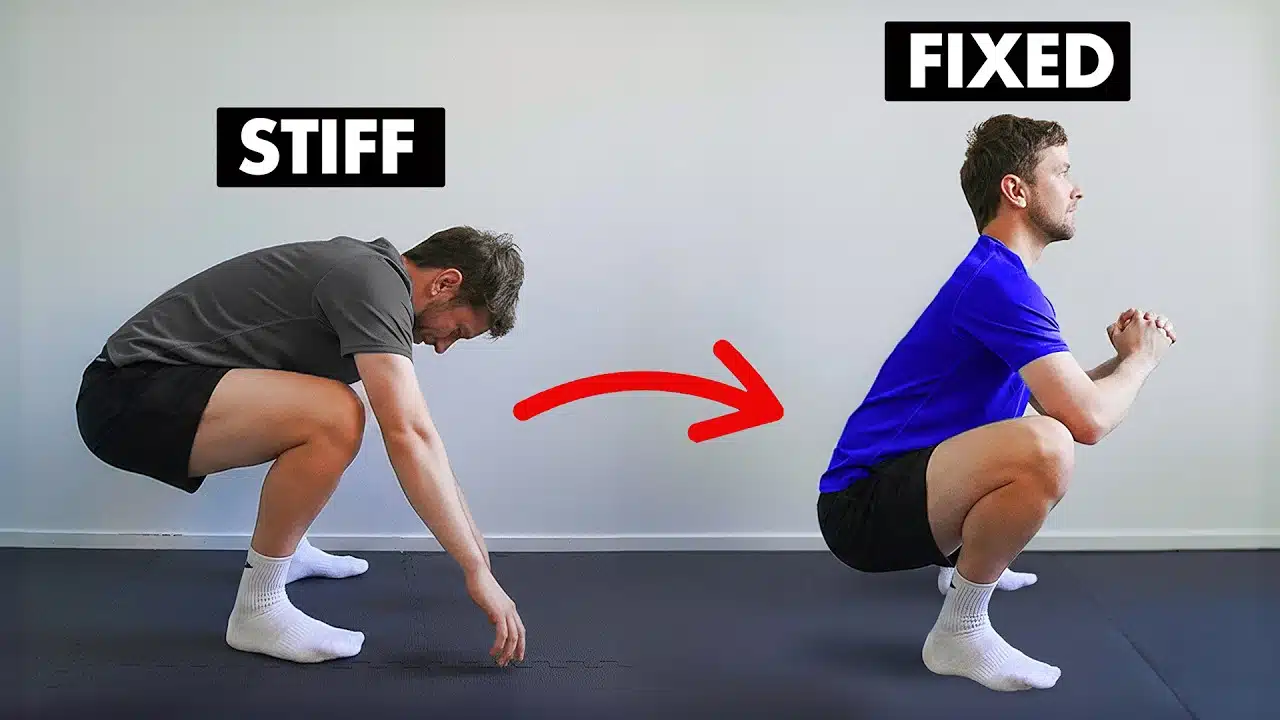
In a recent video, a mobility expert shared three simple but powerful drills designed to restore range of motion, reduce pain, and unlock movement from the ground up.
Whether you’re battling constant tightness or just looking to move better, these mobility exercises target your hips, lower back, spine, and even your ankles.
Each move is easy to perform and beginner-friendly — yet backed by biomechanics and mobility science.
Jump to:
1. The Deep Squat: Reclaim Your Body’s Natural Resting Position
If you could only do one mobility exercise, this would be it.
The deep squat isn’t just a movement—it’s a natural human resting posture. Cultures that rely on squatting daily have lower rates of hip, knee, and back problems. That’s not a coincidence.
This position helps open up the hips, increases ankle dorsiflexion (the ability to bend the ankle up), and decompresses the spine. In fact, improved ankle dorsiflexion has been linked to reduced risk of injury and better lower body alignment during walking, squatting, and running.
How to Practice the Deep Squat
Start by standing with your feet about shoulder-width apart and toes turned slightly outward.
Lower yourself into a squat as deeply as you comfortably can. If your heels rise off the ground, that’s okay. Use your hands for support and maintain the position for 10 seconds before standing back up.
This gentle “in and out” technique helps your body gradually adapt to the position without strain.
As it becomes easier, focus on keeping your heels grounded and chest lifted. An upright torso relieves stress from your lower back and encourages core engagement.
Press your knees outward slightly while squatting. This subtle cue promotes better hip mobility and makes the bottom position more open and comfortable.
Deep Squat Variations to Improve Results
Ready to level up? Here are two variations that target tight areas more specifically:
- Forward Fold in Deep Squat: While at the bottom, lean your torso forward and try to straighten your legs. It’s excellent for tight hamstrings and doubles as a dynamic hip and lower-back stretch.
- Goblet Deep Squat: Hold a light weight (like a dumbbell) at chest level while you squat. The extra load improves depth and builds strength while reinforcing posture.
Don’t rush the process. Choose the variation that suits your current mobility and build from there.
2. Hip CARs: Restore Rotation and Protect Your Spine
When was the last time you focused on hip rotation instead of just flexing and extending?
Probably never — and that oversight may be contributing to some of your most stubborn aches.
Controlled Articular Rotations (CARs) target the full 360-degree range your hips are capable of. Limited hip rotation often forces the lumbar spine to compensate, according to recent studies. This pattern is associated with chronic low back pain and long-term joint degradation.
How to Do Hip CARs
Begin in a quadruped position: hands under shoulders, knees below hips, and core engaged.
Lift one knee off the ground and move it outward without twisting your trunk. Then, rotate your hip by drawing a backward arc with your knee — like you’re making a circle in the air. That’s one direction. Reverse to complete the rep.
Perform 10 slow reps per direction, per leg. Each full rotation should take about 2–3 seconds.
You should feel a distinct burn in your glute medius and piriformis — two small, powerful stabilizers responsible for hip and knee health.
Think of this one as “WD-40 for your hips” — except it also protects your lower back.
3. Split Lunge Hip Flexor Lifts: Build Strength, Not Just Stretch
Most people treat hip flexors with basic static stretches, but the real issue is often neglected: fundamental weakness.
Modern lifestyles involve prolonged sitting, which shortens and weakens the hip flexors. A tight, weak muscle is also more injury-prone.
The split lunge hip flexor lift is unique because it trains strength and length simultaneously. It’s an ideal antidote to chair-bound days and helps rebalance the anterior and posterior hip chains.
How to Perform the Movement
Start in a half-kneeling lunge with your back toes tucked. Gently tilt your pelvis under by tucking your tailbone. Squeeze the glute of your rear leg — this is key to locking the pelvis in the correct position.
Lean forward slightly until you feel a stretch in the front of your trailing hip. From there, lift your back knee just enough to straighten the leg, hold for a second, then return to the ground.
Aim for 8 slow reps per side and repeat for 2 sets. You should feel a targeted burn in your hip flexors — that’s your cue it’s working.
If you’re new to the movement, start supported by a wall or chair. Progress to the bodyweight version, and when ready, add light resistance (such as a dumbbell or sandbag).
Making the Most of Your Routine
These three mobility drills — the deep squat, hip CARs, and split lunge lifts — provide full coverage across your lower body joints and spine.
By training not just flexibility but also strength and control, you’ll unlock missing movement patterns and reduce compensations that lead to pain.
For best results, aim to repeat this sequence 2 to 3 times per week. As mobility and strength improve, you can do them more often, even daily.
Stay consistent, start slow, and level up gradually — and you’ll have free-moving hips, stronger ankles, and a spine that finally feels supported.
Because mobility isn’t just about moving — it’s about thriving in your body for years to come.