Testosterone optimization isn’t about morning supplements.
According to fitness and health expert Thomas DeLauer, the real production window happens during a specific sleep stage at night—one most men blow right past without realizing it.
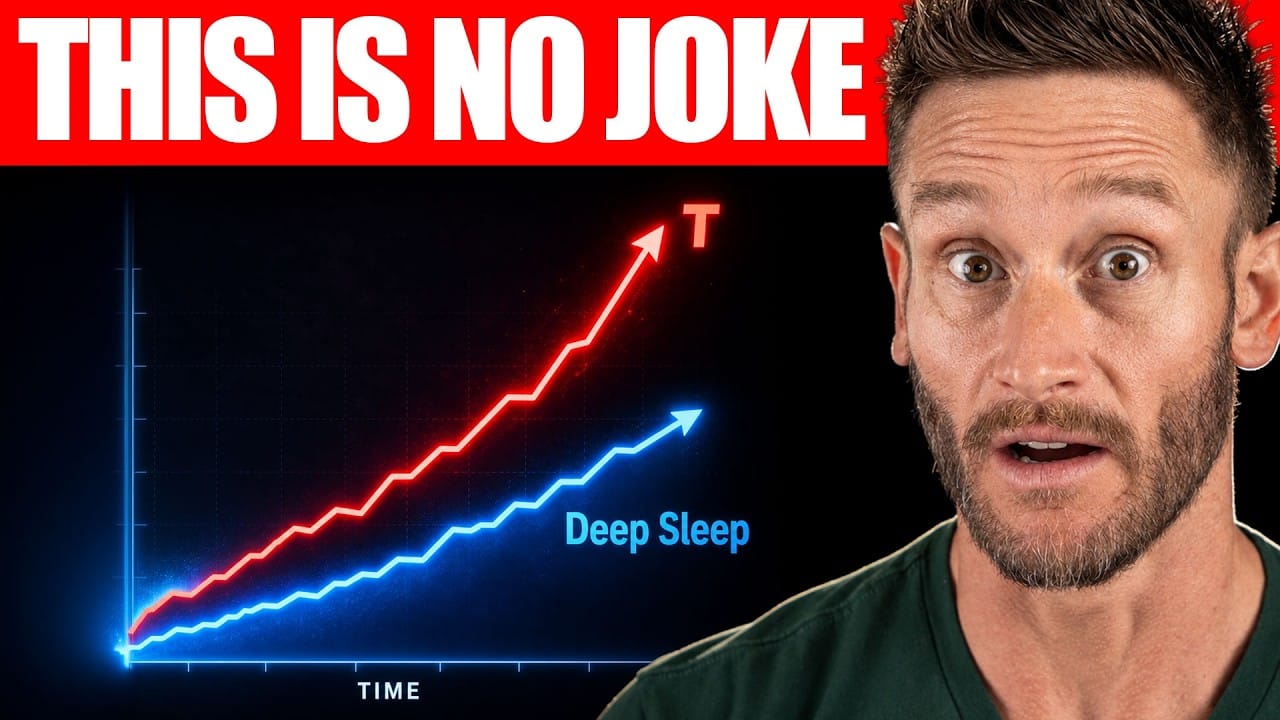
In a recent video, DeLauer broke down an evening protocol that targets testosterone production at the source: the sleep architecture that triggers it, the minerals that fuel it, and the cortisol mechanism that silently suppresses it.
The foundation? A simple amino acid that drops core body temperature and accelerates entry into the exact sleep phase where testosterone synthesis begins.
Jump to:
Glycine: The Sleep Architecture Catalyst
Most people are deficient in glycine, operating at a net loss of about 10 grams per day because modern diets focus on muscle meat rather than nose-to-tail eating. DeLauer explains that glycine crosses the blood-brain barrier and acts on NMDA receptors in the master circadian clock region of the brain.
This triggers vasodilation—blood flow increases to the surface, and core body temperature drops. That temperature drop signals the body to initiate sleep onset and transition into the specific sleep stage linked to testosterone production.

If you want something simple that actually works, this is one of the most effective tools I’ve used to build strength, conditioning, and endurance without needing a full gym setup.
- Full-body training with one weight using swings, squats, and presses
- Solid cast iron build that feels stable and lasts for years
- Comfortable grip that makes high-rep workouts easier to handle
Glycine crosses the blood-brain barrier, and it acts on NMDA receptors in the actual master circadian clock region of your brain. This is what gives you this vasodilation.
Research published in the Journal of Clinical Endocrinology and Metabolism measured testosterone levels every 20 minutes overnight during fragmented versus consolidated sleep. The findings were striking: the nocturnal testosterone rise preceded the first REM episode by approximately 90 minutes, meaning testosterone actually spikes during deep non-REM sleep just before the first REM cycle.
When sleep was fragmented, the testosterone rise was essentially abolished. No proper REM episodes meant no testosterone production.
The Sleep Stage Dependency
Testosterone synthesis is sleep stage dependent, not just duration dependent. DeLauer emphasizes that subjective sleep scores don’t matter here—what matters is hitting the specific sequence from non-REM to the first REM cycle.
This early stage of sleep triggers luteinizing hormone pulsatility, which drives Leydig cell steroidogenesis in the testes. You need at least 3 hours of consolidated sleep with normal architecture for testosterone production to even begin.
Glycine accelerates entry into that architecture. Taking 3 grams before bed—easily obtained through 15 grams of collagen powder—gets you into deeper sleep faster and more effectively.
The sequence from non-REM sleep all the way to the first REM cycle, that early stage of sleep is actually the biological trigger for luteinizing hormone pulsatility, which drives the Leydig cell steroidogenesis.
DeLauer recommends stacking collagen with magnesium glycinate (300-400mg) for additional glycine from the chelate, plus magnesium’s own slow-wave sleep support. Take both 30 minutes before bed.
If you want something simple that actually works, this is one of the most effective tools I’ve used to build strength, conditioning, and endurance without needing a full gym setup.
- Full-body training with one weight using swings, squats, and presses
- Solid cast iron build that feels stable and lasts for years
- Comfortable grip that makes high-rep workouts easier to handle
Three Evening Foods That Directly Support Testosterone
While glycine sets up the sleep architecture, specific foods provide the raw materials needed for testosterone production once that hormonal window opens.
Pumpkin Seeds: The DHT Modulator
Pumpkin seeds deliver zinc, but they also contain beta-sitosterol—a plant sterol that interacts with 5-alpha reductase, the enzyme converting testosterone to DHT. While DHT is a potent androgen and not inherently problematic, excessive 5-alpha reductase activity shifts too much testosterone toward DHT conversion.
Beta-sitosterol modulates that balance naturally. A handful of raw pumpkin seeds provides both zinc for steroidogenesis and natural 5-alpha reductase modulation.
Oysters: The Zinc Powerhouse
Oysters are the single most zinc-dense food available. Zinc is a direct cofactor in Leydig cell steroidogenesis—it’s absolutely required for the enzymatic conversion of cholesterol to testosterone.
When zinc is low, that conversion becomes rate-limited. No zinc, no testosterone production. DeLauer notes that even two to three oysters a few times per week can significantly change zinc status.
Zinc is a direct cofactor in Leydig cell steroidogenesis. It is required, absolutely required, for the enzymatic conversion of cholesterol to testosterone.
If oysters aren’t realistic, 15mg of supplemental zinc is a starting point—but food-source zinc is superior because it comes with copper and selenium as natural cofactors.
If you want something simple that actually works, this is one of the most effective tools I’ve used to build strength, conditioning, and endurance without needing a full gym setup.
- Full-body training with one weight using swings, squats, and presses
- Solid cast iron build that feels stable and lasts for years
- Comfortable grip that makes high-rep workouts easier to handle
Cod Liver Oil: The Leydig Cell Vitamin Signaling
Cod liver oil delivers preformed vitamin A and vitamin D3 in a fat-soluble matrix. Both have direct relevance to Leydig cell function.
Vitamin D receptors sit directly on Leydig cells in the testicles. Activated vitamin D3 upregulates steroidogenic enzyme expression throughout the testosterone biosynthesis pathway. Vitamin A supports testicular health and spermatogenesis, while omega-3s improve absorption of both vitamins.
Taking a tablespoon of cod liver oil with your evening meal—especially one containing fat—maximizes uptake.
The Evening Protocol in Practice
DeLauer’s evening stack is straightforward:
- Dinner: Include oysters or zinc-rich protein, add pumpkin seeds to salad or chicken, take a tablespoon of cod liver oil or equivalent capsules
- 30-60 minutes before bed: 15g collagen powder (providing 3g glycine) and 300-400mg magnesium glycinate
This approach provides raw materials at dinner while delivering sleep architecture support at bedtime.
Glycine Protects Brain Function Even on Short Sleep
Research shows glycine offers cognitive protection even when sleep duration is compromised. One study restricted participants to 75% of their usual sleep and found that 3 grams of glycine before bed reduced next-day fatigue and improved cognitive performance compared to placebo.
If you want something simple that actually works, this is one of the most effective tools I’ve used to build strength, conditioning, and endurance without needing a full gym setup.
- Full-body training with one weight using swings, squats, and presses
- Solid cast iron build that feels stable and lasts for years
- Comfortable grip that makes high-rep workouts easier to handle
For testosterone, this matters because most people can’t magically add sleep hours overnight. Glycine makes the hours you do get more productive by accelerating entry into the sleep stages that drive testosterone production.
On short sleep nights—travel, meetings, unavoidable circumstances—those compressed hours become more hormonally productive than 7-8 hours of fragmented sleep.
DeLauer suggests considering mouth taping for nasal breathing, which reduces micro-arousals that disrupt the critical non-REM to REM sequence.
The Cortisol-Testosterone Connection at the Testicular Level
Cortisol’s impact on testosterone is more direct than most realize. Research published in the Journal of Clinical Endocrinology and Metabolism induced cortisol elevation and measured testosterone, luteinizing hormone, and prolactin levels.
When cortisol increased, testosterone dropped rapidly—but luteinizing hormone didn’t change. The brain was still signaling the testes to produce testosterone, but the testes couldn’t execute.
Cortisol was acting directly at the Leydig cell testicle level. So, the brain was saying go, go, go, but the testes couldn’t execute.
Sleep deprivation elevates cortisol, creating a compounded negative effect: disrupted sleep architecture and high cortisol both suppress testosterone production.
If you want something simple that actually works, this is one of the most effective tools I’ve used to build strength, conditioning, and endurance without needing a full gym setup.
- Full-body training with one weight using swings, squats, and presses
- Solid cast iron build that feels stable and lasts for years
- Comfortable grip that makes high-rep workouts easier to handle
The evening protocol addresses both. Glycine lowers cortisol by improving sleep quality. Zinc from oysters and pumpkin seeds supports testosterone production directly. Vitamin D and magnesium support Leydig cell function and slow-wave sleep.
Environmental Factors Matter
Keeping lights dim in the evening supports natural melatonin production. DeLauer recommends staying below 60 lux with a color temperature around 3,000 Kelvin or lower. It’s less about blue light specifically and more about overall light exposure.
Why This Approach Works
Most testosterone protocols focus on daytime supplementation—zinc in the morning, vitamin D with breakfast, adaptogenic herbs throughout the day. DeLauer’s evening approach recognizes that testosterone production is fundamentally tied to sleep architecture.
By optimizing the specific sleep stages where testosterone synthesis occurs, providing the minerals and vitamins needed for that synthesis, and managing the cortisol mechanism that suppresses production at the testicular level, this protocol targets the actual biological windows where testosterone is made.
The stack is simple, evidence-based, and addresses multiple pathways simultaneously: sleep quality, steroidogenesis cofactors, DHT balance, Leydig cell signaling, and cortisol management.
For men looking to optimize testosterone naturally, the evening hours may be far more important than the morning routine.
If you want something simple that actually works, this is one of the most effective tools I’ve used to build strength, conditioning, and endurance without needing a full gym setup.
- Full-body training with one weight using swings, squats, and presses
- Solid cast iron build that feels stable and lasts for years
- Comfortable grip that makes high-rep workouts easier to handle