Benching 225 lbs is one of the most iconic milestones in gym culture—but it’s rarer than most people think. Fewer than 2% of new lifters ever hit two plates, and even among consistent gym-goers, only about one in five pull it off.
It took the author three years. Ryan, a drug-tested bodybuilding pro, did it in one.
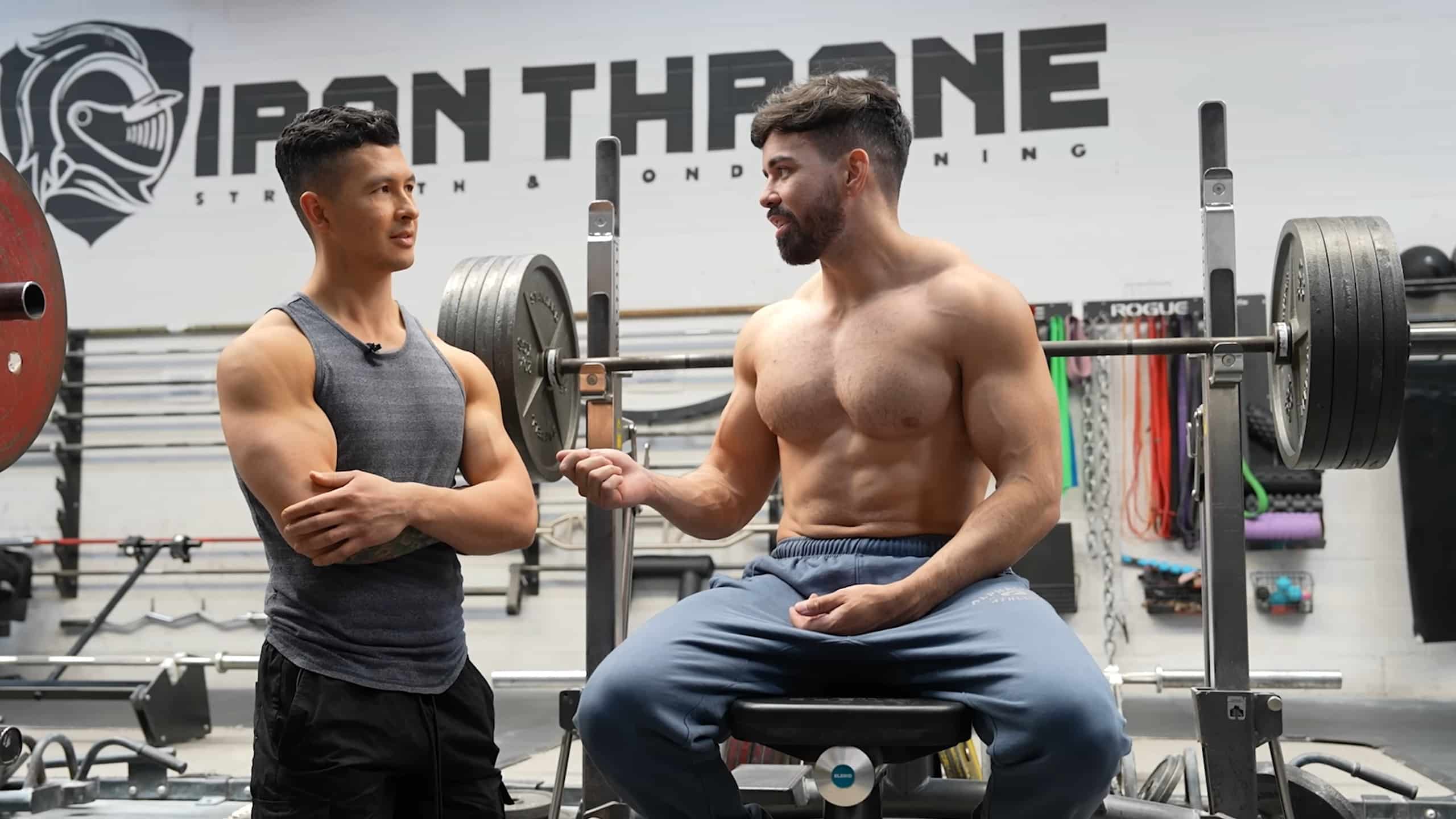
He now benches over 400 lbs—and natural or not, that’s a feat so rare, you’re statistically more likely to become a billionaire than bench 400 lbs.
So, what’s the secret? It starts with a system most lifters have never heard of, involves switching just one detail, and could help add up to 30 lbs to your bench in only six weeks.
Jump to:
- Start With the One Switch That Changed Everything: Grip
- The Setup You Never Learned: Build Your Base First
- Yes, That Arch Helps—and It’s Not Cheating
- Why Your Bench Press Might Be Stuck
- Size Still Matters: How Hypertrophy Helps Strength
- Track Everything: PRs Aren’t Just for the Bench
- Shoulder Health: The Hidden Factor Holding You Back
- Why Benching Less Can Build More Strength
- Conclusion: Progress Is Personal—But the Process Is Universal
Start With the One Switch That Changed Everything: Grip
Most lifters never re-examine one of the easiest tweaks to make: their grip. After the author widened his hand placement on the bar—by just an inch or two—he instantly noticed the bar felt lighter. Research backs this up. Widening your grip slightly reduces your range of motion and increases pec activation, which can boost your bench press by 5–10% instantly.
Grip width changes what muscles contribute most. A narrow grip shifts the load to the triceps, while a wider grip targets the chest. Stronger triceps? Go narrower. Dominant pecs? Go wider. Try different widths and feel what works best—there’s no one-size-fits-all answer.
The Setup You Never Learned: Build Your Base First
Grip isn’t where elite lifters like Ryan begin. His bench press starts before his hands even touch the bar. Step one: foot position. Ryan uses a narrower stance with feet pointing forward, focusing on leg drive—pushing his body backward into the bench to drive force through his traps. The only thing stopping him from sliding is how tightly his traps are pushed into the bench pad.
Next, he retracts his shoulder blades and engages his lats even before unracking. “Think about pulling the bar apart,” he says, rather than just pressing it. That lat tension provides support on the bar’s descent and helps generate rebound strength on the way up.
Over time, the setup becomes second nature. But in the beginning, follow a mental checklist: foot tension, shoulder blade retraction, lat tightness, then unrack.
Yes, That Arch Helps—and It’s Not Cheating
Ryan uses a dramatic spinal arch when benching, which looks extreme but serves a key purpose: shortening the range of motion. That reduces the distance the bar travels, improving leverage and boosting force output. Is it ideal for muscle growth? Not exactly. But for lifting more weight, it’s a proven powerlifting technique.
If your goal is strength, arching isn’t cheating—it’s leveraging biomechanics. If your goal is hypertrophy, you’ll need to supplement benching with accessory lifts that stretch and contract the chest muscle more fully.
Why Your Bench Press Might Be Stuck
You can have flawless form, but if you only ever try to bench heavier, you’ll eventually plateau. Ryan divides his workouts into three parts:
- Strength Work: Heavy benching at low reps
- Sticking Point Analysis: Observing where the bar slows or fails
- Accessory Work: Exercises targeting weaknesses
For instance, if your bench fails right off the chest, focus on pec-dominant exercises like dips or speed benches to build explosiveness. If you stall midway up, that usually points to weak shoulders—try overhead presses and paused bench presses. If you fail near the top, it’s likely the triceps. In that case, use close grip benching or half-rep “spoto” presses to overload the top range.
Size Still Matters: How Hypertrophy Helps Strength
You can get stronger by lifting heavier and practicing good technique. But size, or hypertrophy, is still one of the biggest predictors of strength—especially as you gain experience.
Interestingly, you don’t need to lift heavy to develop muscle. Studies show lifting 30–50% of your one-rep max with high reps and proximity to failure can build just as much muscle mass as lifting heavier weights.
Ryan uses high-rep, lighter-weight exercises like dumbbell presses, cable flies, and dips to grow his chest beyond what the bench press can do alone. Then he uses low-rep bench press practice to teach his nervous system how to use that new muscle mass for strength.
Track Everything: PRs Aren’t Just for the Bench
At Ryan’s level, progress is slow. He’s thrilled if he gains 1 lb per month on his bench—yet he still tracks PRs obsessively. When a bench PR doesn’t happen, he aims for personal bests in other lifts: dips, lateral raises, even fly variations.
This type of tracking keeps motivation high and progress measurable. If you aren’t already logging your workouts—reps, sets, weight lifted—it’s one of the easiest habits that separates elite lifters from the average ones.
Shoulder Health: The Hidden Factor Holding You Back
Many lifters stall out not from weak pecs or triceps—but poor shoulder mobility. Ryan realized this when his shoulders felt “jammed” mid-rep, despite doing all the classic rehab moves like internal/external rotations.
Instead, he discovered targeted rotator cuff work with two key exercises:
- Flat Shoulder Presses: Lay on a bench and press light dumbbells upward. Let gravity pull your elbows down to open your chest and strengthen rotator cuffs. Start at 5 lbs and build from there.
- Behind-the-Back Triceps Extensions: This variation forces internal rotation while extending, helping reduce shoulder tightness and promoting functional strength.
Why Benching Less Can Build More Strength
You’d think benching more frequently leads to faster results. That’s true—up to a point. For beginners, increasing bench frequency from once to twice or three times per week can literally double gains.
But once you’re pressing over 300 lbs, your muscles—and joints—need more recovery. Ryan benches hard only once per week. Near 400 lbs, he may take two full weeks between challenging sessions.
Eventually, strength hinges not on how often you train, but how well you recover. Overtraining kills motivation, wrecks joints, and slows progress.
If you’re not yet benching massive weights, try both high and low frequency. Do 6 weeks on each style and compare your rate of strength gain. That’s how you find out what actually works for you.
Conclusion: Progress Is Personal—But the Process Is Universal
The path to a bigger bench isn’t magical—it’s a mix of better setup, targeted grip adjustments, smarter frequency, and fixing your weak links with accessories.
After applying Ryan’s tips, the author broke a personal record, hitting 245 lbs. Not quite the legendary 315—but far closer than before. By identifying a sticking point in the mid-press (suggesting shoulder lag), and adding overhead work back in, the next breakthrough may be just weeks away.
Want to start your journey toward a 315 bench? Two free bench programs—one high frequency, one low—are now available. Choose based on your recovery and lifestyle, track your gains, and adjust as needed.
And if you’re looking to build chest size too, not just strength, the next video walks you through two underrated exercises that target your chest from angles the bench press never touches.