A cardiac surgeon with over 3,000 heart surgeries under his belt is making waves with a controversial message: saturated fat might actually protect your heart.
Dr. Philip Ovadia, author of the bestselling book Stay Off My Operating Table, recently sat down to challenge nearly everything we’ve been told about heart disease.
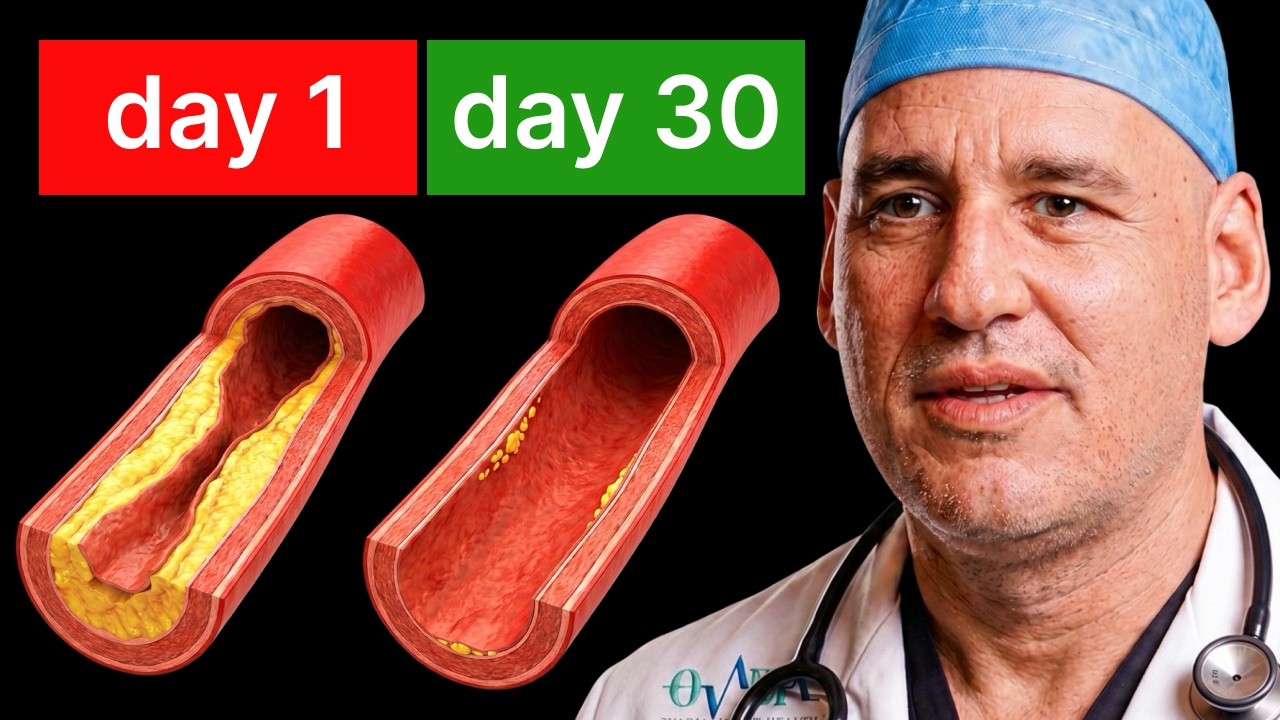
His claims are bold: cholesterol isn’t the villain, statins don’t save lives, and meat is medicine.
But what does the actual research say about these assertions?
Jump to:
- The Cholesterol Controversy: Not as Simple as We’ve Been Told
- Saturated Fat: Protective or Harmful?
- The Statin Debate: Do They Actually Save Lives?
- Insulin Resistance: The Real Culprit?
- What About Those Sky-High Cholesterol Numbers?
- The Processed Food Problem
- Exercise and Muscle: Resistance Over Cardio?
- Practical Testing Recommendations
- The Gut Health Connection
- The Bottom Line: Where Does This Leave Us?
- Sources
The Cholesterol Controversy: Not as Simple as We’ve Been Told
Dr. Ovadia pulls no punches when discussing cholesterol’s role in heart disease.
The concept that cholesterol is the primary cause of heart disease is just flatout wrong.
According to the heart surgeon, the medical establishment has become fixated on lowering cholesterol while missing the real drivers of cardiovascular disease.
No products found.
He argues that some patients with total cholesterol of 200 are at risk, while others with levels of 500 or 700 may not be—depending on other metabolic factors.
The research here presents a more nuanced picture than Dr. Ovadia suggests. While it’s true that cholesterol’s role is complex, LDL cholesterol remains causally linked to atherosclerosis according to extensive evidence from genetic studies, randomized trials, and epidemiological research. A 2017 consensus statement in the European Heart Journal reviewed over 200 studies and concluded that LDL cholesterol is indeed causally related to cardiovascular disease.
However, Dr. Ovadia is correct that context matters. Cholesterol exists within a broader metabolic environment, and factors like particle size, insulin resistance, and inflammation all influence cardiovascular risk.
Saturated Fat: Protective or Harmful?
Perhaps Dr. Ovadia’s most controversial claim centers on saturated fat.
The more saturated fat you have, the lower your risk of heart disease is going to be. The meat, the butter, the dairy, these are actually protective against heart disease.
He goes further, stating that 12 eggs daily with butter and a pound of 80/20 ground beef would be “totally fine” for heart health.
I now as a heart surgeon go around telling people that meat is medicine.
The actual evidence on saturated fat is considerably more mixed than this confident endorsement suggests. Major health organizations including the American Heart Association continue to recommend limiting saturated fat intake based on trials showing that replacing saturated fat with polyunsaturated fat reduces cardiovascular events.
No products found.
That said, recent research has complicated the picture. Some observational studies have found no strong association between saturated fat intake and heart disease risk, while others suggest the food source matters more than the nutrient itself. Saturated fat from dairy, for instance, may have different effects than saturated fat from processed meats.
A 2020 review in the Journal of the American College of Cardiology noted that while saturated fat raises LDL cholesterol, the relationship between saturated fat intake and cardiovascular outcomes is “complex and controversial,” influenced by what replaces it in the diet.
The Statin Debate: Do They Actually Save Lives?
Dr. Ovadia takes aim at one of cardiology’s most prescribed medications.
Statins have never been shown to save lives.
He claims that for people who haven’t had a heart attack (primary prevention), statins offer less than 1% benefit and require treating 80-120 people for five years to prevent one non-fatal heart attack.
Additionally, he warns that statins increase insulin resistance after five years of use.
This characterization is misleading. Multiple large meta-analyses have demonstrated that statins reduce all-cause mortality, not just cardiovascular events. A 2016 meta-analysis published in JAMA Cardiology found that statins reduced all-cause mortality by approximately 10% in primary prevention.
No products found.
The benefit is indeed more modest in primary prevention than in people who’ve already had heart attacks (secondary prevention), where the evidence is overwhelming. But the claim that statins “never save lives” contradicts substantial trial evidence.
Dr. Ovadia is correct, however, that statins are associated with increased diabetes risk—approximately a 9-12% increase according to meta-analyses. This trade-off is real and should be discussed with patients.
Insulin Resistance: The Real Culprit?
On firmer ground, Dr. Ovadia emphasizes insulin resistance as a central driver of heart disease.
When you are insulin resistant, you are more prone to having high blood sugar levels. That’s what really starts the process of heart disease.
He explains that insulin resistance damages blood vessels, shifts cholesterol to smaller, denser particles, and reduces nitric oxide production—all of which contribute to cardiovascular disease.
This is well-supported by scientific evidence. Insulin resistance and metabolic syndrome are strongly associated with increased cardiovascular risk through multiple pathways, including inflammation, endothelial dysfunction, and dyslipidemia.
The American Heart Association has recognized insulin resistance as a significant cardiovascular risk factor, and improving insulin sensitivity through diet, exercise, and weight loss demonstrably reduces heart disease risk.
No products found.
Where Dr. Ovadia’s argument becomes more contentious is in positioning insulin resistance as the primary cause while minimizing cholesterol’s role. Most cardiologists would argue both factors matter, often working synergistically.
What About Those Sky-High Cholesterol Numbers?
Dr. Ovadia addresses a common concern: what happens when someone adopts a low-carb diet and their LDL cholesterol shoots up to 500, 600, or even 700?
He reassures viewers not to panic, explaining that these “lean mass hyper-responders” often have predominantly large, fluffy LDL particles rather than small, dense ones.
The first thing is you shouldn’t panic. What someone in this situation needs to understand is what is the quality of that cholesterol.
He recommends advanced testing including particle size analysis, insulin resistance markers, inflammation markers, and coronary artery calcium scans.
This represents a more reasonable approach. The lean mass hyper-responder phenomenon is real and being actively researched, particularly by groups like the Citizen Science Foundation. Early data suggests these individuals may have unique lipid metabolism and potentially different risk profiles.
However, long-term outcome data on lean mass hyper-responders remains limited. While their advanced biomarkers often look favorable, we don’t yet have decades of follow-up to definitively say extremely elevated LDL levels are safe in this context.
No products found.
Dr. Ovadia’s recommendation for comprehensive testing including coronary imaging is sensible, allowing for individualized risk assessment rather than treating numbers in isolation.
The Processed Food Problem
When discussing dietary culprits, Dr. Ovadia identifies two main villains: refined carbohydrates and seed oils.
I would put the two worst foods as the vegetable and seed oils first. They don’t exist in nature. They have become ubiquitous in our food supply.
He argues these combine with sugar to create a “double whammy” driving insulin resistance, inflammation, and gut damage.
The evidence strongly supports that ultra-processed foods are associated with increased cardiovascular disease risk. Multiple large cohort studies have found higher consumption of ultra-processed foods linked to greater rates of heart disease, stroke, and cardiovascular mortality.
The seed oil hypothesis specifically is more controversial. While it’s true that high omega-6 consumption from refined seed oils may promote inflammation when consumed in excess without adequate omega-3s, randomized trials have generally found that replacing saturated fat with polyunsaturated fat from vegetable oils reduces cardiovascular events.
The reality likely lies somewhere in the middle: whole food sources of fat are preferable to highly refined oils, but seed oils aren’t necessarily the metabolic poison some make them out to be.
No products found.
Exercise and Muscle: Resistance Over Cardio?
Dr. Ovadia offers specific exercise recommendations, prioritizing strength training over traditional cardio.
I put probably a little bit more emphasis on resistance activity, building and maintaining muscle because it turns out that that has a great effect when it comes to lowering insulin resistance.
This aligns well with current research. Resistance training improves insulin sensitivity and glucose metabolism, and muscle mass is inversely associated with metabolic disease risk.
However, the evidence doesn’t support completely deprioritizing aerobic exercise. Cardiovascular exercise has well-documented benefits for heart health, including improved endothelial function, blood pressure reduction, and increased HDL cholesterol.
Most exercise scientists recommend a combination of both resistance and aerobic training for optimal cardiovascular health, rather than choosing one over the other.
Practical Testing Recommendations
Beyond standard cholesterol panels, Dr. Ovadia recommends several advanced tests:
- Particle size testing (NMR or similar) to determine if LDL is predominantly large or small
- HOMA-IR or LP-IR to assess insulin resistance directly
- Fasting insulin levels (ideally below 5-7 μIU/mL)
- High-sensitivity C-reactive protein to measure inflammation
- Coronary artery calcium scan to detect actual plaque
- CT angiography for more detailed arterial imaging
These recommendations align with emerging precision medicine approaches to cardiovascular risk assessment, moving beyond simple cholesterol numbers to a more comprehensive metabolic picture.
No products found.
The Gut Health Connection
Dr. Ovadia dedicates significant attention to gut health as a heart disease factor—a relatively novel focus for a cardiac surgeon.
It’s not just the food that you put in your mouth, it’s what your body is able to do with it. Gut health becomes essential in this.
He explains that some patients don’t respond optimally to dietary changes due to impaired nutrient absorption and gut dysfunction.
This represents an area of active and exciting research. The gut microbiome is increasingly recognized as playing a role in cardiovascular health through mechanisms including inflammation, metabolite production (like trimethylamine N-oxide or TMAO), and metabolic regulation.
However, the clinical application remains in its infancy. While the gut-heart connection is real, we’re still figuring out optimal interventions beyond general healthy eating patterns that support microbial diversity.
The Bottom Line: Where Does This Leave Us?
Dr. Ovadia presents a compelling alternative narrative to mainstream cardiology recommendations, emphasizing metabolic health, insulin resistance, and whole foods while downplaying cholesterol concerns.
Some of his positions have merit and align with evolving research:
No products found.
- Insulin resistance is indeed a major cardiovascular risk factor that deserves more attention
- Context matters for cholesterol—particle size, metabolic health, and inflammation all influence risk
- Processed foods are problematic for cardiovascular health
- Advanced testing can provide valuable individualized risk information
- Muscle building and metabolic health are important
However, other claims overstate the evidence or contradict well-established research:
- LDL cholesterol does play a causal role in atherosclerosis according to extensive evidence
- Statins do reduce all-cause mortality, not just non-fatal events, particularly in higher-risk individuals
- The evidence that saturated fat is protective remains limited and contested
- Extremely high LDL levels (500-700+) lack long-term safety data even in metabolically healthy individuals
Perhaps the most valuable takeaway isn’t choosing between these competing narratives, but recognizing that cardiovascular health is multifactorial.
Metabolic health, inflammation, diet quality, exercise, sleep, stress, and yes, lipid levels all contribute to cardiovascular risk in complex, interconnected ways.
Individual variation matters enormously—what works for one person may not work for another.
The ideal approach likely involves comprehensive metabolic assessment, personalized intervention, and ongoing monitoring rather than one-size-fits-all recommendations based solely on cholesterol numbers or any single biomarker.
Sources
- European Heart Journal (2017) – LDL cholesterol consensus statement
- Journal of the American College of Cardiology (2020) – Saturated fat review
- JAMA Cardiology (2016) – Statin meta-analysis for primary prevention
- American Heart Association – Insulin resistance and cardiovascular disease