Ten minutes of red light exposure could genuinely restructure your skin at a cellular level.
Not through some surface-level trick, but by switching on quantum machinery inside every cell that rebuilds collagen, elastin, and the architectural framework that defines youthful skin.
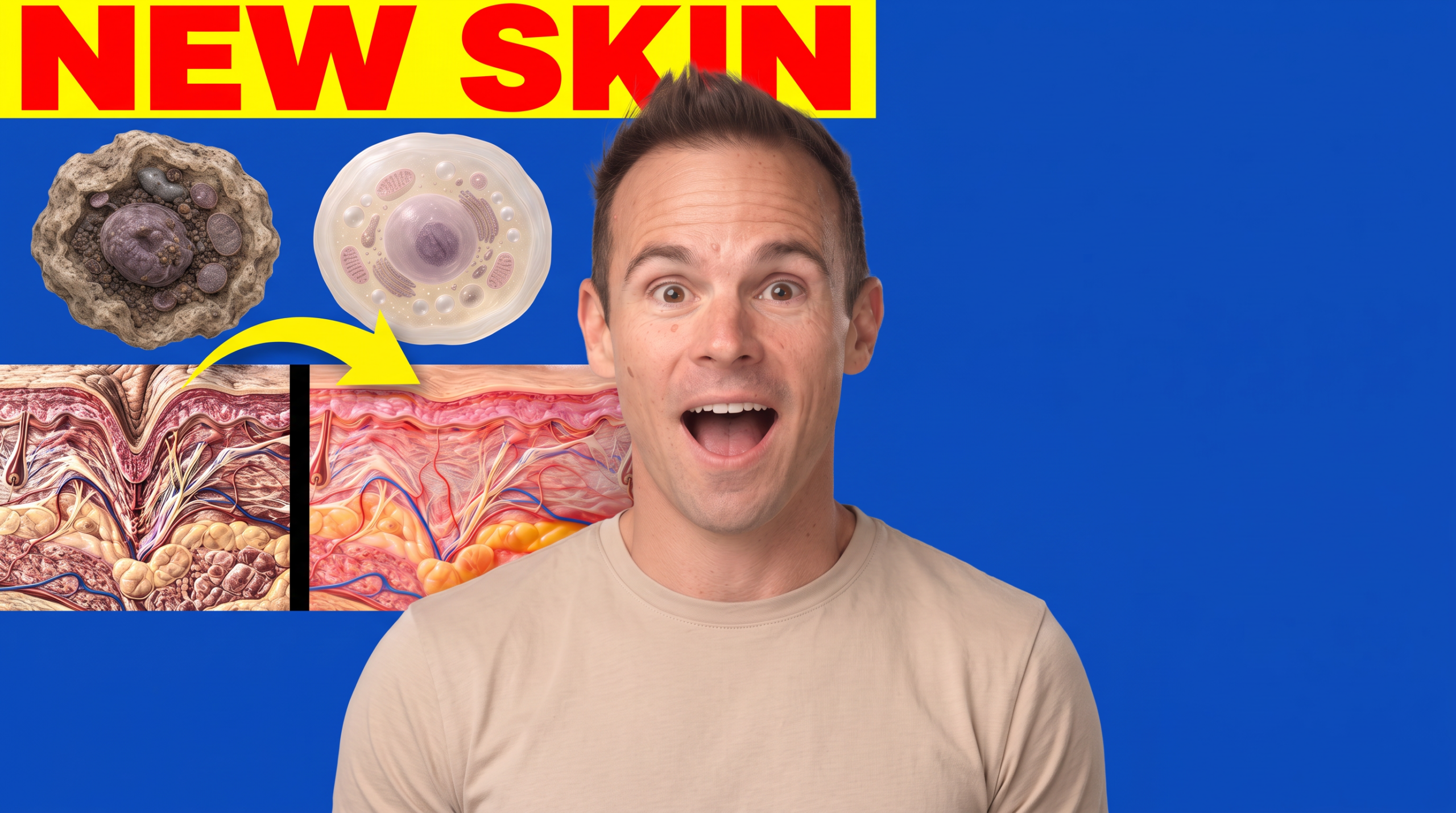
This isn’t wellness hype—researchers have measured denser collagen using ultrasound in controlled trials with over 100 real participants.
And the mechanism behind it? That’s where things get genuinely strange, involving electron tunneling and light-sensitive proteins that operate at the edge of quantum physics.
Jump to:
What Controlled Research Actually Shows
Red light therapy has earned considerable hype, but solid evidence anchors those claims.
A controlled trial examined over 113 people, comparing red light treatment against untreated control groups. Researchers measured concrete endpoints: fine lines, wrinkles, skin roughness, and intradermal collagen density confirmed through ultrasound imaging.
No products found.
The treated group improved across every single marker. Smoother skin, fewer fine lines, and genuinely denser collagen—structural change, not just surface hydration making skin temporarily plumper.
Even after treatment stopped, gains held.
A systematic review from Duke University analyzed 59 studies encompassing nearly 1,900 patients, concluding that evidence genuinely supports red light for multiple skin conditions.
Another mechanistic paper published in the Journal of the American Academy of Dermatology—among top-tier dermatology journals—found that red and near-infrared light increased production of three molecules that literally define youthful skin:
- Collagen for structural integrity
- Elastin for that snapback resilience
- Hyaluronic acid for surface plumpness
Red light nudges skin cells to manufacture more of all three simultaneously.
This distinction matters enormously. You’re not applying something to your skin—you’re sending a signal that tells cells to rebuild from within.
No products found.
How Light Rewires Cellular Energy
So how does a specific color of light restructure collagen?
It starts inside mitochondria, those cellular power plants responsible for producing ATP—your body’s energy currency.
At the end of mitochondria’s energy assembly line sits an enzyme called cytochrome c oxidase. It’s the final stop where electrons get handed off to oxygen, ultimately generating usable energy.
That enzyme absorbs red and near-infrared light almost perfectly—tuned by chemistry to wavelengths around 630-660 nanometers for red, and 810-850 nanometers for near-infrared.
The Nitric Oxide Clog
As we age or experience chronic stress, nitric oxide molecules get stuck onto cytochrome c oxidase, jamming it like a clog in an assembly line.
Energy production slows. Cells lack fuel for expensive maintenance jobs—like synthesizing collagen and elastin.
No products found.
When red light hits cytochrome c oxidase, it rattles nitric oxide loose. The clog clears, electrons flow again, and energy production jumps.
Well-powered skin cells can now afford to rebuild.
The light is just flipping the power back on inside and then your body does the rest. Your body knows what to do.
You’re not lasering wrinkles away. You’re restoring cellular capacity to repair itself.
The Quantum Machinery Inside You
Here’s where biology meets physics in an almost unsettling way.
Electrons inside that mitochondrial assembly line must jump between proteins separated by tiny gaps. According to classical physics, they shouldn’t be able to—there’s a barrier, and electrons lack energy to climb over it.
Yet they do, constantly, through a quantum phenomenon called electron tunneling.
No products found.
At quantum scale, particles behave like waves. Part of that electron wave exists on the far side of the barrier already, allowing it to pass straight through rather than over.
Electron tunneling through respiratory chains is established, measured science—not fringe speculation. Your mitochondria are, quite literally, quantum machines. Every second you’re alive, trillions of electrons tunnel through quantum barriers to keep you powered.
The claim that red light therapy works primarily by enhancing quantum tunneling rates, however, goes beyond current evidence. Most photobiomodulation research focuses on cytochrome c oxidase absorbing photons, downstream reactive oxygen species signaling, and broader cellular effects—not specifically on boosting tunneling efficiency. The tunneling happens regardless; red light’s documented benefit centers on relieving nitric oxide inhibition and optimizing electron flow.
Why Light Is the Perfect Key
This system runs on light-sensitive metal centers—copper and iron atoms within that enzyme catch and pass electrons.
It’s essentially a light-and-electron device. Shine the exact wavelength it’s tuned to receive, and you’re communicating at mitochondria’s native frequency.
Light and electrons are two sides of the same coin. This machine was built to trade in both.
No products found.
Red Light for Deeper Tissue
Beyond skin, red light’s effects extend into connective tissue. Some companies now use laser technology to concentrate red and near-infrared wavelengths, claiming deeper penetration for joint and cartilage support.
It’s one thing to look good, to have better skin. That’s almost fake if you just look good, but your body doesn’t move good because the mitochondria now has the ability to produce energy to repair itself just like when you were young.
Evidence does support red and near-infrared light for reducing joint pain, particularly in osteoarthritis studies. But claims about penetrating deeply enough to directly stimulate cartilage repair or intervertebral disc healing remain contentious. Most documented benefits likely arise from effects on surrounding tissues—reducing inflammation, improving circulation—rather than direct deep-tissue restructuring.
The cellular energy boost is real. Whether lasers genuinely reach cartilage at therapeutic intensity requires more robust evidence.
How to Dose Red Light Correctly
Dosing makes or breaks red light therapy. More is not better.
Red light follows a hormetic curve—moderate doses help, excessive exposure can backfire by creating oxidative stress.
You’re using red light as a signal, not a treatment applied externally. It triggers your body to repair itself.
No products found.
Optimal Protocol for Skin
- Wavelengths: 630-660nm (red light) for surface skin; 810-850nm (near-infrared) for slightly deeper penetration
- Duration: 10-15 minutes per session—research consistently clusters around this range
- Frequency: Most days, ideally 3-5 times weekly
- Distance: Position device 6-12 inches from skin
- Clean skin: Remove makeup and skincare products before exposure
Consistency matters far more than intensity. Daily 10-minute signals accumulate into structural change over 8-12 weeks.
More is not better. Dose it. Consistency is what matters, though. Most days, 10 to 15 minutes.
Support the Repair Process
Red light stimulates repair signals. If cells lack raw materials—amino acids from protein, glycine from bone broth—you’re sending construction orders with no materials on-site.
Pair red light therapy with:
- Adequate protein intake (0.7-1g per pound bodyweight)
- Collagen peptides or bone broth for glycine and proline
- Vitamin C to support collagen synthesis
You’re powering cellular machinery. Give it fuel and building blocks.
What Red Light Actually Does
Strip away the complexity, and red light therapy accomplishes something elegantly simple.
A specific wavelength of light—tuned to quantum machinery inside mitochondria—unclogs energy production. Well-powered skin cells rebuild their own collagen, elastin, and hyaluronic acid.
No products found.
Measured improvements in wrinkles, skin texture, and structural density aren’t miracles. They’re your body repairing itself when given sufficient energy.
You’re not treating your face. You’re powering the cells that build it.
Structural change is slow and cumulative, unfolding over weeks and months of consistent signaling. Patience and protocol matter more than intensity.
Red light doesn’t fix you. It restores your cells’ capacity to fix themselves—which might be the most powerful intervention of all.
Sources
- Wunsch A, Matuschka K. A controlled trial to determine the efficacy of red and near-infrared light treatment in patient satisfaction, reduction of fine lines, wrinkles, skin roughness, and intradermal collagen density increase. Journal of Drugs in Dermatology. 2014.
- Systematic review on photobiomodulation for skin conditions, Duke University researchers, examining 59 studies with nearly 1,900 patients.
- Mechanistic paper on red/NIR light increasing collagen, elastin, and hyaluronic acid. Journal of the American Academy of Dermatology.
- Research on cytochrome c oxidase photon absorption and nitric oxide displacement in photobiomodulation literature.
- Studies on electron tunneling in mitochondrial respiratory chains (established biophysics research).