

High rep calisthenics has become a staple in park workouts worldwide, with enthusiasts cranking out endless sets of pull-ups, push-ups, and dips.
Research shows muscle growth can happen anywhere from 5 to 50 reps per set, seemingly validating this approach.
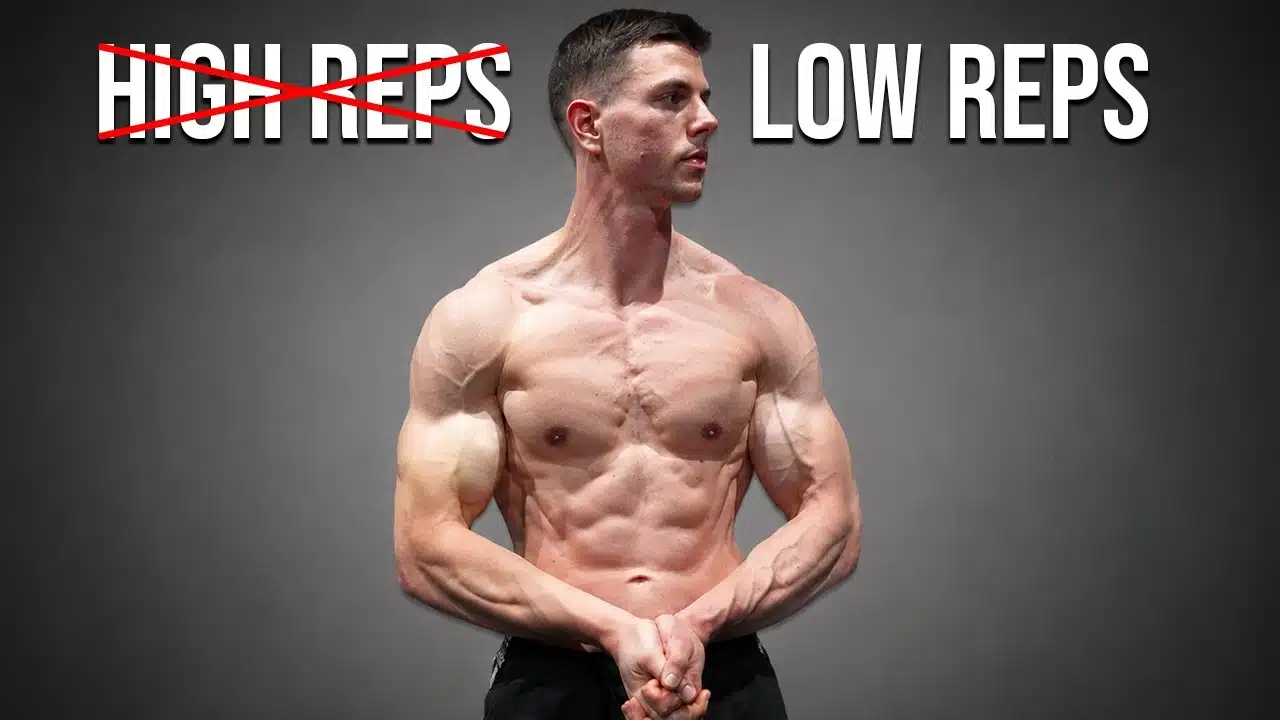
But fitness experts are now questioning whether these marathon sets are actually the most effective path to building strength and size.
The reality behind high rep training reveals some uncomfortable truths that might change how you approach bodyweight exercise.
Jump to:
- The Hypertrophy Continuum Myth
- The Failure Recognition Problem
- Theory Versus Practice
- Adaptation Has Limits
- The Right Tool for the Job
- Reassessing Your Actual Goals
- Strength Transfers to Endurance
- The Weighted Training Advantage
- The Bodybuilding Context Problem
- Three Reasons Lower Reps Win
- Practical Implementation Strategy
- Getting Comfortable With Discomfort
The Hypertrophy Continuum Myth
Recent research has established what’s known as the hypertrophy continuum—the idea that rep ranges from roughly 4 to 50 reps produce similar muscle growth when pushed equally close to failure with matched volume.
This finding initially seemed like a vindication for high rep calisthenics practitioners. Doing 30 pull-ups in a park appeared just as effective as 8 reps on a lat pulldown machine.
That was redeeming for a lot of the high rep calisthenics stuff cuz if you’re in a park doing 30 reps of pull-ups or something like you know that’s that’s arguably as good now as an eight rep set done in a traditional bodybuilding setting on a lat pull down or something like that.
However, newer research on proximity to failure assessment has complicated this picture significantly.
The Failure Recognition Problem
Knowing when you’ve actually reached muscular failure becomes dramatically harder as reps increase. At 5 reps with heavy weight, failure is unmistakable—you simply cannot move the load.
At 30 reps, everything changes.
At that 30 reps it’s you stop because the pump, the fatigue, the metabolites, the lactic acid, all those ions floating through you is what is causing you to stop. But if you had a gun to your head, you could probably do another 5 10 reps to actually hit failure.
Multiple factors convince your brain to stop well before true muscular failure:
- Cardiovascular fatigue from elevated heart rate
- Breathing difficulty that feels overwhelming
- Metabolic buildup creating intense burning sensations
- Time under tension exceeding a minute or more
- Perception of injury risk from prolonged effort
These competing signals cloud your ability to accurately gauge true muscular capacity. Your muscles might have several reps remaining while your cardiovascular system screams for mercy.
Theory Versus Practice
Laboratory studies often involve highly motivated subjects with researchers shouting encouragement, creating conditions that don’t reflect real-world training.
Practically speaking, completing 10 sets of 20+ reps to genuine failure in a single workout session simply doesn’t happen for most people.
It’s extremely physically uncomfortable to do sets of beyond 30 and actually get close to failure.
Unless you possess what one expert describes as “intrinsic masochistic joy,” consistently pushing high rep sets to true failure becomes mentally and physically draining. Most trainees are outliers if they genuinely enjoy this training style.
Adaptation Has Limits
Tolerance to discomfort does improve with exposure. Regular high rep training increases your ability to handle cardiovascular stress, muscular burn, and metabolic fatigue—similar to how stretching tolerance improves over time.
Someone performing 8 sets of 20 reps multiple days weekly will absolutely adapt to these demands.
But there’s a physiological ceiling to this adaptation. Why struggle to tolerate uncomfortable sensations when you could eliminate them entirely?
Lower rep ranges with higher loads remove cardiovascular limitations, breathing constraints, and metabolic interference from the equation. You’re left with pure muscular effort—easier to assess and push to genuine failure.
The Right Tool for the Job
This isn’t about completely abandoning higher reps. Context matters tremendously.
Building an entire routine around 30-50 rep bodyweight exercises presents serious efficiency problems. However, strategic high rep work absolutely has value:
- Training variety blocks using moderate to higher reps periodically
- Finishing movements after primary low-to-moderate rep work
- Deload phases reducing joint stress while maintaining volume
- Injury management when heavy loads aggravate existing issues
The problem emerges when certain corners of the internet insist bodyweight exercises must be performed for high reps, creating unnecessary dogma.
Reassessing Your Actual Goals
Many trainees haven’t recently evaluated whether their training matches their objectives. After years of training a particular way, inertia takes over—you continue because it’s familiar, not because it’s optimal.
After a certain amount of time, that training, like we’re saying, pure body weight stuff, if you just keep progressing that and what worked early by adding reps or adding sets, that was still conducive to those strength or that hypertrophy goals. It’s easy to keep doing that cuz it kept working for a while, but eventually that can become detached from goals.
What worked initially—adding reps and sets—eventually stops aligning with strength and hypertrophy goals. Regular programming audits prevent this drift.
Strength Transfers to Endurance
Evidence strongly suggests lower rep strength training transfers remarkably well to higher rep performance—but the reverse isn’t true.
At a spontaneous competition in Bondi featuring max rep ring dips, pull-ups, and muscle-ups, an interesting pattern emerged. The top performers weren’t endurance specialists—they were strength athletes who trained primarily in lower rep ranges.
Me and them and a couple other guys who performed the best on some of these ring dips and some of these high rep pull-ups, the we were all the low rep strength guys and still came out with decent high reps. Like all of the the the two guys I knew and myself cracked about 30 pull-ups over 40 over 40 on the ring dips.
Meanwhile, skill-focused calisthenics athletes working on static holds also performed well. The common thread? Top-end strength work.
Conversely, taking someone who regularly performs 50-100 rep push-up sets and asking them to bench press or perform heavy weighted dips would yield poor results. Strength doesn’t transfer from endurance work.
The Weighted Training Advantage
One athlete described training exclusively with heavy weighted dips (60+ kilograms) for six months without touching bodyweight variations. After a full push workout including bench press, overhead press, and isolation work, he casually pumped out 30 bodyweight dips.
He jokingly stopped there, saying anything above 30 reps “probably isn’t good for hypertrophy”—satirizing common training misconceptions. He likely could have continued to 50 reps.
This demonstrates how weighted training creates a relative strength advantage. When external load is removed, bodyweight feels remarkably light—similar to training in increased gravity and returning to normal conditions.
The Bodybuilding Context Problem
Many natural trainees unknowingly follow programs designed around enhanced physiology. When performance-enhancing drugs became widespread in bodybuilding, training methodology shifted dramatically.
Workout splits changed because recovery capacity, protein synthesis, and fatigue management all operate differently with chemical assistance. The classic “bro split” with an entire day dedicated to biceps—fitting 6-8 exercises with high volume—works under enhanced conditions but proves inefficient for natural athletes.
Similarly, the practice of automatically increasing reps on isolation exercises at workout’s end (bumping from 8-10 reps to 15-25 reps with drop sets) creates maximum fatigue when you’re least capable of pushing to productive failure.
Three Reasons Lower Reps Win
Setting aside failure recognition issues, lower rep ranges offer clear advantages:
1. Equal or better hypertrophy outcomes. At best, higher reps match lower reps for muscle growth—but likely underperform due to difficulty reaching true failure.
2. Superior strength development. Higher loads with lower reps produce dramatically better strength gains, no contest.
3. Substantially less fatigue. Per set and per workout, lower rep training creates less systemic stress, improving recovery and allowing more frequent quality training.
Bonus: Connective tissue adaptation. Tendons, ligaments, and joint structures strengthen more effectively under moderate-to-high loads rather than extended time under lighter tension.
Practical Implementation Strategy
Hybrid training combining weighted calisthenics, barbells, dumbbells, and machines provides optimal flexibility for constraining rep ranges effectively.
A double progression model works exceptionally well:
- Start at the lower end of your range (example: 4 reps)
- Progress to the upper end (8 reps) at that weight
- Increase load or progression difficulty
- Return to lower rep range with new intensity
- Maintain consistent set volumes across movements
This approach builds progressive overload into the system while preventing endless rep accumulation that dilutes training stimulus.
Intensity remains constrained. Proximity to failure stays consistent. Results follow predictably: you get bigger and stronger.
Getting Comfortable With Discomfort
Mechanical tension reaches higher levels with heavier loads. High-threshold motor units activate sooner and more completely. Effective reps accumulate more efficiently when sets genuinely approach failure.
If lower rep ranges feel awkward initially, that’s completely normal. Adaptation through consistent exposure takes approximately 4-6 weeks before movements feel natural and comfortable.
Technical movements require particular attention. If a 5-rep max causes form breakdown on reps 4-5, simply perform 3-rep sets with an extra set added, leaving 2 reps in reserve. Powerlifters have used this approach successfully for decades with excellent strength and hypertrophy outcomes.
The number of legitimate reasons to avoid lower-to-moderate rep ranges remains slim unless your goals specifically emphasize muscular endurance over strength and size.
For most trainees seeking muscle growth, strength gains, and sustainable training, the evidence points clearly toward heavier loads and constrained rep ranges—regardless of whether you’re training in a gym or a park.










