Movement restrictions and nagging pain might not be what most people think they are.
While strengthening end-range joint positions helps signal safety to the brain, there’s a critical piece missing from this approach.
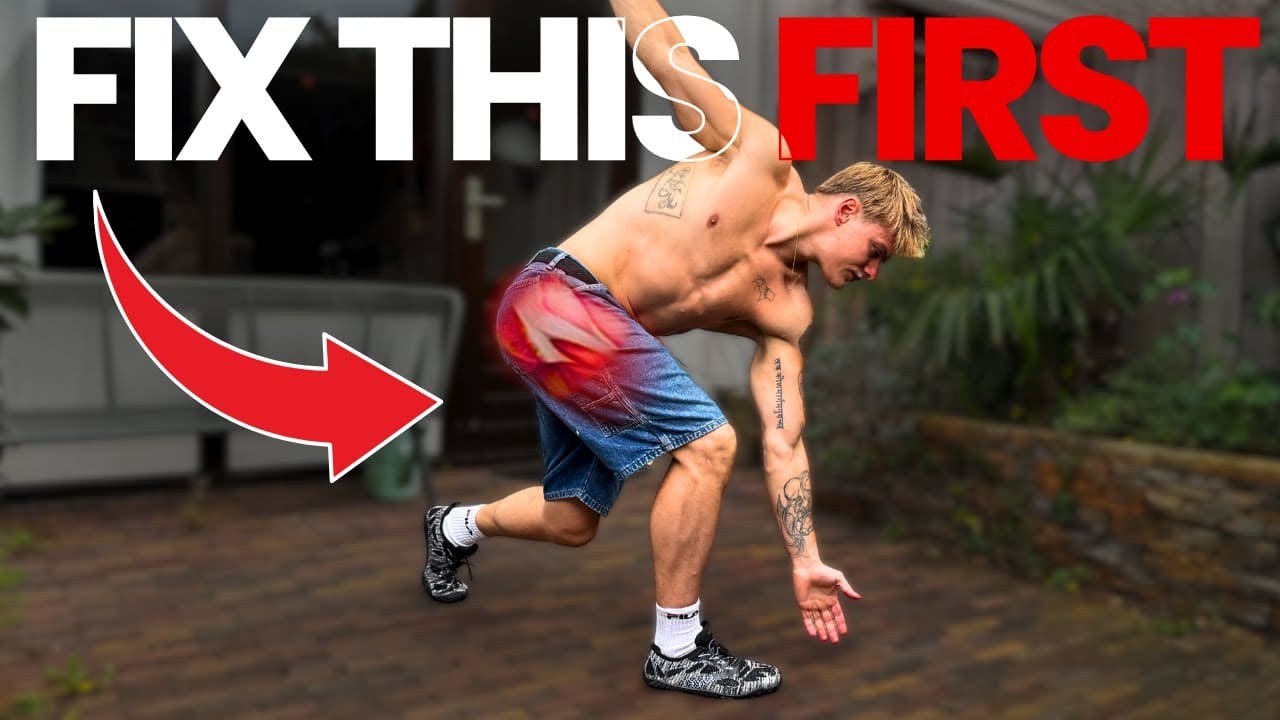
One joint carries far more responsibility than others when it comes to effortless movement—and addressing restrictions here could be the key to feeling less restricted and pain-free.
Movement specialists are now highlighting one mobility exercise that targets this crucial area more effectively than traditional approaches.
Jump to:
Why Your Hips Control Everything
The spine acts as the movement initiator, driving rotation that propels the body forward through space. Remove the arms or legs, and movement remains possible.
But remove the spine? Game over.
However, power comes from the hips—the foundation beneath the spine. Because hips sit centrally and attach directly to the spine, any impairment here cascades down through the entire lower extremity.
The spine brings us from A to B, but the hips bring us from B to beyond.
Conversely, when hips express proper range of motion, the rest of the kinetic chain performs movements with significantly less effort.
The Missing Link: Hip Rotation
The hip joint moves in three planes: forward and backward (sagittal), side to side (frontal), and rotation (transverse). Among these three ranges, rotation influences movement quality most dramatically.
Examining the gait cycle reveals why.
From heel strike through midstance, the hip moves into internal rotation—a landing and loading phase. From midstance to toe-off, external rotation dominates—the launching phase that propels forward.
This constant cycling between internal and external rotation allows the body to absorb ground reaction forces and convert them into forward propulsion.
When Rotation Goes Wrong
Restricted hip rotation during gait forces the body into compensatory strategies. These workarounds create a snowball effect, potentially causing restrictions and discomfort in other postural regions.
Traditional mobility drills like 90/90s and hip CARs address rotation effectively. But there’s one exercise that mimics internal and external rotation precisely as it occurs during walking and locomotion.
The Hip Airplane: Three Powerful Benefits
The hip airplane exercise stands out for restoring rotational capacity in ways that directly transfer to daily movement patterns.
Benefit #1: Mimics Real Gait Mechanics
Performed in a hinged position, the hip airplane replicates the hip extension-flexion present during walking. This positioning creates functional rotation rather than isolated movement.
Benefit #2: Opens Up Glute Stretch Capacity
The hinged position stretches the glute far beyond what most people achieve. Greater stretch capacity means more room for contraction—and more control throughout the entire range.
Benefit #3: Reduces SI Joint Pressure
The sacroiliac joint—where the ilium connects with the sacrum at the spine’s base—experiences less stress when hip rotation improves.
Better rotational capacity during locomotion allows the pelvis to move closer toward the femur, aligning the body with its base of support. Without proper rotation, gravity places excessive pressure on SI joints, creating discomfort for many individuals.
Mastering the Hip Airplane Progression
Maximizing intensity while minimizing volume produces the best results. The key metric: performing better than the previous session.
Step 1: Establish the Hinge Pattern
Before attempting the full movement, nail down proper hip hinge positioning on the working leg.
- Start in a bilateral stance
- Step back with the supporting leg
- Glide the opposite hand over the front knee, traveling down as far as possible
- Drive the glute backward while keeping the knee over the ankle
- Continue descending until maximum glute stretch occurs
- Perform five repetitions per side, noting differences between left and right
Step 2: Add Diagonal Resistance
Increasing the base of support provides stability for adding resistance and building strength at maximum range.
Hold weight on the supporting side, internally rotating that arm to create length. Drive the pelvis toward the working leg while pushing the glute backward.
You will feel a very deep stretch on the glute. And once you’re in max range, you hold it.
Contract the adductors isometrically, then push into external rotation—rotating torso and pelvis away from the working side. Perform 6-10 repetitions to maximize intensity.
Step 3: Decrease Support Weight
Gradually shift more weight onto the working leg. Experiment with foot placement—bringing it straight back versus diagonal.
Diagonal positioning significantly increases glute stretch. Keep the knee aligned with the ankle as much as possible, distributing 70-80% of body weight onto the working leg.
Step 4: Transition to Wall Support
Once comfortable with substantial weight on the working leg, use a wall for stability before going completely freestanding.
- Lean forward with the torso
- Straighten the rear leg
- Keep the working knee slightly bent in a hinged position
- Hold weight close to chest
- Move into internal rotation, then external rotation while leaning against the wall
- Allow the rear foot to internally rotate for maximum hip rotation
Step 5: Full Hip Airplane
Execute the complete pattern with the rear leg straight and working knee slightly bent to stretch the glute.
In the bottom internal rotation position, contract adductors and pelvis maximally. During external rotation, engage glutes and abductors for full range of motion.
Programming Recommendations
Load the pattern with 15-25% of body weight after establishing proper hinge mechanics. Perform 6-10 repetitions per session.
The repetitions serve to support maximum contractions held for extended periods. Incorporate this movement once or twice weekly for significant results.
Slow, controlled execution utilizes the full spectrum of available tissue capacity. Quality trumps quantity—each repetition should emphasize extreme ranges with deliberate muscle engagement.
Why This Exercise Deserves Priority Status
Central joint restrictions create downstream problems throughout the movement chain. Because hips connect directly to the spine and influence every step taken, addressing rotational deficits here yields disproportionate benefits.
The hip airplane’s unique combination of functional positioning, rotational demands, and progressive loading makes it exceptionally efficient for resolving movement restrictions.
Rather than performing multiple isolation drills, this single exercise addresses internal rotation, external rotation, glute capacity, and SI joint mechanics simultaneously—all within movement patterns that directly transfer to walking and running.
For individuals experiencing restrictions during daily activities or unexplained discomfort in lower body joints, prioritizing hip rotational capacity through the airplane progression often produces rapid improvements in movement quality and comfort levels.