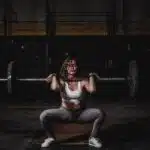
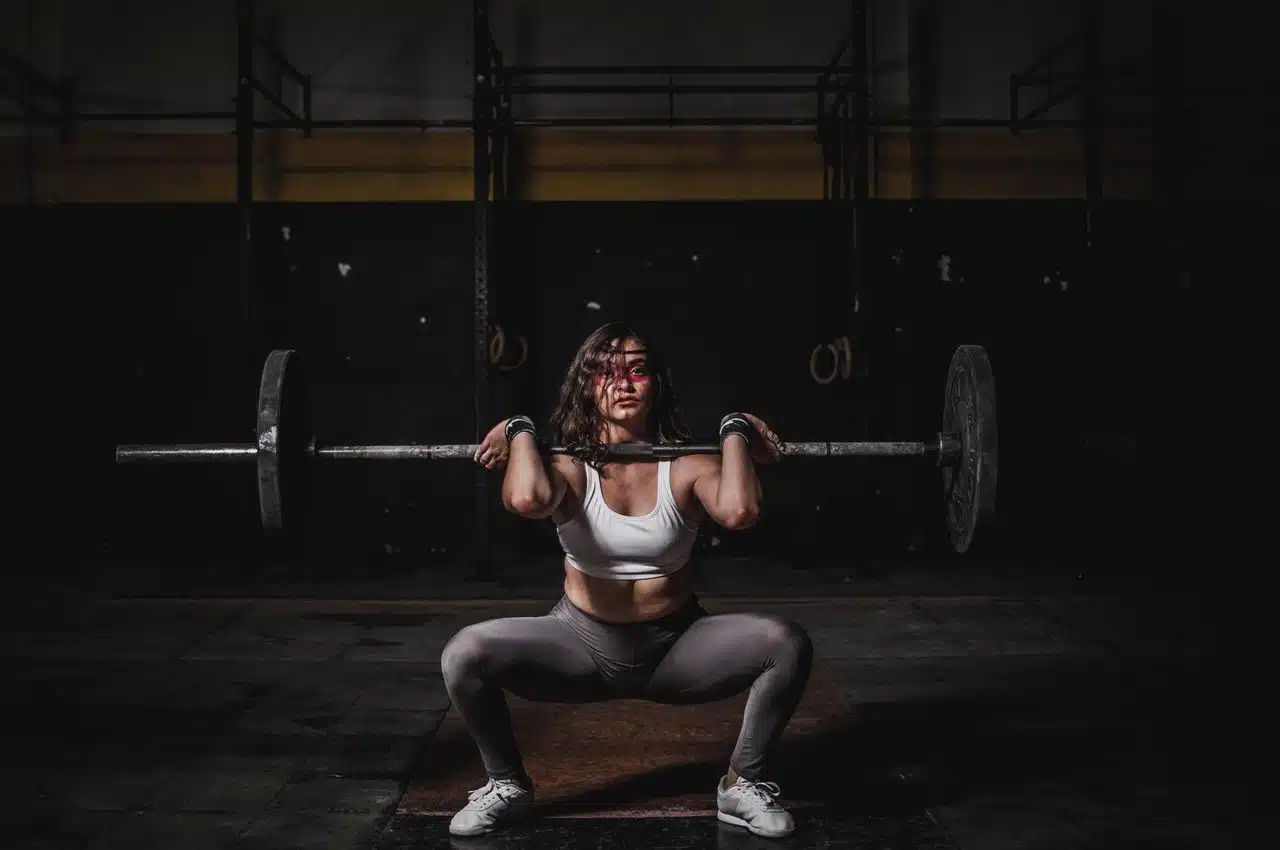
You hit depth, feel a pinch in the front of the hip, and grind out the rep anyway. Then it happens again on the next set. And the next workout.
Hip pain in the squat is one of the most common complaints in any box. Sometimes it really is tight tissue and poor positioning. Sometimes it is the joint itself telling you something has changed.
Jump to:
- Why the Hip Pinches at Depth
- Mobility Problem or Joint Problem?
- Red Flags That Need a Professional
- What to Do in the Meantime
- What Happens If It Is the Joint
Jump to:
Why the Hip Pinches at Depth
The hip is a ball-and-socket joint. At the bottom of a deep squat, the top of the thighbone moves close to the front rim of the socket.
If anything reduces that space, the two can bump into each other. That is what creates the classic “pinch” in the front of the hip or groin.
Several things can cause it:

If you want something simple that actually works, this is one of the most effective tools I’ve used to build strength, conditioning, and endurance without needing a full gym setup.
- Full-body training with one weight using swings, squats, and presses
- Solid cast iron build that feels stable and lasts for years
- Comfortable grip that makes high-rep workouts easier to handle
- Hip shape: some people are simply built with deeper sockets or a thighbone neck that is angled differently. Their comfortable squat depth and stance will never match the athlete next to them.
- Femoroacetabular impingement (FAI): extra bone on the ball or the rim of the socket that causes the two to contact earlier than normal. It is common in athletes and often shows up in deep flexion movements.
- Labral irritation or tears: the labrum is a ring of cartilage around the socket. Repeated pinching can irritate or tear it.
- Early arthritis: wear of the joint cartilage, more common from the 40s onward and in people with previous hip problems.
- Soft tissue issues: hip flexor strains, tendon irritation and tight surrounding muscles can all mimic joint pain.
Mobility Problem or Joint Problem?
There is no perfect at-home test, but some patterns are worth noticing.
It is more likely to be mobility or positioning if:
- The pinch disappears when you widen your stance or turn your toes out a little
- Pain only happens at end range and goes away as soon as you come up
- A good warm-up makes a big difference
- You feel tightness more than sharp pain
It is more likely to be the joint if:
- Pain is deep in the groin, not on the side or the back of the hip
- You feel clicking, catching or locking with pain
- The hip aches after training or the next day, even with light loads
- Putting on socks, getting out of a car or sitting for long periods hurts
- Your range of motion is slowly getting worse over months, not better
Pain on the outside of the hip is often coming from tendons rather than the joint, while pain in the buttock can come from the lower back. That is one reason self-diagnosis gets tricky.
Red Flags That Need a Professional
Most hip niggles settle with smarter programming. But some signs mean it is time to stop guessing:
- Pain that has not improved after four to six weeks of modifying your training
- Mechanical symptoms: locking, catching or the hip giving way
- Night pain or pain at rest
- A specific injury moment, such as a fall or a sudden sharp pain during a lift
- Pain that spreads down the leg with numbness or tingling, which may point to the spine instead
A sports physiotherapist is a good first stop for most athletes. If symptoms are persistent or mechanical, a hip evaluation by an orthopedic specialist, usually with X-rays and sometimes an MRI, can confirm whether you are dealing with impingement, a labral tear, early arthritis or something outside the hip altogether.
If you want something simple that actually works, this is one of the most effective tools I’ve used to build strength, conditioning, and endurance without needing a full gym setup.
- Full-body training with one weight using swings, squats, and presses
- Solid cast iron build that feels stable and lasts for years
- Comfortable grip that makes high-rep workouts easier to handle
Getting the diagnosis right matters. The rehab plan for a strained hip flexor looks nothing like the plan for a torn labrum.
What to Do in the Meantime
While you are figuring it out, you do not need to stop training. You do need to stop poking the problem.
- Adjust your stance: try a slightly wider stance and more toe-out. Many athletes find a pain-free squat this way.
- Cap your depth temporarily: box squats to a height that feels comfortable let you keep loading the legs.
- Swap movements: sled pushes, step-ups, single-leg work and hinge variations often feel better than deep bilateral squats.
- Strengthen the hip: glute and deep hip rotator work helps control the ball in the socket.
- Watch the volume: high-rep squat-heavy workouts and lots of deep wall balls stack up quickly. Scale them.
- Do not force range: aggressive stretching into a painful pinch can make an irritated joint worse.
What Happens If It Is the Joint
A joint diagnosis is not the end of training. Many athletes with FAI or minor labral irritation do well with targeted rehab and movement changes.
When conservative care is not enough, options may include injections or, for selected patients, hip arthroscopy to address impingement or repair the labrum. For advanced arthritis that limits daily life, hip replacement is a well-established operation. Return to the gym afterwards is common, although surgeons usually advise adapting high-impact and very heavy loaded work.
Each case is different, and these decisions should be made with a surgeon who understands what you want to get back to.
The Bottom Line
A hip pinch in the squat is not something to ignore, but it is not something to panic about either. Start by changing your stance, depth and volume. If the pain keeps coming back, or there is clicking, locking or night pain, get it properly assessed. The sooner you know what is going on, the sooner you can train around it, and the longer you will keep squatting.
If you want something simple that actually works, this is one of the most effective tools I’ve used to build strength, conditioning, and endurance without needing a full gym setup.
- Full-body training with one weight using swings, squats, and presses
- Solid cast iron build that feels stable and lasts for years
- Comfortable grip that makes high-rep workouts easier to handle
This article is for general information and does not replace individual medical advice.