Feeling overwhelmed by work and struggling to stay active? Turns out, you’re not the only one — even people in ancient Rome and Greece faced the same challenge.
In a fascinating look at history, scholars like Konstantine Panegyres from the University of Melbourne reveal how ancient physicians, philosophers and ordinary workers navigated tight schedules while honoring their health. From strategic exercise hacks to daily routines designed for busy lives, the ancients may have left us a playbook more relevant today than ever.
Here’s how you can borrow their wisdom to effortlessly weave fitness into a packed calendar — without needing a gym or fancy gadget.
Jump to:
- An Age-Old Problem: Too Busy to Stay Healthy
- The Health Price of Modern (and Ancient) Busyness
- Galen’s Flexible Routine: A Timeless Template
- Practical Fitness for Working Professionals
- Customizing Your Health Strategy
- The Role of Personal Responsibility
- Ancient Takeaways for Modern Wellness
- We’re Still Human
An Age-Old Problem: Too Busy to Stay Healthy
The temptation to skip workouts and meals in favor of productivity isn’t new. The Roman physician Galen, who practiced medicine in the bustling city of Rome in the 2nd century AD, saw this firsthand with patients like Premigenes — a philosopher so consumed by writing that he neglected sunlight and movement.
Galen’s prescription? Less work, more motion. He emphasized that daily activity and exposure to fresh air were essential elements of good health — advice that would be echoed by health authorities over 2,000 years later.
“The reality is simple,” Galen argued, “time spent on caring for your body will save time lost to illness.”
The Health Price of Modern (and Ancient) Busyness
In ancient times, as now, being overworked took a serious toll. Satirist Lucian of Samosata, writing in the 2nd century, painted a vivid picture of professionals so trapped by commitments that health declined rapidly:
“Sleeplessness, sweating, and weariness gradually undermine you, giving rise to consumption, pneumonia, indigestion, or…gout.”
Lucian lamented how work environments often discouraged rest, treating illness not as a concern but as an excuse to dodge duties. The parallels to modern hustle culture are unmistakable.
Galen’s Flexible Routine: A Timeless Template
Despite a demanding career, Galen found ways to integrate health maintenance into his lifestyle. By age 28, after realizing the impact of preventive wellness, he committed to two simple habits:
- One main meal in the evening
- Daily exercise — sometimes wrestling, his personal favorite
This “do-what-you-can-when-you-can” approach made it possible to sustain a routine despite unpredictable days. While accidents (like a dislocated shoulder at age 35) occasionally interrupted his flow, the core habit prevailed — and kept him remarkably healthy for decades.
Practical Fitness for Working Professionals
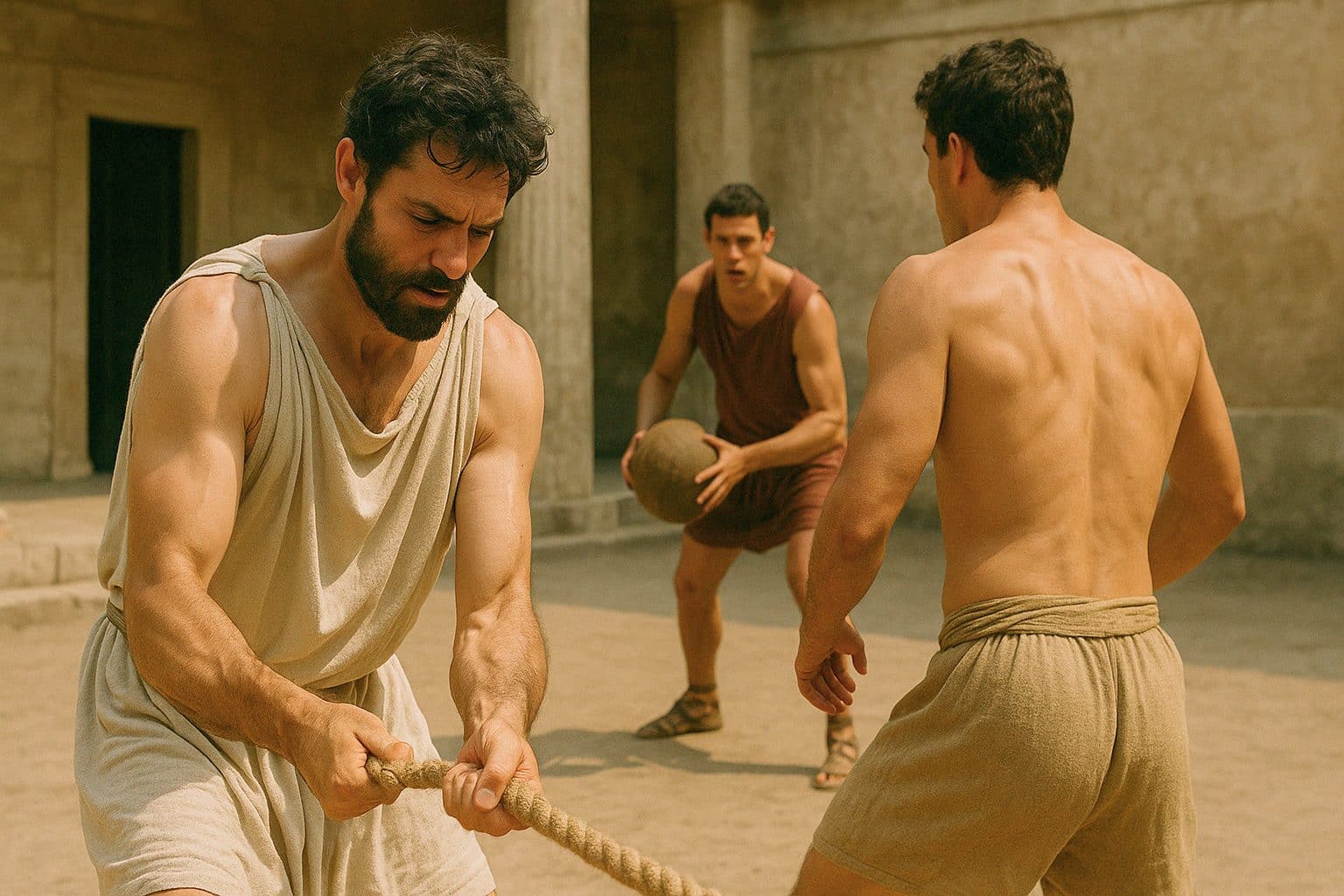
Galen’s suggestions didn’t require fancy gyms or memberships. He recommended ball games involving running, throwing, and dodging — exercises that were dynamic, social, affordable, and full-body.
Other elites, like the wealthy Athenian Ischomachus from the 5th century BC, worked out during their commutes. Instead of hopping on a chariot, he walked or jogged to the city and his farm, making use of movement-based transportation long before step counters were a thing.
This idea has serious modern applications:
- Walk or bike to work when possible.
- Take phone calls standing or walking.
- Replace scrolling breaks with stretch breaks.
- Use household tasks like vacuuming or gardening as movement opportunities.
Customizing Your Health Strategy
Although Galen endorsed a structured regimen, he also acknowledged the diversity in human needs. “Everyone has a different nature,” he wrote, recognizing that fitness isn’t one-size-fits-all.
His advice was simple: Build habits that fit into your reality. Whether you’re a doctor, student, parent, or entrepreneur, it’s possible to carve out pockets of time for activity that doesn’t feel like a burden.
What If You’re Just Too Busy?
A 7th-century physician, Paul of Aegina, offered guidance for those caught in a nonstop grind. For people who used to have good routines but now struggle, he suggested:
- Lighten your load where possible.
- Resume parts of your old routine — even a simplified version.
- If exercise isn’t doable, prioritize diet.
“The worst outcome,” he warned, “is abandoning both exercise and nutrition altogether.”
The Role of Personal Responsibility
Philosopher Aristotle took a firm stance: your health is your responsibility. If you ignore advice and make poor choices knowingly, he believed, the effects on your health should not be surprising.
Yet this isn’t about blame — it’s about ownership. Choosing to take small, intentional actions daily, even in a packed schedule, adds up over time.
Ancient Takeaways for Modern Wellness
Despite living thousands of years ago, the ancients faced the same issues plaguing modern professionals — burnout, irregular sleep, skipped meals, sedentary jobs. Yet they found resourceful ways to move, eat better, and stay connected to their physical well-being.
Key lessons that still apply today include:
- Integrate movement into your daily routine naturally.
- Create adaptable routines — even short, consistent ones.
- Prioritize nutrition when training time is tight.
- Be honest about your limits and don’t aim for perfection.
- View health care as daily maintenance, not crisis response.
We’re Still Human
The challenges faced by the ancient Greeks and Romans are surprisingly similar to those we face in the digital age. Deadlines, social pressures, and ambition can push wellness down the priority list — but we also have more knowledge than ever to combat it.
Feeling overwhelmed doesn’t mean health needs to fall apart. As the ancients proved, even small, strategic shifts can offer powerful returns — and fitness isn’t only for those with time to spare.
After all, being busy doesn’t have to mean being burnt out.