How do you distill a month of reading 13 fitness books into a single takeaway? For author and ultralearning expert Scott H Young, the answer was simple: consistency in movement beats complexity in methods.
In a recent article on his blog, Young revealed the key lessons from his deep dive into fitness, part of his ambitious year-long project to improve foundational habits. Over just four weeks, he devoured books on cardio, strength training, behavioral psychology, and evolutionary health. The verdict?
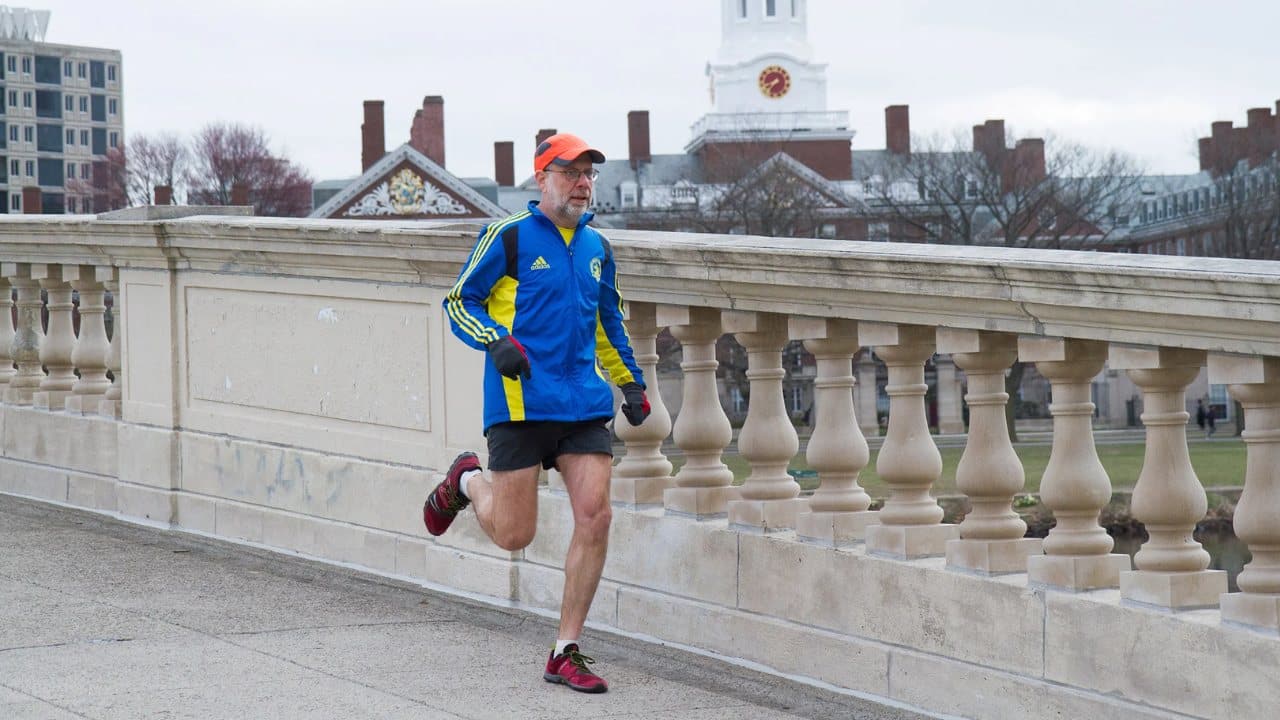
“Regular exercise is essential—probably more than you think,” he wrote.
Read on to discover the highlights from his research, practical tips to help you get moving, and which books are worth adding to your own fitness library.
Jump to:
- The Key Takeaways: Build the Habit, Reap the Benefits
- Exercise Isn’t Natural—But It’s Necessary
- Discipline Without Burnout: The Psychology of Fitness Habits
- Books That Inform vs. Books That Inspire
- Biochemistry and Biomechanics: Learning the ‘Why’ Behind Training
- The Longevity Lens: Think Decades, Not Days
- Fun, Fiction, and the Running-Shoe Conspiracy
- Scott’s Final Verdict? Just Get Moving
- TL;DR: The 6 Principles Scott Came Away With
The Key Takeaways: Build the Habit, Reap the Benefits
You don’t need to become an elite athlete to see massive health benefits. In fact, Scott emphasizes that the biggest health payoff comes from moving out of inactivity.
- Going from no exercise to even a moderate amount provides disproportionate benefits—better mood, metabolic health, and longevity.
- 150 minutes of moderate cardio weekly plus two resistance sessions is a proven, science-backed baseline. You only need about 30 minutes a day to meet it.
- Cardio dominates for health and weight control, but strength training offers unique benefits like bone density, injury prevention, and preserving lean mass.
In short, a rounded routine including both aerobic and resistance elements is ideal—not groundbreaking, but crucial nonetheless.
Exercise Isn’t Natural—But It’s Necessary
In Exercised by evolutionary biologist Daniel Lieberman, Young found his favorite book of the month. Lieberman drives home the point that we didn’t evolve to exercise for leisure.
“Hunter-gatherers thought it was bizarre to go running just to stay healthy,” Young remarked.
Instead, our ancestors were active because survival demanded it. Today, with calorie expenditure no longer tied to survival, we need conscious incentives.
This insight helps explain why we struggle to maintain exercise habits—it’s evolutionary mismatch in action.
Discipline Without Burnout: The Psychology of Fitness Habits
While most books aligned on what to do, a few focused on how to actually stick with it. For behavioral wisdom, Scott turned to Amantha Imber’s The Health Habit. Her biggest insights included:
- Give yourself “hall passes”—optional rest days improve adherence over time.
- Use flexible scheduling instead of rigid plans to avoid burnout.
- Enjoyable activities increase consistency, whether dancing, rock climbing, or walks in nature.
Kelly McGonigal’s The Joy of Movement echoes that sentiment: sustainable fitness needs to feel good in the moment, not just serve as a future reward. Her chapters on music, social exercise, and outdoor activity offer immediate ways to boost enjoyment.
Books That Inform vs. Books That Inspire
Not all books aimed to educate—some were designed to motivate. Rich Roll’s Finding Ultra and Haruki Murakami’s What I Talk About When I Talk About Running showed the deeply personal side of fitness:
- Roll goes from depressed and breathless to ultra-endurance legend at age 40.
- Murakami shares a low-key, meditative view of running—not as conquest, but reflection.
Young found both stories deeply encouraging, especially for those beginning their fitness journey or rediscovering it later in life.
Biochemistry and Biomechanics: Learning the ‘Why’ Behind Training
Ever the lifelong student, Young also dug into textbooks used by trainers. In the ACSM’s Complete Guide to Fitness and Health and NSCA’s Essentials of Personal Training, he learned:
- Fitness has four pillars: cardio, strength, flexibility, and neuromuscular training (i.e., balance and coordination).
- Training systems like aerobic vs. anaerobic energy pathways each serve unique functions worth understanding.
- Optimal exercise technique is essential—especially for lifts like squats and deadlifts, where poor form can lead to injury.
For biomechanics, Mark Rippetoe’s Starting Strength delivered in-depth breakdowns of barbell lifts—useful, if you’re lifting regularly and want to train safely.
The Longevity Lens: Think Decades, Not Days
Peter Attia’s bestseller Outlive stood out for its holistic framework. While Attia touches on diet and sleep, he puts movement squarely at the center of well-being.
He introduces what Scott calls a powerful reframing: the “Centenarian Decathlon.”
“What are the physical tasks you want to be able to do at 100? Train for those—today.”
That long-term thinking shifts the goal from aesthetics or even fitness milestones to what really matters: being functionally able decades from now. Climbing stairs. Carrying groceries. Getting up from the floor unaided.
Fun, Fiction, and the Running-Shoe Conspiracy
No roundup of fitness books is complete without Born to Run by Christopher McDougall. While it veers into wild storytelling and counterculture (and possibly caused Young a brief bout of runner’s knee), Scott admits it’s a page-turner loaded with running mythology.
The story of the Tarahumara tribe and minimalist footwear adds flair to what might otherwise be another “how to run” manual.
Scott’s Final Verdict? Just Get Moving
From textbooks to trail-running tales, the overarching conclusion is clear: fitness doesn’t need to be overengineered to be effective. As Scott writes:
“The biggest insight is boring: just do some form of regular aerobic and strength training.”
But the supporting materials—the science, the psychology, the personal stories—make it easier to see why fitness matters and how to make it last.
TL;DR: The 6 Principles Scott Came Away With
- Start with consistency—30 minutes daily is enough to change everything.
- Cardio adds years to your life; strength training adds quality.
- Science is clear and uncontroversial—you don’t need cutting-edge methods.
- Evolution didn’t design us to enjoy exercise, so don’t expect motivation to come naturally.
- Enjoy the moment, not just the long-term rewards—joy makes the habit last.
- Think long-term: train today for the life you want when you’re 80+.
Whether you’re a seasoned lifter or a beginner lacing up for your first walk, the most valuable lesson from Scott H Young’s fitness month is simple:
You don’t have to do everything—but you do have to start.