It might sound contradictory, but yes, you can be both stiff and flexible at the same time. If you’ve been stretching and massaging endlessly trying to loosen up your body – but the stiffness keeps coming back – you’re not alone.
Recent science reveals something surprising: the solution to chronic stiffness isn’t more stretching. Believe it or not, it might be more about movement—and even a little electrical shock therapy.
Here’s what you really need to know about stiffness, why it happens even when flexibility isn’t the issue, and how to finally get lasting relief.
Jump to:
- Stiffness Doesn’t Always Mean You’re Inflexible
- Sitting and Inactivity Are Major Causes of Stiffness
- Massage and Stretching Feel Great… But Only Temporarily
- The Study That Used Electricity to Reduce Stiffness
- What This Tells Us: Contracting Muscles Reduces Stiffness
- Yes, You Can Be Stiff *and* Flexible – and That’s Not a Bad Thing
- Recap: How to Loosen Up for Good
Stiffness Doesn’t Always Mean You’re Inflexible
Flexibility is the ability of your muscles and tissues to lengthen, but stiffness is something else entirely. Real stiffness refers to how much your muscles resist movement—even when you’re trying to stay relaxed.
For example, someone might have extremely flexible shoulders. But try to actively move those arms without assistance, and they might not go very far. Add a pole or assistance, and suddenly they can move far past those active limits. What’s going on?
This resistance is called passive stiffness, or resting muscle tone. It’s what gives your body some natural rigidity and joint stability, which is actually a good thing. But when passive stiffness becomes excessive, especially throughout the whole range of motion, that’s when problems arise.
Sitting and Inactivity Are Major Causes of Stiffness
Your resting muscle tone increases with age, sedentary habits, and prolonged static positions—like sitting or standing still for hours. The less you move, the more your nervous system tells your muscles to “lock up” just to protect your posture.
That stiffness you feel in your neck or lower back after a day at the desk? It’s not just tight muscles—it’s your body adapting to inactivity.
Massage and Stretching Feel Great… But Only Temporarily
Things like stretching, foam rolling, or getting a massage do help—instantly. But those effects don’t last long. Within minutes or a few hours, your body tends to revert right back to its old stiffness patterns.
Why? Because those techniques don’t fundamentally change your resting muscle tone. Instead, they briefly “trick” your nervous system into relaxing. While those sports massages and deep stretches feel amazing, chronic stiffness needs a deeper solution.
But That Doesn’t Mean You Should Skip Stretching
Stretching still serves an important purpose. It improves range of motion and can be lifesaving when dealing with intense cramps—including period cramps. The key is knowing that while stretching helps temporarily, it’s not the long-term fix you need for daily stiffness.
The Study That Used Electricity to Reduce Stiffness
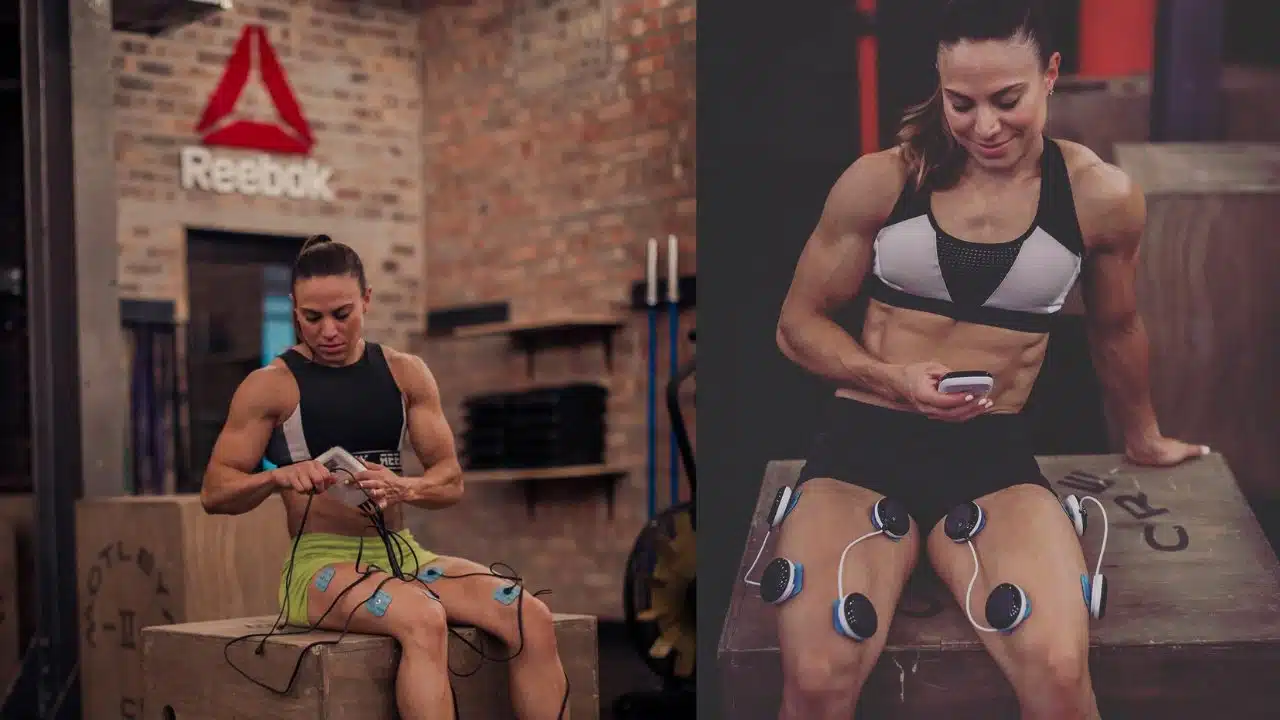
In one fascinating study, participants were asked to sit still for 4.5 hours—about the length of a typical desk-bound workday. As expected, their backs got stiffer over time—especially their lower backs.
Next, scientists divided them into three groups:
- Group 1: Received electrical stimulation at the motor threshold (enough to cause cramping).
- Group 2: Received electrical stimulation only at the sensory threshold (barely noticeable).
- Group 3: The control group—did absolutely nothing but sit, quietly.
The results were illuminating:
- Group 1 saw almost a complete reversal in muscle stiffness by the end of the study.
- Group 2 (light stim) showed no improvement.
- Group 3 just got bored—and very stiff.
What This Tells Us: Contracting Muscles Reduces Stiffness
The takeaway from this study is simple: contracting your muscles is what reverses stiffness. And your body knows this intuitively. That big stretch you do after standing up? It’s not just to feel good—it’s activating the opposing muscles and resetting your system.
This is why movement is so important. When you stretch, you’re activating muscle groups—not just pulling on tissues. That contraction is far more valuable than passive stretching alone.
Motion Is Lotion
If you have to sit for hours—for work, studying, or a long flight—make a conscious habit to move often. A few essential rules:
- Switch up your posture frequently—every 20 to 30 minutes.
- Stand and stretch dynamically—not just pulling, but engaging your muscles.
- Walk around—even for just 2-3 minutes to get blood flowing.
- Do a few bodyweight squats or glute squeezes to activate your lower body.
Movement not only boosts circulation and joint lubrication (hello, synovial fluid!), but more importantly, it reengages your dormant muscles—helping combat the passive stiffness that builds throughout sedentary days.
Yes, You Can Be Stiff *and* Flexible – and That’s Not a Bad Thing
Having some stiffness—especially near end ranges of motion—is a good thing. It keeps your joints secure and prevents injury. But when that stiffness takes over your entire range of motion and makes everyday movements painful, it becomes a liability.
If you feel stiff after sitting too long, you’re not broken. You just need more muscle activation in your routine—not just more stretching.
Next Steps for a More Mobile Body
- Incorporate regular strength training—especially in the form of isometric holds and full range movements.
- Warm up actively before workouts with dynamic mobility drills instead of static holds.
- Use stretching and foam rolling for short-term relief or recovery, not as your only fix.
- Build consistency—daily movement, even 5-10 minutes, rewires your baseline muscle tone.
Recap: How to Loosen Up for Good
- You can be both stiff and flexible—at the same time.
- Stiffness isn’t caused by tight tissues—but by resistance to movement, aka muscle tone.
- Stretching helps temporarily, but only muscle contraction can reverse stiffness long-term.
- Prolonged sitting leads to increased muscle tone—which feels like tightness.
- Movement and strength are the keys to a fluid, mobile body—not just passive interventions.
So if you’re chasing that ultra-flexy lifestyle—or just want to feel less achy and tight after work—remember: move often, move with intention, and don’t just stretch—flex.