Tia-Clair Toomey-Orr isn’t easing back into competition—she’s rewriting how elite athletes prepare for it.
The six-time CrossFit Games champion is now embracing a new challenge: training for HYROX while maintaining CrossFit fundamentals. Her focus has shifted toward optimizing running performance without letting her strength slip—a delicate balancing act requiring intense physical and mental precision.
Save
“The more we can push our threshold paces, the better. I want my running to be on par with the incredible athletes I’ll be racing against,” she said, discussing her strategy to close the gap between strength and endurance.
This hybrid style—where threshold training meets barbell grit—is becoming her new standard.
A Structured, Threshold-Driven Approach to Running
Toomey’s training now includes three 9-minute running efforts at threshold pace, simulating the fatigue and pacing demands of race day. Each session is designed to increase her ability to perform when compromised—a concept central to both CrossFit and HYROX formats.
Running is no longer just a supporting role in her programming.
She’s clocking 60 to 70 kilometers per week, accounting for both high-effort segments and the warm-up and cooldown miles that often go overlooked.
“If I’m doing a piece, it’s usually one mile to two kilometers warming up, then again cooling down,” she explained. “Some of the main efforts go up to 10K, especially hill runs.”
Her goal is clear: build running resilience without sacrificing explosiveness.
CrossFit Roots Still Hold Strong
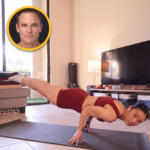
Despite the increased mileage, Toomey refuses to let go of her CrossFit foundation. Her sessions often open with skill elements like freestanding handstand push-ups, followed by AMRAPs (as many rounds as possible) combining running, rowing, and strength movements.
One piece featured 10 x 300-meter rowing intervals, each followed by 45 seconds of rest. She aimed to row faster than race pace—though clarity on exact pacing was elusive.
“Shane’s being really cryptic,” she said, referring to her coach and husband, Shane Orr. “I’m trying to read him, like—why’s he being so secretive about my paces?”
Still, she pushes through discomfort, focusing on technique. “My hamstrings and glutes were on fire. I was just trying to hold on and stay strong in the pull,” she said, acknowledging technical flaws she’s working to fix.
Strength Takes a Hit—But She’s Not Ignoring It
As her endurance builds, Toomey admits her raw strength numbers have dipped slightly.
“In Houston, I definitely felt my strength had decreased,” she noted. “That’s because I’ve been so focused on running and speed.”
Still, strength remains a top priority, especially with a lighter frame competing against larger athletes.
“Mass moves mass, and the math doesn’t add up right now,” she joked. “I’d love if 70K of running each week made my back squat go up—but that’s just not the reality.”
She continues to work in strength elements—like Olympic lifts and loaded carries—but accepts that something has to give when chasing dual-sport excellence.
Training Environment Built on Accountability and Energy
After returning to her base, Toomey has noticed a culture shift among athletes training alongside her.
“They clean up after themselves. They put the gear away properly. I’ve barely had to say anything,” she said. “It helps having people who’ve been here before set the tone.”
There’s a palpable sense of professionalism, but also light-hearted competition that makes the grind more bearable.
“When someone’s 50 meters ahead of me, I’m trying to make sure it doesn’t get too far. There’s always that little edge in group training.”
That energy is helping her keep pace—mentally and physically—with the long hours and evolving demands of hybrid sport.
Nutrition: Still a Work in Progress
Despite her elite status, fueling properly remains a daily challenge. The increased endurance work has added a new layer of complexity to her nutritional needs.
“I definitely should be eating more,” she admitted. “I get sidetracked. It’s not that I forget—I’m not starving—I just need to keep the calories coming.”
Her meals are straightforward and functional.
“I had some beef with a bunch of rice for lunch—my partner made it. Super delicious,” she said.
Bananas are also a staple.
“I even got asked during competition why I eat so many bananas,” she laughed. “They’re easy, they work for me.”
She acknowledges that HYROX demands more consistent fueling than CrossFit ever did—especially given the higher mileage and longer event durations.
Spontaneous Haircuts and Mental Shifts
Toomey’s adaptability isn’t just physical—it’s psychological. One recent example? Her dramatic haircut, which she says was more instinct than plan.
“I was driving to the supermarket and thought, stuff it. If I walk into a salon and they’re free, I’ll do it,” she recalled. “They said yes, so I just went for it.”
This embrace of change echoes how she’s handling the evolution in her training—welcoming the unfamiliar to unlock growth.
What’s Next: Longevity Through Variation
While HYROX adds new variables, Toomey believes the change in training stimulus is key to longevity.
“It’s like changing the furniture in your house—it’s still your home, but it feels fresh again,” she said.
She remains fully engaged in the grind but with a renewed mental perspective. The challenge of mastering both speed and strength keeps her sharp.
Whether it’s high-intensity intervals, AMRAP strength sets, or 10K tempo runs, the throughline remains the same: show up, work hard, and leave no doubt.
“We’re still working out, we’re still pushing really hard. Just focusing on different things now. But the concept’s the same—I want to be better in every way.”