Building upper body strength doesn’t require a marathon gym session.
One fitness enthusiast has cracked the code with just four strategic exercises that target chest, shoulders, and triceps.
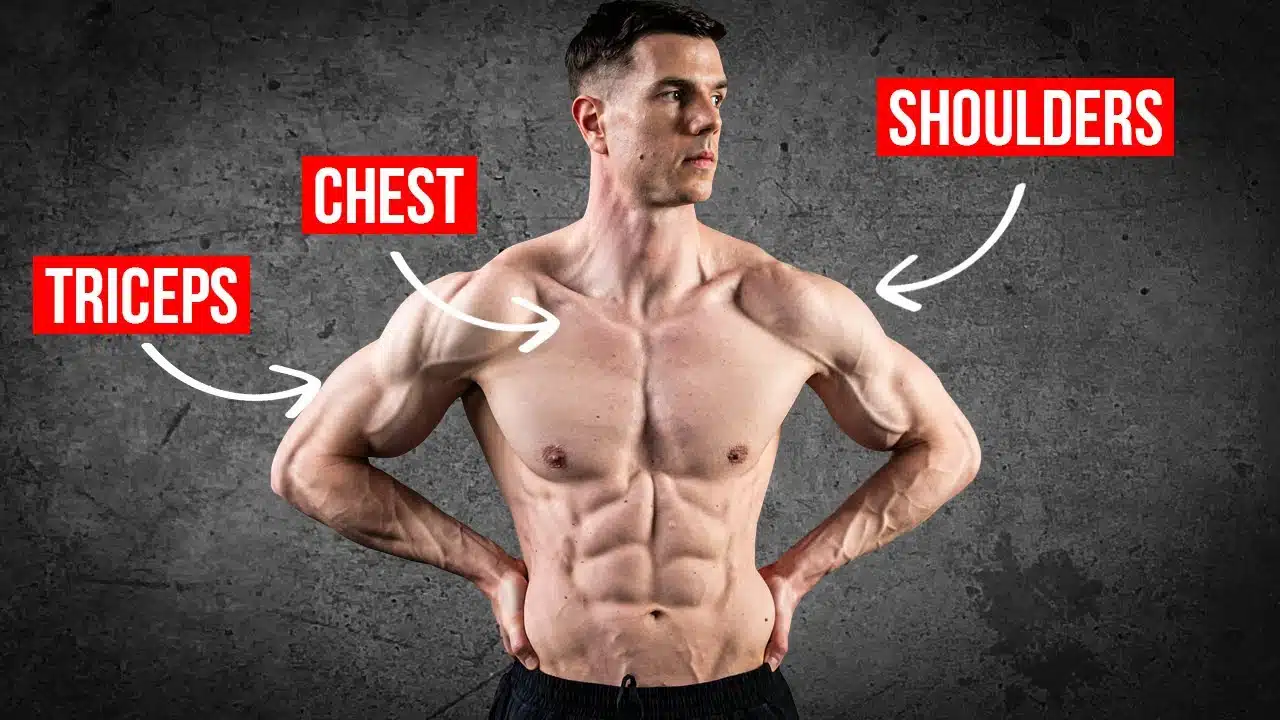
His minimalist approach challenges conventional wisdom about volume and variety, proving that quality trumps quantity when programming push workouts.
The method combines calisthenics mastery with strategic weight training, delivering serious results without unnecessary fluff.
Jump to:
Dips: The Foundation of Push Day Success
Weighted dips take center stage as the workout’s cornerstone movement. For good reason.
No real push day is complete without dips. They’re one of the best exercises for building a big, strong chest.
Exercise selection for your first movement shouldn’t be random. Choose something that genuinely motivates you, targets lagging muscle groups, or represents a strength goal worth chasing.

If you want something simple that actually works, this is one of the most effective tools I’ve used to build strength, conditioning, and endurance without needing a full gym setup.
- Full-body training with one weight using swings, squats, and presses
- Solid cast iron build that feels stable and lasts for years
- Comfortable grip that makes high-rep workouts easier to handle
For me, the dip is a weighted calisthenics compound that gets me fired up to beat my previous best. I love how technical they become at heavier weights.
Smart Warm-Up Strategy
Warm-ups don’t need to be complicated. One to three progressively heavier sets suffice.
Start with bodyweight, even when it feels easy. This primes movement patterns and joint preparation. Add a 20-kilo plate next to activate the nervous system, then 40 kilos before hitting working sets.
I’m a warm-up minimalist. I don’t do a million different mobility and activation drills or I don’t skip warm-ups entirely. Honestly, save your time and effort for just beasting out on those working sets to come.
Technical Execution for Maximum Load
Street lifting technique optimizes weight capacity. Hollow body position with engaged core, depressed shoulders, and controlled 90-degree range of motion create mechanical advantages.
Weight positioning matters tremendously. Using a long chain length with the plate near your ankles drops your center of mass, enhancing stability throughout the movement.
- Lower center of mass: Improved balance and control
- Smoother resistance curve: More even load distribution
- Reduced swing: Weight acts as stabilizing pendulum
- Better mechanics: Easier to maintain proper positioning
Current working weight sits at 60 kilos (at 85 kilos bodyweight), with long-term goals reaching 80 kilos. Progress unfolds slowly, measured in months rather than weeks.
The unseen aspect of fitness is how slow the grind is for everyone. Progress isn’t measured from one workout to the next. It’s measured in months.
Controlled tempo protects tendons and joints while maximizing muscle damage for hypertrophy. The weight plate should travel vertically in a straight line, signaling proper alignment and control.
If you want something simple that actually works, this is one of the most effective tools I’ve used to build strength, conditioning, and endurance without needing a full gym setup.
- Full-body training with one weight using swings, squats, and presses
- Solid cast iron build that feels stable and lasts for years
- Comfortable grip that makes high-rep workouts easier to handle
Leaving two to three reps in reserve (approximately 80% of one-rep max) provides optimal strength progression without excessive fatigue or injury risk.
Seated Barbell Overhead Press: Delta Destroyer
The overhead press delivers unmatched satisfaction. Watching rep speed slow as fatigue builds, fighting through that final grinding rep until lockout—pure triumph.
The best part is fighting for that final rep. You hold your breath. You see the bar stall. You’re pushing with everything you’ve got and it inches forward. Your whole body is shaking. And when you finally lock out at the top, it’s pure joy.
Why Seated Instead of Standing?
Seated variations eliminate compensatory movement patterns. Standing overhead presses often deteriorate into incline presses as fatigue accumulates and lower back arching increases.
Sitting locks the pelvis into posterior tilt, maintaining vertical pressing mechanics. No leg drive means less systemic fatigue and zero balance concerns.
All mental energy flows into bar path control and maximal effort, directly building upper body strength without full-body taxation.
Flat Bench Benefits
Using a flat bench instead of back-supported incline challenges upper back musculature differently. Without external stability, thoracic extensors work overtime.
If you want something simple that actually works, this is one of the most effective tools I’ve used to build strength, conditioning, and endurance without needing a full gym setup.
- Full-body training with one weight using swings, squats, and presses
- Solid cast iron build that feels stable and lasts for years
- Comfortable grip that makes high-rep workouts easier to handle
Think of it like a front squat for your upper back. It forces you to use your own strength to stay upright.
This variation sacrifices some hypertrophy potential for improved posture and overhead mobility—a worthwhile tradeoff for long-term physical development.
Old-school barbell movements keep training honest. Progressive overload on fundamental lifts builds impressive physiques that prompt disbelief when you reveal the simple program behind them.
Ring Tricep Extensions: Overhead Growth Secret
Overhead tricep work unlocks arm development potential most lifters miss. When arms extend overhead, the long head—the largest tricep portion—experiences deep stretch.
Standard pressing movements neglect this crucial aspect. Skipping overhead extensions leaves significant gains unrealized.
Rings are my go-to equipment for triceps because they feel so good on your joints and tendons.
Rings accommodate natural movement patterns better than fixed bars, reducing elbow and shoulder discomfort while maintaining training intensity.
Bonus Core Development
Ring tricep extensions deliver two-for-one value. Maintaining plank position builds anti-extension core strength simultaneously with tricep development.
If you want something simple that actually works, this is one of the most effective tools I’ve used to build strength, conditioning, and endurance without needing a full gym setup.
- Full-body training with one weight using swings, squats, and presses
- Solid cast iron build that feels stable and lasts for years
- Comfortable grip that makes high-rep workouts easier to handle
Medicine within the movement—smart programming for people who neglect dedicated core work.
The 8-15 rep range works perfectly. Lower or higher repetitions compromise form quality. Once 15 reps become manageable, lower the rings to increase difficulty—calisthenics progression without added weight.
Since dips and overhead press already tax triceps, one isolation exercise suffices. Fewer exercises with genuine effort outperforms high-volume mediocrity.
Upright Rows: Controversial but Effective
Upright rows generate heated debate. Critics claim shoulder impingement and injury risk. Supporters argue proper progression makes them perfectly safe.
Pain typically results from excessive loading beyond current capacity, not inherent exercise danger. Olympic lifters hoist hundreds of kilos overhead without shoulder destruction.
After sticking with the upright row for 12 weeks, I’m doing it completely pain-free, and I’m lifting pretty heavy now.
Initial discomfort stemmed from weakness in internal rotation—precisely why the exercise proved valuable. Patient progression eliminated symptoms while building strength in previously underdeveloped ranges.
If you want something simple that actually works, this is one of the most effective tools I’ve used to build strength, conditioning, and endurance without needing a full gym setup.
- Full-body training with one weight using swings, squats, and presses
- Solid cast iron build that feels stable and lasts for years
- Comfortable grip that makes high-rep workouts easier to handle
Strategic Exercise Rotation
After years of lateral raises, upright rows provided fresh stimulus for shoulder development. Movement variation sustains long-term consistency and training enjoyment.
Rotating exercises hitting similar movement patterns and muscle groups prevents staleness while maintaining progressive overload.
Using straps eliminates grip limitations, allowing complete focus on technique and pushing sets to genuine muscular failure rather than forearm fatigue.
Upright rows challenge most in the top contracted position. Half-reps at set conclusion signal success—those brutal partial repetitions drive muscle development.
External Rotations: Longevity Insurance
Nobody cares about rotator cuff exercise numbers. Your shoulders certainly do.
Regular external rotations eliminate posterior shoulder pain during overhead movements. Two focused sets beat three half-hearted attempts.
If you want something simple that actually works, this is one of the most effective tools I’ve used to build strength, conditioning, and endurance without needing a full gym setup.
- Full-body training with one weight using swings, squats, and presses
- Solid cast iron build that feels stable and lasts for years
- Comfortable grip that makes high-rep workouts easier to handle
Elbow-on-knee positioning minimizes posterior deltoid contribution, isolating infraspinatus and teres minor—small muscles crucial for shoulder stability and joint centration.
Stronger external rotators translate directly to improved overhead pressing performance. Pain-free movement with full strength expression—exactly what prehab work should accomplish.
The Minimalist Advantage
Four exercises provide everything necessary for upper body push development. Strategic selection, proper progression, and genuine effort create results.
Consistency with fundamentals beats chasing endless exercise variety. Master basic movements, progressively add load, and watch strength accumulate steadily over months.
Patient progress without rushing—sustainable long-term development that builds capable, resilient bodies alongside impressive physiques.