Metabolic expert Dr. Jason Fung is flipping conventional weight loss wisdom on its head, and his approach doesn’t involve counting a single calorie.
Instead, he’s pointing to something far more fundamental: hormones, particularly insulin, as the true driver behind stubborn weight gain.
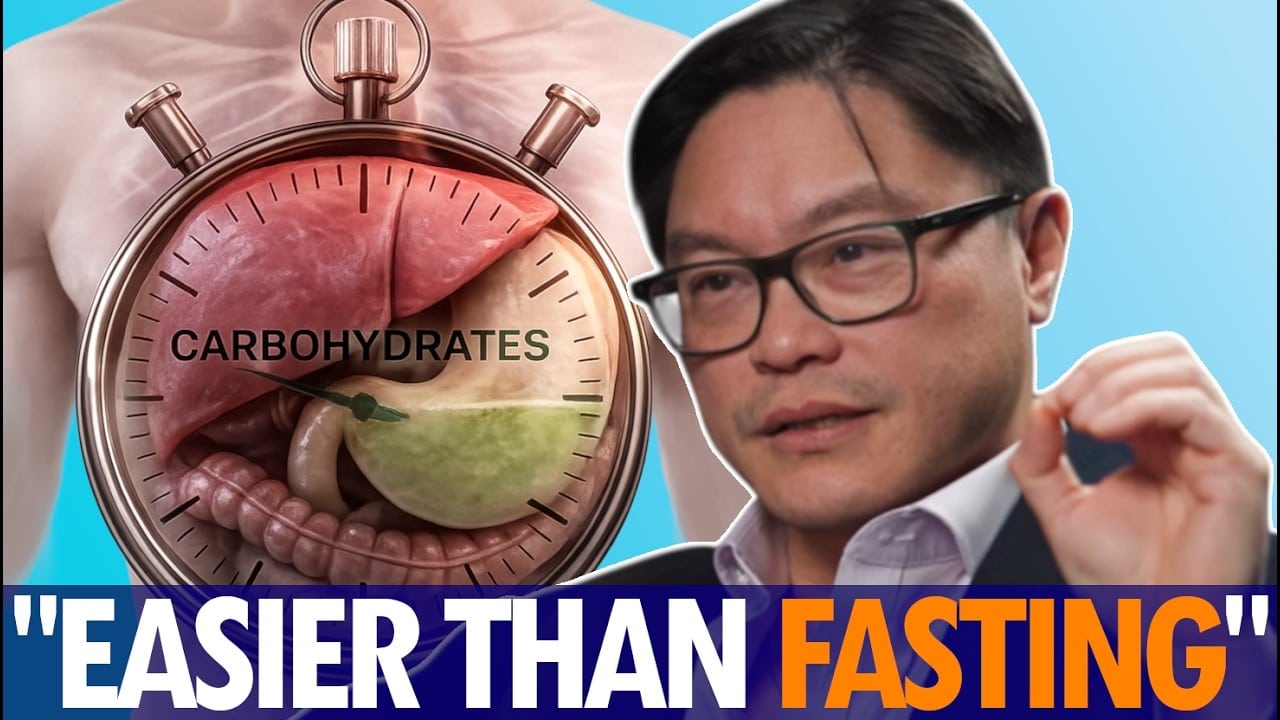
According to Dr. Fung, even the strictest diets and toughest workouts often fail because they ignore how the body actually regulates fat storage.
His solution? Simple, science-backed eating strategies that work with your metabolism instead of against it.
Jump to:
Why Calories In, Calories Out Misses the Point
Dr. Fung challenges the dominant calorie-counting model by emphasizing that weight regulation is fundamentally hormonal, not mathematical.
If you think about how we gain or lose weight, you only gain or lose weight if your body tells you to gain or lose weight. That’s just because everything is run by hormones in our body, right?
He points out that nothing in the body happens without hormonal signals. Growth, puberty, metabolism—all controlled by chemical messengers.

If you want something simple that actually works, this is one of the most effective tools I’ve used to build strength, conditioning, and endurance without needing a full gym setup.
- Full-body training with one weight using swings, squats, and presses
- Solid cast iron build that feels stable and lasts for years
- Comfortable grip that makes high-rep workouts easier to handle
Yet obesity medicine has largely ignored this reality when it comes to weight management.
Insulin: The Fat Storage Hormone
Among the various hormones involved in weight regulation, insulin stands out as one of the most critical.
Insulin is one of the major ones you have to consider. That is to say that insulin is a hormone that tells your body to gain more fat.
But insulin itself isn’t inherently bad. The real trouble begins with excessive carbohydrate consumption.
When carbs flood your system, blood sugar spikes, forcing massive insulin release. Over time, these repeated surges overwhelm cells, leading to insulin resistance and making weight control increasingly difficult.
Understanding Insulin Resistance
Insulin resistance occurs when cells stop responding effectively to insulin’s signals, even though both glucose and insulin levels remain high in the bloodstream.
One of the actions of insulin is to allow glucose to go from the blood into the cell so that the cell can use it for energy. Insulin resistance is a term that they use when they say, “Oh, well, there’s lots of glucose in the blood, and there’s lots of insulin, so why is it not going into the cell?”
This metabolic dysfunction creates a vicious cycle: more insulin is produced to compensate, which promotes even more fat storage.
If you want something simple that actually works, this is one of the most effective tools I’ve used to build strength, conditioning, and endurance without needing a full gym setup.
- Full-body training with one weight using swings, squats, and presses
- Solid cast iron build that feels stable and lasts for years
- Comfortable grip that makes high-rep workouts easier to handle
The Food Order Hack That Changes Everything
Dr. Fung highlights a surprisingly simple intervention that doesn’t require eliminating favorite foods or following extreme diets.
The strategy? Change the order in which you eat your food.
This method has been used by people with diabetes for years, and research confirms its powerful effects on blood sugar control.
The 2015 Study That Proved It Works
Researchers tested this approach on 11 people with type 2 diabetes who were taking metformin.
Participants ate identical meals on two separate occasions, but in different sequences.
- Carbs-first meal: Bread and orange juice first, followed 10 minutes later by chicken breast, salad with vinaigrette, and steamed broccoli
- Carbs-last meal: Protein, fats, and vegetables first, then carbohydrates after 10 minutes
The results were dramatic.
If you want something simple that actually works, this is one of the most effective tools I’ve used to build strength, conditioning, and endurance without needing a full gym setup.
- Full-body training with one weight using swings, squats, and presses
- Solid cast iron build that feels stable and lasts for years
- Comfortable grip that makes high-rep workouts easier to handle
The peak glucose was down a stunning 54%, and the insulin area under the curve decreased by 48%. That’s a huge difference considering that the two meals were exactly the same.
Why This Strategy Works
Digestion happens much slower than most realize. When you start with protein and healthy fats, they act like traffic controllers for your digestive system.
Carbohydrates eaten afterward get caught in this metabolic “traffic jam,” slowing their breakdown and absorption dramatically.
This prevents sudden blood sugar spikes and keeps insulin rises gradual and controlled.
There’s another significant benefit: eating protein and fat first naturally stimulates GLP-1 hormone release, the same hormone that signals fullness.
You feel satisfied longer, experience fewer cravings, and naturally eat less—all without feeling deprived or restricted.
If eating the exact same number of calories, eating the exact same foods, but simply switching the orders means that we can face 40% less glucose, that means we might be able to prevent the onset of type 2 diabetes, we might be able to take less medications, we may be able to lose weight.
Pairing Carbs With Organic Acids
Another effective strategy involves pairing carbohydrates with foods containing organic acids.
If you want something simple that actually works, this is one of the most effective tools I’ve used to build strength, conditioning, and endurance without needing a full gym setup.
- Full-body training with one weight using swings, squats, and presses
- Solid cast iron build that feels stable and lasts for years
- Comfortable grip that makes high-rep workouts easier to handle
This means eating carbs alongside:
- Kefir, yogurt, or butter (lactic acid)
- Olive oil (fatty acids)
- Vinegar (acetic acid)
These acids interact with enzymes in saliva and dramatically slow carbohydrate breakdown, resulting in steadier blood sugar levels and lower glycemic impact.
The Bread and Butter Study
Research comparing plain bread versus bread with butter or olive oil revealed striking differences.
If you take the bread, you can see that the glycemic index is 71. When you eat it with the butter or with olive oil, you can drop it to 50, which is almost a 1/3 drop in the glycemic index simply by taking some olive oil with the bread.
The traditional Mediterranean practice of dipping bread in olive oil and vinegar turns out to be metabolically brilliant.
The Post-Meal Walking Advantage
Dr. Fung recommends another deceptively simple habit: a 30-minute walk after each meal.
Walking helps regulate blood sugar, but more importantly, it switches your body into energy-burning mode instead of energy-storage mode.
If you want something simple that actually works, this is one of the most effective tools I’ve used to build strength, conditioning, and endurance without needing a full gym setup.
- Full-body training with one weight using swings, squats, and presses
- Solid cast iron build that feels stable and lasts for years
- Comfortable grip that makes high-rep workouts easier to handle
Think about typical post-meal behavior—sitting down, lying on the couch, turning on the TV. These activities signal the body to conserve and store energy.
Taking even a short walk flips that signal, encouraging fat burning instead.
After you’ve eaten a meal, there’s all this glucose. And when you walk, you’re going to encourage your muscles to start burning that glucose rather than storing it away.
Timing Matters
Research shows that walking immediately after eating produces the best results.
In one study, blood glucose dropped from 6.5 to about 5.6 when participants walked right after their meal—a significant reduction.
Walking before meals showed minimal effect, and waiting 30 minutes produced middling results. The longer you wait, the less impact the walk has on blood sugar management.
Sustainable Weight Loss Without Suffering
Dr. Fung’s methods won’t produce dramatic overnight results, but that’s precisely the point.
If you want something simple that actually works, this is one of the most effective tools I’ve used to build strength, conditioning, and endurance without needing a full gym setup.
- Full-body training with one weight using swings, squats, and presses
- Solid cast iron build that feels stable and lasts for years
- Comfortable grip that makes high-rep workouts easier to handle
This approach creates comfortable, sustainable weight loss that doesn’t feel like constant struggle or deprivation.
By applying these simple strategies, you naturally drift toward lower-carb eating patterns without forcing yourself through willpower alone.
As metabolism rebalances and insulin sensitivity improves, excess weight begins melting away almost effortlessly. You’re not fighting your body—you’re finally working with it.
The beauty of this approach lies in its simplicity: eat protein and fats first, pair carbs with healthy acids, and take short walks after meals. Small changes, significant metabolic impact.
For anyone who’s struggled with traditional dieting approaches, Dr. Fung’s hormone-focused strategies offer a refreshing alternative grounded in how the body actually functions, not outdated calorie equations.