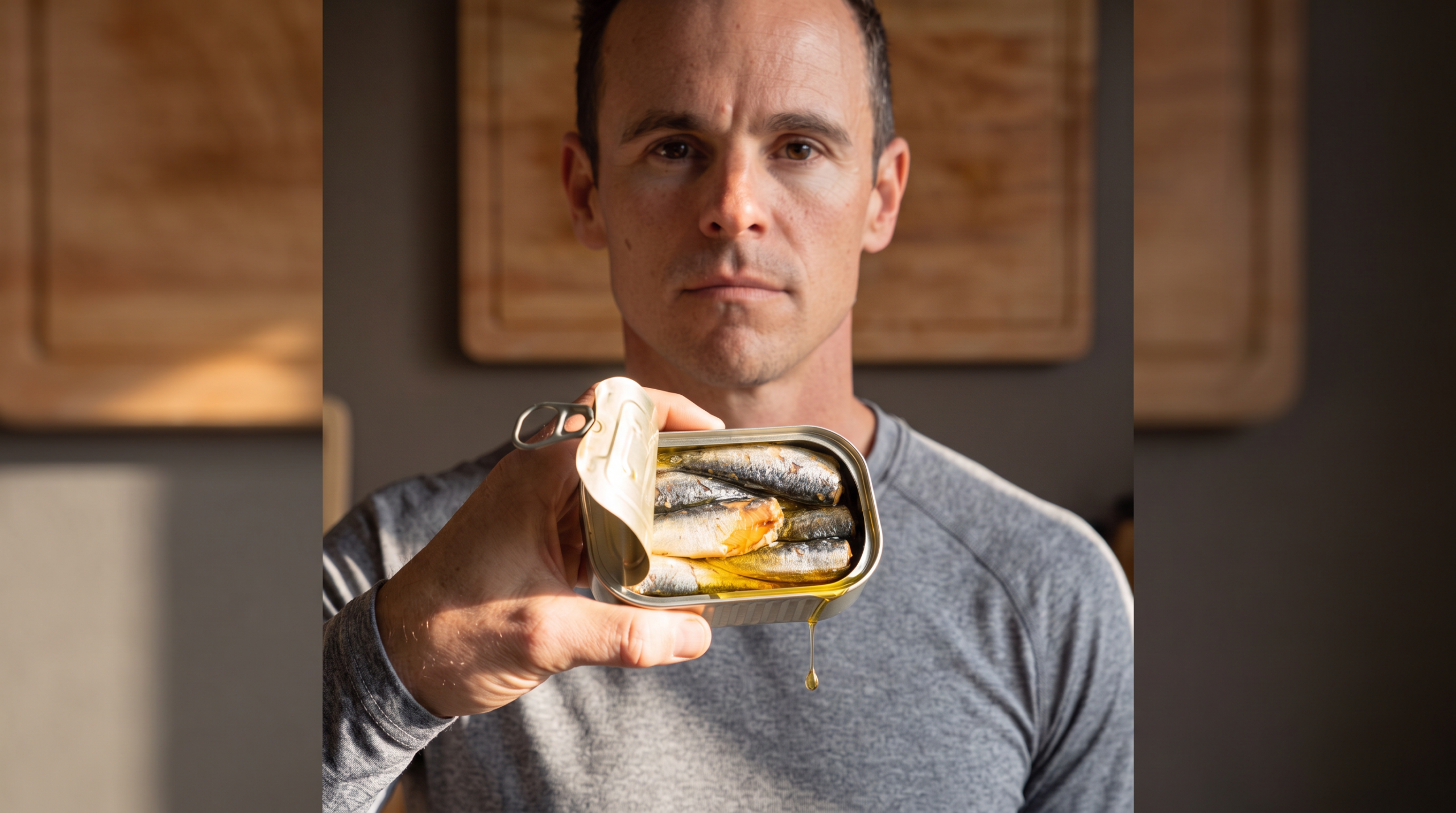
A humble tin of sardines is having a very big moment.
In a recent article, Verywell Health unpacked “sardinemaxxing,” the viral trend of cracking open tins for health optimization.
Unlike most food fads, this one comes with peer-reviewed clinical research.
One trial found that roughly two tins weekly dramatically shifted diabetes risk in older adults with prediabetes.
Could a budget pantry staple truly rival omega-3 pills? Let’s dig in.
Jump to:
The Prediabetes Trial Behind the Buzz
Díaz-Rizzolo and colleagues followed 152 adults over 65 with prediabetes for one year, publishing results in Clinical Nutrition in 2021. Participants in the sardine group ate about 200 grams weekly, equal to two standard 100-gram tins.
Numbers diverged sharply between groups:
- Sardine group: highest-risk category for developing type 2 diabetes dropped from 37% to 8%
- Control group: same category slipped only from 27% to 22%
That gap is striking for a dietary tweak this simple.
Before Stocking a Year’s Supply
Evidence here is more nuanced than viral posts imply. Díaz-Rizzolo’s trial was open-label, meaning participants knew their group, which can introduce behavioral bias and lower certainty.
Measured outcome was a risk category, not confirmed diagnoses. Larger, blinded replication studies would strengthen confidence considerably.
Sardines vs. Fish Oil: The Food Matrix Argument
Large randomized trials of fish oil, including ASCEND, VITAL and STRENGTH, delivered mixed cardiovascular results. Researchers began asking whether isolated omega-3 capsules miss something whole fish provides.
Enter the “food matrix effect.” Nutrients arriving together may interact in ways a single-ingredient capsule cannot replicate.
A 2023 review by Santos, May and Bueno in Frontiers in Nutrition formalized this case for sardines specifically. Authors concluded sardines may deliver broader cardiovascular benefits than fish oil alone.
Worth noting: that conclusion rests on nutrient composition and existing evidence, not a head-to-head showdown. “May outperform” remains a promising hypothesis rather than settled fact.
What One Tin Actually Delivers
Capsules offer EPA and DHA. Tinned sardines offer those plus a full supporting cast:
- EPA and DHA omega-3s: same fatty acids found in fish oil
- Taurine: an amino acid linked to cardiovascular benefits
- Complete protein: high quality, all essential amino acids
- Vitamin B12: key for energy and nerve function
- Calcium: roughly 25-40% of daily needs in one bone-in can, depending on brand
- Vitamin D3 and phosphorus: support absorption and bone structure
A Bone-Health Bonus
Observational research cited by Eating Well links eating sardines at least once weekly with a 33% lower hip fracture risk. Observational data cannot prove cause and effect, yet findings fit sardines’ calcium and vitamin D profile.
Safe, Cheap and Planet-Friendly
Sardines sit low on the marine food chain, so they accumulate far less mercury and PCBs than predators like tuna or swordfish. FDA rates them a “Best Choice” seafood, suitable for frequent eating, including by pregnant women and older adults.
Bonus points for sustainability. Fast-reproducing populations and widely available MSC-certified options make tins an environmentally smart protein, usually costing far less than other premium animal proteins.
Why This Matters Right Now
CDC estimates around 96 million U.S. adults, or 1 in 3, live with prediabetes. Most do not know it.
For anyone in that group, an inexpensive, shelf-stable food with emerging clinical support deserves attention. Emerging is the keyword, though.
How to Start Eating Sardines
- Aim for about two 100-gram tins weekly, mirroring amounts used in the trial
- Choose bone-in varieties to capture the calcium
- Look for MSC certification when sustainability matters to you
- Pile them on whole-grain toast, toss into salads, or stir through pasta with lemon
Managing prediabetes or heart risk? Treat sardines as a smart addition to medical guidance, never a replacement. Ask a doctor or registered dietitian how they fit your plan.
Sources
- Santos, May and Bueno (2023), Frontiers in Nutrition: https://doi.org/10.3389/fnut.2023.1107475
- Verywell Health, “What Is Sardinemaxxing?”: https://www.verywellhealth.com/what-is-sardinemaxxing-11949775