Dr. Jason Fung didn’t set out to revolutionize weight loss science.
As a kidney disease specialist, he stumbled into obesity research almost by accident—and what he discovered challenged everything mainstream medicine taught about losing weight.
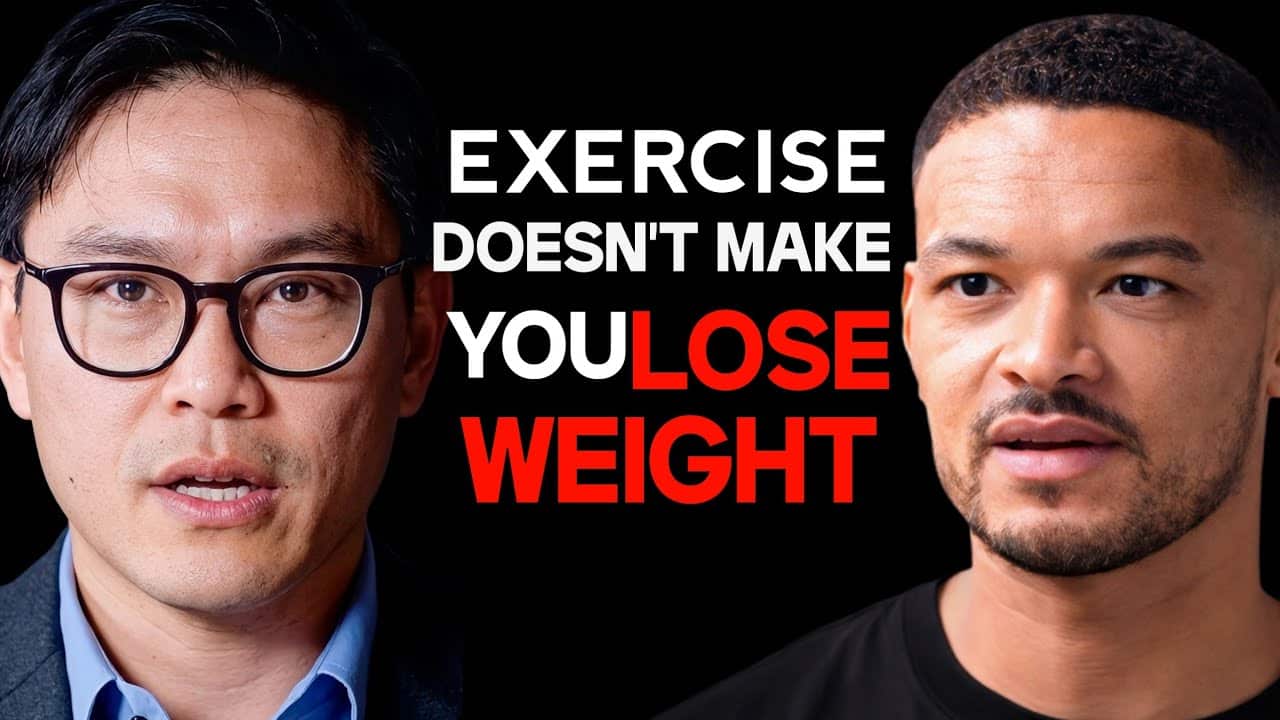
In a recent conversation, the author of The Obesity Code explained why the calorie-counting model has failed millions of people.
His alternative framework centers on hormones, not willpower—and it’s backed by decades of research that’s been largely ignored.
Jump to:
- The Calorie Myth That Won’t Die
- Why Alcoholism and Obesity Are More Alike Than You Think
- Two Breakfasts, Same Calories, Completely Different Outcomes
- Your Body Has a Weight Thermostat
- How Modern Food Processing Hijacks Satiety
- The Teacher Failed, Not the Students
- Genetics Load the Gun, Environment Pulls the Trigger
- The Metabolism Trap That Makes Dieting Backfire
- Why Intermittent Fasting Changes Everything
- Exercise Burns Fewer Calories Than You Think
- How We Accidentally Started Eating Six Times a Day
- Breakfast: The Most Skippable Meal
- Autophagy: The Body’s Cellular Cleanup System
- GLP-1 Drugs Prove the Hormone Hypothesis
- Fiber: The Forgotten Antidote
- Type 2 Diabetes: A Reversible Disease
- Why Doctors Resist This Message
- The Stigma Must End
- A Framework That Actually Works
The Calorie Myth That Won’t Die
Fung trained as a nephrologist, treating patients with kidney disease. Like most doctors, he believed weight loss was simple: calories in, calories out.
“It doesn’t work at all,” he said bluntly. “It doesn’t work for patients and it doesn’t work for doctors even.”

If you want something simple that actually works, this is one of the most effective tools I’ve used to build strength, conditioning, and endurance without needing a full gym setup.
- Full-body training with one weight using swings, squats, and presses
- Solid cast iron build that feels stable and lasts for years
- Comfortable grip that makes high-rep workouts easier to handle
The problem is not that people didn’t realize that they had to eat fewer calories or increase their calorie expenditure. The problem was why were they eating more calories than they could expend.
The body stores energy because hormones tell it to, Fung explains. Insulin, in particular, drives weight gain.
When doctors inject insulin into diabetic patients, those patients gain weight—regardless of willpower or discipline.
Why Alcoholism and Obesity Are More Alike Than You Think
Fung uses a striking analogy to expose the flaw in calorie-counting logic.
Alcoholism is alcohol in minus alcohol out. Can you simply cure alcoholism by telling an alcoholic, oh just drink less alcohol than you expend? Yes, you can say that and it’s absolutely true, but it’s not useful in any way.
Just as alcoholism requires addressing addiction and depression, obesity requires understanding why the body stores excess energy.
The answer lies in hormonal imbalance, particularly elevated insulin levels that lock calories away as body fat.
Two Breakfasts, Same Calories, Completely Different Outcomes
Not all calories trigger the same hormonal response, Fung emphasizes.
If you want something simple that actually works, this is one of the most effective tools I’ve used to build strength, conditioning, and endurance without needing a full gym setup.
- Full-body training with one weight using swings, squats, and presses
- Solid cast iron build that feels stable and lasts for years
- Comfortable grip that makes high-rep workouts easier to handle
Consider two breakfasts with identical calorie counts:
Breakfast A: Two slices of white bread with jam
Breakfast B: Scrambled eggs
You eat two slices of white bread and jam. All that energy goes straight into your body fat and you’ve left none of it for energy for your day. By 10:30, now you’re ravenous and you go get yourself a low-fat muffin.
Refined carbohydrates spike insulin, which instructs the body to store energy immediately as fat. That leaves nothing available for daily energy needs.
The egg breakfast, however, produces minimal insulin response. Energy remains available throughout the morning, preventing the mid-morning hunger crash.
Your Body Has a Weight Thermostat
Contrary to popular belief, humans aren’t destined to overeat when food is abundant.
If you want something simple that actually works, this is one of the most effective tools I’ve used to build strength, conditioning, and endurance without needing a full gym setup.
- Full-body training with one weight using swings, squats, and presses
- Solid cast iron build that feels stable and lasts for years
- Comfortable grip that makes high-rep workouts easier to handle
The body maintains a “set point weight” through powerful hormonal systems:
- Stomach stretch receptors signal fullness
- Peptide YY activates after protein consumption
- Cholecystokinin responds to dietary fat
- Leptin tells the brain to stop eating when fat stores are adequate
There are no obese antelope. There are no obese lions. Why? Because how much body fat you carry is actually very important.
If someone overeats one day, their body naturally compensates by reducing hunger the next day. The system self-regulates—unless something overrides it.
How Modern Food Processing Hijacks Satiety
Ultra-processed foods bypass the body’s natural protective mechanisms.
Removing fiber creates unnaturally rapid absorption. Glucose and insulin spike to extreme levels, triggering massive dopamine release in the brain.
How can you take a thousand calories in one of those giant sodas you get at the ball game and don’t feel full at all. Whereas if you took a steak that’s 1,000 calories, you’d be like, I’m pretty full.
The soda provides zero satiety despite enormous caloric content. It fails to activate any hunger-suppressing hormones.
Worse, it creates cravings for more food because the body recognizes it hasn’t received actual nutrition.
If you want something simple that actually works, this is one of the most effective tools I’ve used to build strength, conditioning, and endurance without needing a full gym setup.
- Full-body training with one weight using swings, squats, and presses
- Solid cast iron build that feels stable and lasts for years
- Comfortable grip that makes high-rep workouts easier to handle
The Teacher Failed, Not the Students
In the United States, roughly 70% of adults are overweight or obese. That percentage has climbed steadily since 1977.
Fung poses a thought experiment:
Say you have a hundred children, one of them fails. Well, that might be the child they didn’t study. What if 70 of them fail? Would you say it’s each and every one of them’s fault? Or would you say it’s more likely that it’s the teacher’s fault?
When the majority struggles, the problem isn’t individual willpower.
The problem is systemic—bad nutritional guidance, a toxic food environment, and an outdated calorie-obsessed framework that places blame on victims rather than addressing root causes.
Genetics Load the Gun, Environment Pulls the Trigger
Twin studies reveal that approximately 70% of obesity risk is genetic.
Twins separated at birth and raised in different households show remarkably similar weight patterns, even in vastly different food environments.
If you want something simple that actually works, this is one of the most effective tools I’ve used to build strength, conditioning, and endurance without needing a full gym setup.
- Full-body training with one weight using swings, squats, and presses
- Solid cast iron build that feels stable and lasts for years
- Comfortable grip that makes high-rep workouts easier to handle
But genetics alone can’t explain the obesity epidemic.
The genetics of the world population has not changed. So if we’re seeing more obesity now, it’s not due this recent change within the last 50 years to a change in genetics.
Genes determine individual predisposition—who gains weight easily versus who stays naturally lean. But environmental changes explain why entire populations have become heavier.
The shift toward ultra-processed foods, constant snacking, and high-carbohydrate diets created conditions that activate genetic vulnerabilities.
The Metabolism Trap That Makes Dieting Backfire
Standard calorie-restriction diets trigger a metabolic slowdown that dooms long-term success.
Here’s what happens:
Someone eating 2,000 calories daily cuts to 1,500 calories, expecting to burn 500 calories from body fat each day.
If you want something simple that actually works, this is one of the most effective tools I’ve used to build strength, conditioning, and endurance without needing a full gym setup.
- Full-body training with one weight using swings, squats, and presses
- Solid cast iron build that feels stable and lasts for years
- Comfortable grip that makes high-rep workouts easier to handle
But if they’re eating high-carb, low-fat foods multiple times per day, insulin remains constantly elevated. Elevated insulin prevents fat burning—it’s biochemically impossible to access stored body fat when insulin is high.
Your body can only burn 1500 calories. Your metabolic rate has just now gone down by 500 calories. And guess what? You’re not losing any body fat.
The person becomes cold, tired, and constantly hungry. Eventually they increase intake to 1,800 calories—still below their original 2,000.
But now they’re eating 1,800 while only burning 1,500. They gain weight despite eating less than before.
Why Intermittent Fasting Changes Everything
Fasting allows insulin levels to drop, which unlocks stored body fat for energy.
Consider the same calorie reduction—2,000 to 1,500—but with intermittent fasting incorporated:
Now 1500 calories are coming in, insulin levels are low. Your body wants to burn 2,000 calories. It says, “Well, insulin levels are low. Let me take 500 calories from my body fat.”
The equation balances: 1,500 from food plus 500 from body fat equals 2,000 burned. Metabolic rate stays stable.
If you want something simple that actually works, this is one of the most effective tools I’ve used to build strength, conditioning, and endurance without needing a full gym setup.
- Full-body training with one weight using swings, squats, and presses
- Solid cast iron build that feels stable and lasts for years
- Comfortable grip that makes high-rep workouts easier to handle
When the person returns to eating 2,000 calories, they don’t experience rebound weight gain because their metabolism never slowed down.
Fasting Increases Metabolic Rate
Contrary to fears about “starvation mode,” fasting actually increases metabolic rate.
Studies measuring metabolic rate during four-day fasts show participants burning approximately 2,200 calories on day four compared to 2,000 calories at baseline.
Think about in the wild, if you see a hungry wolf, is that wolf just sort of all like lethargic? No, he’s activated. He’s actually more dangerous than any other wolf.
During fasting, the body releases adrenaline, cortisol, and growth hormone—all of which increase energy and alertness. From an evolutionary perspective, this makes perfect sense.
Exercise Burns Fewer Calories Than You Think
While exercise offers numerous health benefits, its role in weight loss is surprisingly minimal.
A 30-minute treadmill session might burn 120 calories—the equivalent of two cookies.
If you want something simple that actually works, this is one of the most effective tools I’ve used to build strength, conditioning, and endurance without needing a full gym setup.
- Full-body training with one weight using swings, squats, and presses
- Solid cast iron build that feels stable and lasts for years
- Comfortable grip that makes high-rep workouts easier to handle
If you’re you’re taking in if your body is normally using 2,000 calories with your brain generating body heat, your heart, your lungs, your liver, they’re using 2,000 calories and now you go up to 2100 calories. Well, percentage-wise, it’s not a huge deal.
Additionally, exercise increases hunger. Studies show people consume more calories after exercising, often exceeding what they burned during the workout.
Fung estimates that 95% of weight loss comes from diet, with exercise playing a supporting but not primary role.
How We Accidentally Started Eating Six Times a Day
In 1977, Americans typically ate three meals daily with no snacks.
By 2003, the average person was eating five to six times per day.
This shift happened unintentionally as a consequence of high-carbohydrate, low-fat dietary guidelines.
You eat two slices of bread in the morning with jam. You have no satiety. Insulin spikes way up. Glucose spikes way up. But then it crashes because you get hungry again. Then you get hungry at 10:30.
The blood sugar rollercoaster created constant hunger, leading to mid-morning snacks, afternoon snacks, and bedtime snacks.
If you want something simple that actually works, this is one of the most effective tools I’ve used to build strength, conditioning, and endurance without needing a full gym setup.
- Full-body training with one weight using swings, squats, and presses
- Solid cast iron build that feels stable and lasts for years
- Comfortable grip that makes high-rep workouts easier to handle
What was once an occasional indulgence became institutionalized as healthy eating advice.
The Simple Logic of Eating vs. Fasting
If you eat, your insulin is going to go up. Your body is going to store calories. If you don’t eat or if you fast, your insulin is going to go down. You’re going to bring those calories back out of storage.
Extending the fasting window—the time between dinner and the next day’s first meal—allows insulin to remain low long enough for meaningful fat burning to occur.
Breakfast: The Most Skippable Meal
Despite decades of messaging that “breakfast is the most important meal,” research suggests otherwise.
Studies show breakfast eaters consume an average of 539 extra calories daily compared to those who skip it.
The word “breakfast” itself reveals ancient wisdom: it means to break the fast, acknowledging that a daily fasting period is natural and expected.
On average, people are the most hungry at 8:00 p.m. and the least hungry at 8:00 a.m.
Morning hunger is hormonally suppressed. Around 5:00 a.m., the body releases cortisol, growth hormone, and activates the sympathetic nervous system—preparing for the day by mobilizing stored energy.
If you want something simple that actually works, this is one of the most effective tools I’ve used to build strength, conditioning, and endurance without needing a full gym setup.
- Full-body training with one weight using swings, squats, and presses
- Solid cast iron build that feels stable and lasts for years
- Comfortable grip that makes high-rep workouts easier to handle
This natural rhythm makes morning the easiest time to extend fasting.
Autophagy: The Body’s Cellular Cleanup System
Fasting triggers autophagy, a cellular recycling process that won the Nobel Prize in Medicine in 2016.
During autophagy, cells break down old, damaged proteins and organelles—essentially cleaning house at the molecular level.
You’re getting rid of all the old stuff and then when you eat again, you’re actually got growth hormone to produce new proteins. So in essence, you’re getting rid of the old, you’re bringing in the new.
This process likely activates after 20-30 hours of fasting, particularly when protein intake is minimal.
Research suggests autophagy may protect against Alzheimer’s disease, cancer, mental health disorders, and general aging.
Ancient Wisdom, Modern Science
Virtually every major religion includes prescribed fasting periods—often 24 hours or longer, sometimes lasting weeks.
If you want something simple that actually works, this is one of the most effective tools I’ve used to build strength, conditioning, and endurance without needing a full gym setup.
- Full-body training with one weight using swings, squats, and presses
- Solid cast iron build that feels stable and lasts for years
- Comfortable grip that makes high-rep workouts easier to handle
Through trial and error or whatever they realize that hey periodically abstaining from food makes us stronger.
These traditions preceded modern science by thousands of years, yet align perfectly with current understanding of autophagy, insulin regulation, and metabolic health.
GLP-1 Drugs Prove the Hormone Hypothesis
Medications like Ozempic (semaglutide) have become cultural phenomena due to dramatic weight loss results.
These drugs mimic GLP-1, a naturally occurring hormone that signals satiety. They don’t burn calories—they simply reduce hunger.
What it’s telling you is that it’s not about controlling the calories because Ozempic doesn’t burn any calories. It’s about controlling your hunger.
When people feel less hungry, they naturally eat less. Insulin drops, fat burning increases, and weight falls.
This mechanism validates Fung’s core argument: weight gain is hormonal, not behavioral.
Fiber: The Forgotten Antidote
Food processing systematically removes fiber, which dramatically alters how the body responds to carbohydrates.
If you want something simple that actually works, this is one of the most effective tools I’ve used to build strength, conditioning, and endurance without needing a full gym setup.
- Full-body training with one weight using swings, squats, and presses
- Solid cast iron build that feels stable and lasts for years
- Comfortable grip that makes high-rep workouts easier to handle
Fiber slows digestion and glucose absorption, preventing the massive insulin spikes that drive fat storage.
If you don’t have any fiber, you get this massive sort of unnatural spike and your body says, “Oh, that’s great. It tastes great. I really love it.” And you get people who are sort of addicted to it.
The rapid glucose spike releases dopamine, creating pleasure and cravings. With fiber intact, absorption is gradual and dopamine response is muted.
High-fiber foods include beans, whole grains, vegetables, and unprocessed plant foods.
Type 2 Diabetes: A Reversible Disease
Perhaps Fung’s most radical claim—backed by clinical data—is that type 2 diabetes can be reversed through dietary intervention.
Dr. David Unwin’s research in the UK showed that 50% of type 2 diabetics achieved drug-free remission through carbohydrate reduction.
You can fix just by changing their diet, either cutting down their carbohydrates or using intermittent fasting. And it’s free and anybody can do it.
Type 2 diabetes is fundamentally a disease of too much stored sugar. Reducing sugar intake and allowing fasting periods to burn stored glucose addresses the root cause rather than merely managing symptoms with medication.
If you want something simple that actually works, this is one of the most effective tools I’ve used to build strength, conditioning, and endurance without needing a full gym setup.
- Full-body training with one weight using swings, squats, and presses
- Solid cast iron build that feels stable and lasts for years
- Comfortable grip that makes high-rep workouts easier to handle
Step One: Put Less Sugar In
Low-carbohydrate diets have the strongest evidence base of any dietary intervention for type 2 diabetes, according to the American Diabetes Association.
Step Two: Burn the Sugar Off
Intermittent fasting depletes glucose stores by extending periods when insulin remains low and the body accesses stored energy.
Why Doctors Resist This Message
Despite compelling evidence, mainstream medicine has been slow to adopt Fung’s approach.
People are very reluctant to change. They’ve invested so much in this calories in calories out model. They’ve built their entire careers on saying that it’s your fault that you’re fat.
The calorie-focused framework dominates medical education. Most doctors receive zero training on intermittent fasting or hormonal approaches to weight management.
Additionally, acknowledging that obesity is hormonally driven undermines decades of messaging that placed moral blame on individuals.
Financial incentives also play a role. Pharmaceutical companies profit from drugs that manage symptoms. Weight-loss surgery generates substantial revenue. Intermittent fasting generates none.
If you want something simple that actually works, this is one of the most effective tools I’ve used to build strength, conditioning, and endurance without needing a full gym setup.
- Full-body training with one weight using swings, squats, and presses
- Solid cast iron build that feels stable and lasts for years
- Comfortable grip that makes high-rep workouts easier to handle
The Stigma Must End
Viewing obesity through a calorie lens perpetuates harmful stigma.
Do you think this person who’s trying to lose 50 pounds needs you to tell them they need to lose 50 pounds? Absolutely not. That’s only going to be the 10,000th time they’ve heard it.
Understanding obesity as a hormonal disorder removes blame from individuals and redirects attention to systemic issues: ultra-processed foods, misleading nutritional guidance, and toxic food environments.
This shift enables compassion rather than judgment—and compassion itself may aid weight loss by reducing stress and cortisol.
A Framework That Actually Works
Fung’s approach can be distilled into actionable principles:
- Reduce refined carbohydrates to lower insulin spikes
- Eliminate constant snacking to allow fasting periods
- Prioritize whole, unprocessed foods with natural fiber
- Extend overnight fasting to 14-16+ hours
- Consider longer fasts (24+ hours) periodically
- Focus on protein and fat for satiety without insulin spikes
These strategies address why people overeat rather than simply demanding they eat less.
They work with the body’s hormonal systems rather than fighting against them through deprivation and willpower.
If you want something simple that actually works, this is one of the most effective tools I’ve used to build strength, conditioning, and endurance without needing a full gym setup.
- Full-body training with one weight using swings, squats, and presses
- Solid cast iron build that feels stable and lasts for years
- Comfortable grip that makes high-rep workouts easier to handle
It is correct, but it’s not getting to that root deeper cause that we need to in order to help people.
Dr. Jason Fung’s work represents a fundamental reframing of obesity—from moral failure to metabolic disorder, from personal weakness to systemic problem, from counting calories to understanding hormones.
His message is simultaneously revolutionary and ancient: the human body knows how to regulate itself when given the right nutritional environment and adequate fasting periods.
The conversation around weight loss desperately needs this depth—not just for those struggling with obesity, but for the reversal of type 2 diabetes, the reduction of chronic disease, and the restoration of metabolic health across entire populations.