VO2 max is widely regarded as one of the most important metrics for cardiovascular fitness—and even your longevity. But do you really need that expensive lab test with tubes and oxygen masks to get a reliable estimate?
Thanks to wearables like Garmin, WHOOP, and Polar, you can get a VO2 max number straight from your wrist. But how accurate are those numbers? Can these tech-powered guesstimates actually match up to gold-standard lab measurements?
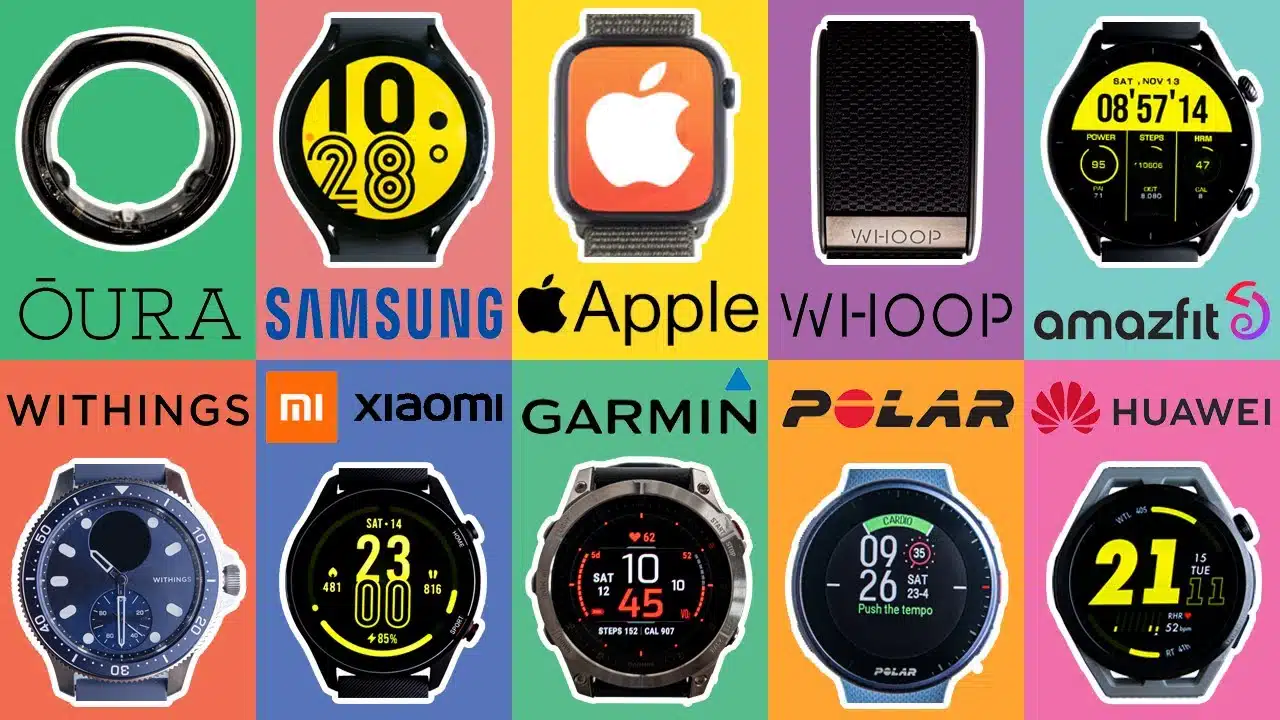
To find out, post-doctoral scientist Rob Ter Horst conducted an analysis using real-world data from 16 trained athletes who had both wearable VO2 max scores and professional lab measurements. Here’s what he found—and what it means for how you use your wearable’s fitness estimations.
Jump to:
Wearables Can Estimate VO2 Max, But Accuracy Varies
In Rob’s analysis, each of the 16 athletes used a combination of WHOOP, Garmin, and/or Polar over time while also undergoing lab testing. This allowed a clear comparison between real VO2 max values and device estimates.
The verdict? Each brand produces a reasonable correlation with lab tests, but not without some bias and individual variance.
WHOOP: Positive Correlation, Tendency to Overestimate
- Correlation coefficient (R): Statistically significant and relatively strong
- P-value: Below 0.05, confirming a valid relationship
Visually, the data points between WHOOP’s VO2 max estimates and lab results show a decent correspondence. The higher your real VO2 max, the higher WHOOP tends to rank it.
However, several data points show overestimations. For instance, a male athlete with a lab-measured VO2 max of 54 was given a 64 by WHOOP—a full 10-point inflation.
“The value WHOOP gives can indicate whether you have good fitness, but it’s not precise,” Rob said. “It’s rare that a device gives you a low number when you’re actually very fit.”
Garmin: Small Sample but Strong Correlation
- Correlation coefficient: Around 0.85 – very solid
- Sample size: Just 7 participants
Garmin’s estimates mostly followed real lab results, albeit with some underestimation. One notable case showed a lab VO2 max of 60-61, while Garmin estimated it at 56.
Despite the sample size, the overall trend was consistent and promising. However, Rob emphasized more testing is needed before concluding Garmin is more accurate than WHOOP.
Polar: Lower Correlation, More Questionable Accuracy
- Correlation coefficient: About 0.5
- Sample size: Very limited
Out of all three brands, Polar’s VO2 max estimates appeared least reliable. The data showed a distinct separation in values for men and women, but did not reflect individual variances well.
For example, a woman with a true VO2 max of 60 was estimated well below 55, and a man with a real score of 52 got a much higher estimation. “The spread we see in reference data is just not captured in Polar’s estimates,” said Rob.
What Does This Mean for You?
So what can we conclude from this data? Wearable VO2 max estimates can be useful, but they have key limitations:
1. Good for Tracking Trends, Not Precise Scores
These estimates are most helpful when tracking your progress over time. If your VO2 max rises over months of training, wearables likely reflect real improvement—especially when combined with other metrics like resting heart rate.
However, comparing your number against someone else’s can be misleading. One device might inflate your score while another under-reports it, even if both users are equally fit.
2. Accurate Lab Testing Still Reigns Supreme
If precision is what you’re after, there’s no replacement for a clinical VO2 max test. “These estimates can’t fully replicate a lab test,” Rob emphasized. “They’re directionally useful, but not foolproof.”
3. Each Brand Has Its Biases
- WHOOP: Solid correlation but tends to overestimate
- Garmin: Slight underestimation, strong ecosystem for athletes
- Polar: Weaker accuracy, possibly better with use of specific test protocols
It’s also important to note that some models require specific activities or protocols to calibrate the VO2 max accurately. Rob’s study didn’t apply these protocols, which may have impacted results—especially for Polar.
Tips for Using VO2 Max Estimates Effectively
You don’t need to abandon wearables entirely for VO2 max tracking. Here are some best practices to get the most from your device:
- Stay consistent: Use the same wearable and perform similar types of workouts.
- Track trends: Focus on the direction of change, not the exact value.
- Pair with other metrics: Combine VO2 max with resting heart rate and training load for a fuller fitness picture.
- Don’t compare scores: Avoid one-to-one comparisons between friends using different devices.
Which Wearable Should You Choose?
Rob also shared his personal take on the best devices for different goals:
- Best overall: WHOOP – great all-round tracking experience, though it’s pricey.
- Best for sports: Garmin – robust ecosystem and connectivity with top-tier performance tools.
- Best for sleep: Oura Ring – exceptional sleep tracking, but limited activity tracking.
If sleep environment is a limiting factor in your recovery, Rob also recommends the Eight Sleep Pod for active temperature control throughout the night, although it’s a higher-end solution.
Final Thoughts: Trust, But Lightly
Wearables offer useful insights into VO2 max and cardiovascular health—but they come with margins for error. Use them to guide progress, not to judge your exact fitness level.
“It’s okay to have a changing VO2 max score,” said Rob. “Just don’t tie your self-worth to that number.”
If you’re serious about peak precision, go get a lab test. But if you’re looking for a consistent way to stay on track, wearables like WHOOP and Garmin can be a motivating part of your toolkit.