Knee arthritis doesn’t always require surgery to find relief.
A comprehensive approach targeting weak stabilizer muscles and restoring range of motion can dramatically improve knee function and reduce pain.
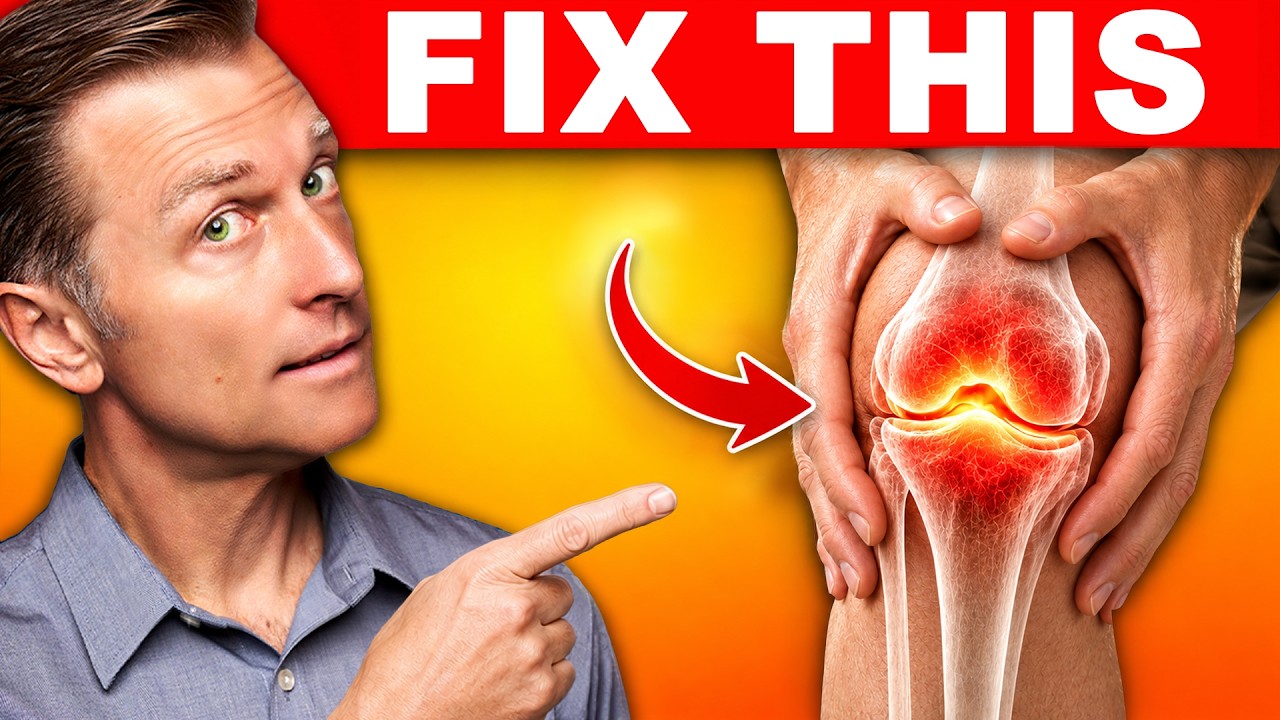
In a recent video, Dr. Berg shared his best knee exercises specifically designed for arthritis sufferers who want to avoid surgical intervention.
These specialized movements focus on strengthening atrophied muscles while releasing tension in overworked areas.
Jump to:
- Understanding Knee Muscle Imbalances in Arthritis
- The Wall Squat Hold: Strengthening Your Weakest Link
- Internal and External Rotation: Breaking Up Scar Tissue
- Band-Resisted Knee Extension
- Knee Flexion: Restoring Full Range of Motion
- Expected Results and Recovery Protocol
- Comprehensive Arthritis Management
Understanding Knee Muscle Imbalances in Arthritis
When arthritis develops in knees, certain muscles begin compensating for weaker ones. This creates an imbalance where some muscles work overtime while others atrophy.
The weakened muscles lose their ability to properly stabilize joints. This instability accelerates wear and tear, creating a vicious cycle of deterioration.
Targeting these neglected stabilizer muscles is the foundation of non-surgical knee arthritis treatment.
The Wall Squat Hold: Strengthening Your Weakest Link
Dr. Berg’s first exercise specifically targets the most commonly weakened knee stabilizer muscle.
Here’s how to perform this movement:
- Position yourself with your back against a wall
- Squat down to a comfortable depth
- Extend one leg outward while keeping the other bent
- Hold this position for 10 seconds (or 5 seconds if that’s too challenging)
- Switch legs and repeat
The supporting leg bears all weight during this exercise. You’re isolating and strengthening that critical stabilizer muscle that’s been hiding from work.
You’re putting all your weight on that one knee, and you’re really targeting that atrophied or weak muscle on the side that is stabilizing you.
Expect significant soreness the following day or even two days later. This delayed soreness indicates you’ve successfully activated dormant muscle fibers.
Because of this intensity, perform this exercise only once weekly to allow proper recovery.
Internal and External Rotation: Breaking Up Scar Tissue
Arthritis often creates scar tissue within knee ligaments. Internal and external rotation exercises help restore mobility while strengthening surrounding structures.
The Seated Rotation Technique
This isometric approach brings joints to their end range of motion, then applies resistance without actual movement.
Start by sitting with your leg extended. Rotate your foot internally as far as comfortable, reaching the end range of motion.
I don’t want you to actually move your foot in the range of motion. I want you to keep it at the end of the range of internal rotation as you push against your hand.
Push against your hand for 10 seconds at approximately 50% force. Then reverse direction, pushing your foot deeper into internal rotation for another 10 seconds.
If you experience pain, reduce force immediately. Discomfort should be mild stretch sensation, never sharp pain.
The Kneeling External Rotation Exercise
This variation targets external rotation patterns specifically.
Begin in a kneeling position. Rotate your foot outward as far as possible, creating external rotation at knee level.
Contract muscles as if bringing toes back to center, but keep your foot stationary against the ground. Hold for 10 seconds.
After brief rest, contract into the stretch, pushing for more external rotation. You’ll likely find increased range of motion after releasing muscle guarding patterns.
Perform three repetitions on each knee at 50% intensity.
Band-Resisted Knee Extension
Another powerful stabilizer exercise uses resistance bands to activate neglected knee muscles.
Attach a resistance band to a stable object near ground level. Loop the other end behind your knee.
Pull back, extending your knee fully while maintaining tension. Hold this position for 10 seconds, engaging stabilizing muscles throughout.
Rest briefly, then repeat for another 10-second hold. Perform this sequence on both knees individually.
You’re activating certain muscles that are stabilizers for the knee and you just hold it for 10 seconds.
This exercise specifically targets muscles that have been dormant due to compensation patterns developed from arthritis.
Knee Flexion: Restoring Full Range of Motion
Full knee flexion often becomes limited with arthritis. This exercise progressively restores that lost mobility.
Bring your foot toward your buttocks, achieving maximum flexion. First, contract as if straightening your leg, but prevent actual movement. Hold 10 seconds.
After resting, reverse the contraction direction. Pull your heel even closer to your buttocks, contracting into the stretch. Hold another 10 seconds.
Complete three full cycles, then switch knees.
Take the full range of motion, contract away from the butt, and then contract towards the butt, and do that three separate times.
This technique releases protective muscle guarding while simultaneously strengthening tissues at end ranges.
Expected Results and Recovery Protocol
Consistent application of these exercises produces measurable improvements in knee function.
Most people experience:
- Dramatically increased range of motion
- Enhanced stabilization during walking
- Improved symmetry between left and right sides
- Reduced pain levels
- Decreased protective muscle guarding
Soreness following these exercises is normal and expected. You’re activating muscles and tissues that haven’t worked properly in potentially years.
The key to success is patience with recovery. Perform this complete routine only once weekly, allowing connective tissues, ligaments, and tendons full time to heal and strengthen.
Rushing recovery by exercising more frequently can actually impede progress. Connective tissue requires longer healing periods than muscle tissue.
Comprehensive Arthritis Management
While these exercises provide powerful mechanical benefits, combining them with proper nutrition amplifies results.
Anti-inflammatory dietary approaches support joint healing from the inside out. Reducing inflammatory foods while increasing nutrient-dense options provides raw materials for tissue repair.
Exercise addresses mechanical dysfunction and muscle imbalances. Nutrition addresses underlying inflammation and provides healing compounds.
Together, these approaches create a comprehensive non-surgical strategy for managing knee arthritis effectively.
Consistency matters more than intensity with these exercises. Perform them properly once weekly, and progressive improvements accumulate over months, potentially eliminating the need for surgical intervention entirely.