A bacterium found in kimchi may offer an unexpected solution to one of modern health’s most insidious problems: microplastic contamination.
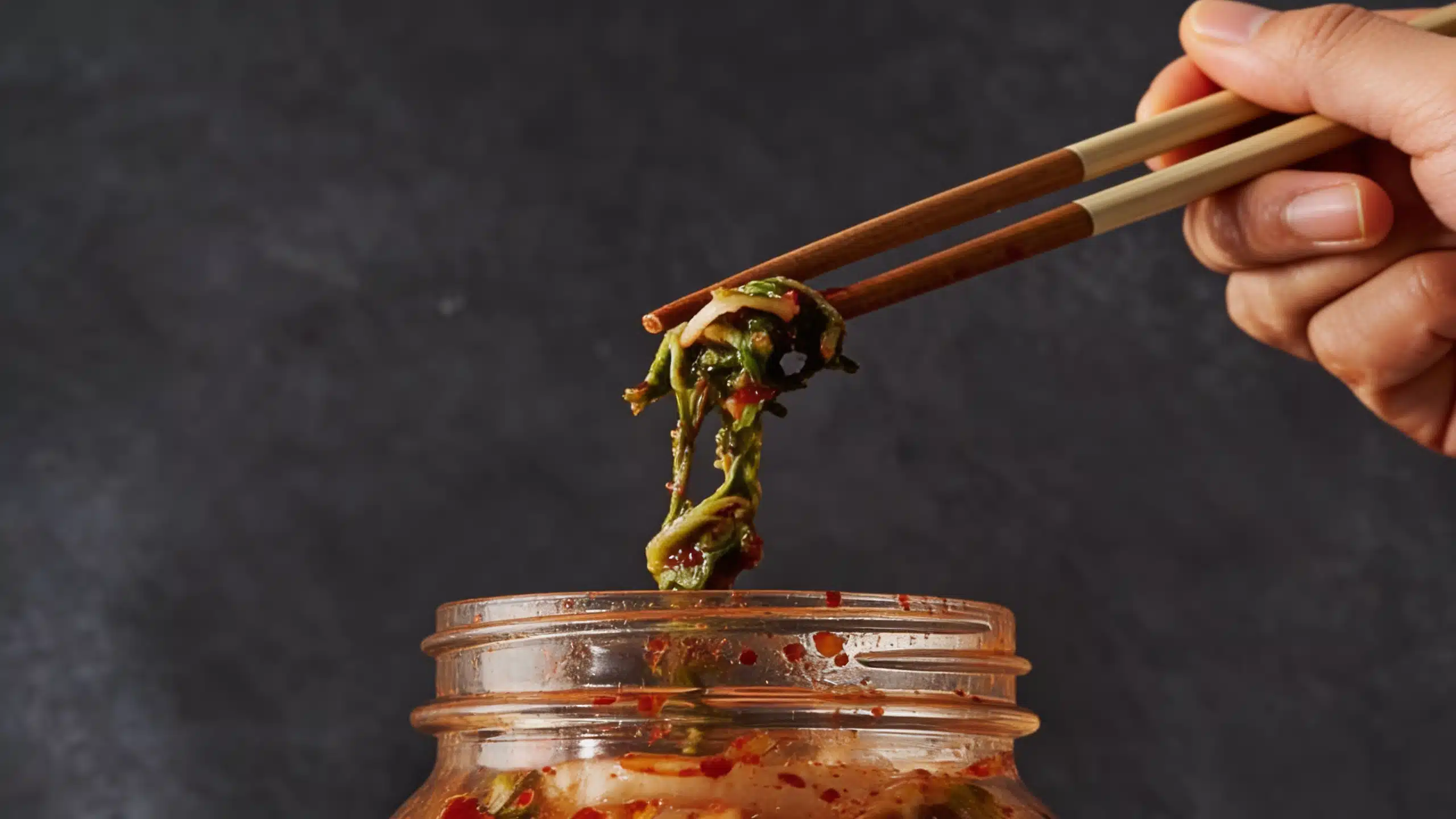
Scientists at South Korea’s World Institute of Kimchi have discovered that a specific strain of bacteria naturally present in the fermented cabbage dish can bind to nanoplastic particles and help flush them from the body.
The research, published in Bioresource Technology in 2026, demonstrates that beneficial microorganisms from traditional foods might serve as natural detoxification agents against plastic pollution.
This breakthrough comes as microplastics have been detected in human hearts, brains, kidneys, and digestive systems—making effective removal methods increasingly urgent.
Jump to:
- The Bacterium That Grabs Plastic
- Mouse Studies Confirm Real-World Potential
- Why Microplastic Removal Matters
- Traditional Foods, Modern Solutions
- Not All Kimchi Contains Active Bacteria
- From Laboratory to Human Application
- Broader Implications for Probiotic Therapy
- Prevention Remains Primary
- What Happens Next
The Bacterium That Grabs Plastic
Leuconostoc mesenteroides CBA3656 is a lactic acid bacterium that occurs naturally during kimchi fermentation. Researchers discovered it possesses remarkable nanoplastic-binding capabilities through its cell wall structure.
In controlled laboratory conditions, the bacterium demonstrated an impressive 87% binding rate to nanoplastic particles. Even more remarkably, under simulated human gut conditions—which include digestive acids and competing bacteria—it maintained a 57% binding efficiency.

If you want something simple that actually works, this is one of the most effective tools I’ve used to build strength, conditioning, and endurance without needing a full gym setup.
- Full-body training with one weight using swings, squats, and presses
- Solid cast iron build that feels stable and lasts for years
- Comfortable grip that makes high-rep workouts easier to handle
The mechanism works through biosorption. The bacterium physically attaches to plastic particles as they pass through the digestive system, preventing absorption into tissues and facilitating excretion.
Mouse Studies Confirm Real-World Potential
Laboratory petri dish results are one thing. Animal studies provide more convincing evidence.
Researchers administered the kimchi-derived bacterium to mice and tracked nanoplastic excretion rates. Treated mice expelled twice as many microplastic particles in their stool compared to untreated control groups.
This doubling of excretion rates suggests the bacterium doesn’t just bind to plastics in isolated conditions—it functions effectively within living digestive systems.
Why Microplastic Removal Matters
Tiny plastic fragments have infiltrated every corner of our environment. These particles form from breakdown of larger plastic pollution and accumulate throughout food chains.
Recent detection of microplastics in critical human organs has elevated this from environmental concern to immediate health crisis. These particles can potentially:
If you want something simple that actually works, this is one of the most effective tools I’ve used to build strength, conditioning, and endurance without needing a full gym setup.
- Full-body training with one weight using swings, squats, and presses
- Solid cast iron build that feels stable and lasts for years
- Comfortable grip that makes high-rep workouts easier to handle
- Damage cellular structures through physical presence
- Disrupt metabolic processes by interfering with normal biochemistry
- Cause DNA alterations through chemical leaching
- Trigger inflammatory responses as foreign bodies
- Accumulate over time without natural elimination pathways
Current approaches focus primarily on reducing plastic use and exposure. This research introduces a novel remediation strategy: actively removing plastics already present in the body.
Traditional Foods, Modern Solutions
Kimchi has been a Korean dietary staple for centuries, valued for its probiotic benefits and distinctive flavor. Nobody suspected it might hold answers to 21st-century pollution problems.
The discovery highlights how traditional fermented foods contain complex microbial ecosystems with properties scientists are only beginning to understand. Fermentation creates billions of bacteria, each strain possessing unique capabilities.
Leuconostoc mesenteroides is just one of many bacterial species present in properly fermented kimchi. Other species contribute different health benefits, from immune modulation to vitamin synthesis.
Not All Kimchi Contains Active Bacteria
Before stocking up on kimchi, consumers should understand that processing matters enormously.
Pasteurized kimchi won’t help. Heat treatment kills the beneficial bacteria responsible for plastic binding. Many commercially produced varieties undergo pasteurization for shelf stability.
If you want something simple that actually works, this is one of the most effective tools I’ve used to build strength, conditioning, and endurance without needing a full gym setup.
- Full-body training with one weight using swings, squats, and presses
- Solid cast iron build that feels stable and lasts for years
- Comfortable grip that makes high-rep workouts easier to handle
Effective kimchi must be:
- Refrigerated continuously to keep bacteria alive
- Unpasteurized to maintain active cultures
- Traditionally fermented without vinegar shortcuts
- Labeled with live cultures similar to probiotic yogurt
Check labels carefully. Products marketed as “kimchi-flavored” often contain vinegar instead of genuine fermentation, providing taste without probiotic benefits.
From Laboratory to Human Application
Mouse studies and laboratory tests demonstrate proof of concept. Human clinical trials represent the crucial next step.
Researchers must determine optimal dosing, identify which human populations benefit most, and assess long-term safety. Questions remain about whether eating kimchi provides sufficient bacterial quantities or whether concentrated probiotic supplements might prove necessary.
The bacterium’s performance in actual human digestive systems—with their unique pH levels, transit times, and existing microbiomes—requires validation through rigorous clinical research.
Broader Implications for Probiotic Therapy
This discovery extends beyond microplastics. It suggests beneficial bacteria might bind and eliminate other environmental toxins circulating through our bodies.
If you want something simple that actually works, this is one of the most effective tools I’ve used to build strength, conditioning, and endurance without needing a full gym setup.
- Full-body training with one weight using swings, squats, and presses
- Solid cast iron build that feels stable and lasts for years
- Comfortable grip that makes high-rep workouts easier to handle
Scientists are exploring whether similar biosorption mechanisms could address heavy metal contamination, pesticide residues, or industrial chemical exposure. Traditional fermented foods from various cultures may harbor additional strains with therapeutic potential.
The research opens new avenues for developing targeted probiotic therapies designed specifically for environmental toxin removal rather than just general digestive health.
Prevention Remains Primary
While biological remediation shows promise, reducing plastic exposure remains essential. No detoxification method can keep pace with continued accumulation from ongoing exposure.
Practical exposure reduction strategies include:
- Minimizing plastic food packaging and storage containers
- Filtering drinking water to remove plastic particles
- Avoiding microwaving plastic containers which releases more particles
- Choosing natural fiber clothing over synthetic materials that shed microfibers
Combining prevention with active removal creates a comprehensive approach to managing microplastic burden.
What Happens Next
The World Institute of Kimchi’s findings represent early-stage research requiring extensive validation. Scientists must conduct human trials to confirm effectiveness and establish whether dietary kimchi consumption provides therapeutic benefits or if pharmaceutical-grade probiotic formulations become necessary.
If you want something simple that actually works, this is one of the most effective tools I’ve used to build strength, conditioning, and endurance without needing a full gym setup.
- Full-body training with one weight using swings, squats, and presses
- Solid cast iron build that feels stable and lasts for years
- Comfortable grip that makes high-rep workouts easier to handle
Regulatory pathways for approving probiotic treatments for environmental toxin removal remain unclear. This novel application falls between traditional food supplements and medical therapies.
Meanwhile, consuming traditionally fermented foods like unpasteurized kimchi offers established probiotic benefits for digestive health. If future research confirms microplastic removal capabilities in humans, that would add another compelling reason to include fermented foods in regular diets.
The discovery that a simple bacterium from fermented cabbage might help address one of modern society’s most pervasive pollution problems demonstrates how traditional foods continue revealing unexpected health applications.