Dr. Mitch Rice describes one of his most frustrating clinical scenarios with striking clarity.
Patients walk in after months of dietary discipline—no red meat, no eggs, low-fat everything—only to find their cholesterol numbers haven’t budged.
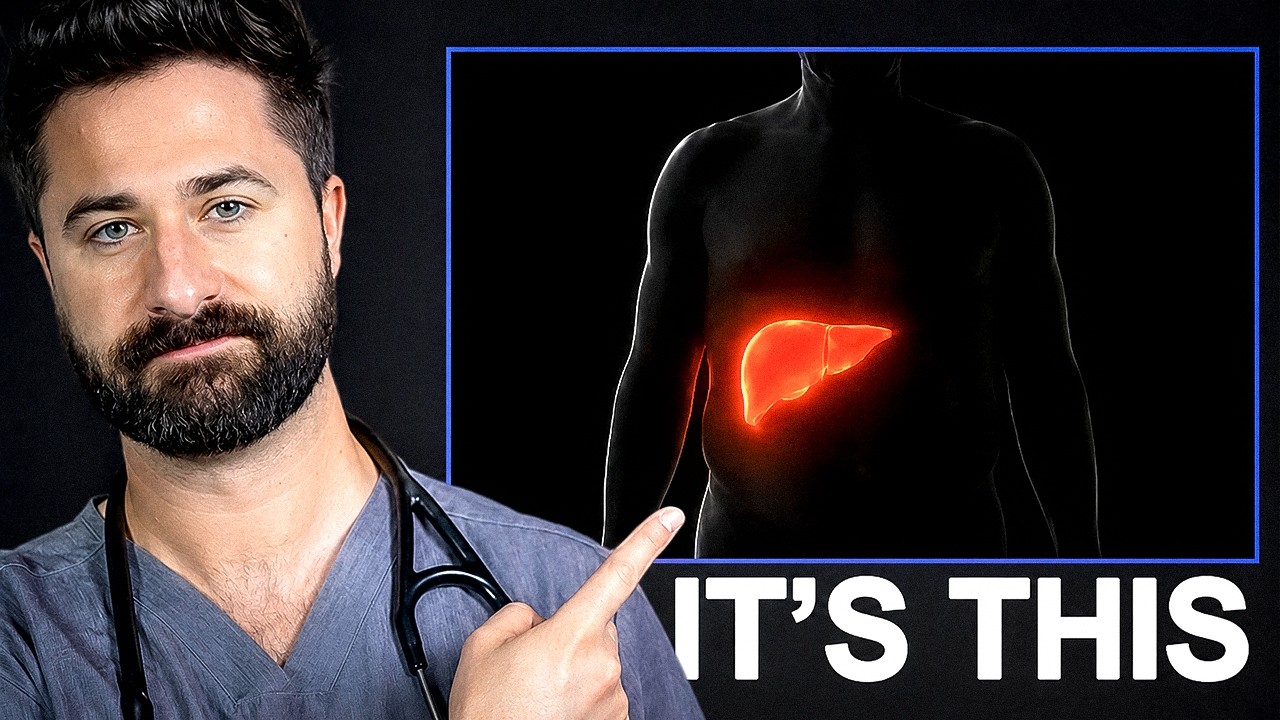
They ask what they’re doing wrong, and his answer surprises them: probably nothing.
In a recent discussion, the board-certified primary care physician revealed that the real culprit behind stubborn high cholesterol isn’t what most people eat—it’s what’s happening inside their liver.
Jump to:
Why Total Cholesterol Numbers Miss the Mark
Most people fixate on total cholesterol or LDL when reviewing lab results. These are big, visible numbers that seem important.
But Dr. Rice explains that total cholesterol isn’t actually measured—it’s calculated. It’s a sum: LDL plus HDL plus triglycerides divided by five.

If you want something simple that actually works, this is one of the most effective tools I’ve used to build strength, conditioning, and endurance without needing a full gym setup.
- Full-body training with one weight using swings, squats, and presses
- Solid cast iron build that feels stable and lasts for years
- Comfortable grip that makes high-rep workouts easier to handle
Two people can have identical total cholesterol yet face completely different cardiovascular risks.
Think of your bloodstream like a highway. The LDL particles are delivery trucks. They carry cholesterol from the liver to your tissues. HDL particles are the cleanup trucks.
What matters isn’t the total number of vehicles on that highway—it’s how many delivery trucks are clogging traffic, whether cleanup systems work efficiently, and how well flow is controlled.
Someone with total cholesterol of 210 might have high HDL, low triglycerides, and healthy LDL particle distribution. Another person with the same total could be dominated by high LDL and low HDL.
Same number. Totally different risk profile.
The Markers That Actually Matter
Dr. Rice recommends focusing on these instead:
- LDL and ideally apoB (more on this shortly)
- Triglycerides
- HDL
- Triglyceride-to-HDL ratio
- Metabolic context: Does this person have insulin resistance, inflammation, poor metabolic health—or are they insulin sensitive with minimal dysfunction?
The Real Driver: Insulin Resistance in Your Liver
Here’s where conventional cholesterol advice breaks down.
If you want something simple that actually works, this is one of the most effective tools I’ve used to build strength, conditioning, and endurance without needing a full gym setup.
- Full-body training with one weight using swings, squats, and presses
- Solid cast iron build that feels stable and lasts for years
- Comfortable grip that makes high-rep workouts easier to handle
For most people with elevated cholesterol, the primary driver is not saturated fat—it’s insulin resistance in the liver.
I will repeat that again. The primary driver for elevated cholesterol is not saturated fat, it’s insulin resistance in their liver.
Understanding this mechanism changes everything.
Your liver controls cholesterol production, export into bloodstream, and reabsorption. When insulin resistance develops—typically from diets high in refined carbs and sugar—three things happen simultaneously:
First, excess glucose converts into fat through de novo lipogenesis. Fat accumulates in liver cells and gets packaged into VLDL particles—the liver’s shipping system for exporting fat into circulation.
Second, more VLDL eventually becomes more LDL. As VLDL particles circulate and shed triglycerides, what remains transforms into LDL. More VLDL output equals more LDL buildup downstream.
Third, LDL receptors become less active. Normally these receptors function like vacuum cleaners, pulling LDL from bloodstream back into liver for processing. With insulin resistance, that vacuum gets turned down—sometimes off entirely.
If you want something simple that actually works, this is one of the most effective tools I’ve used to build strength, conditioning, and endurance without needing a full gym setup.
- Full-body training with one weight using swings, squats, and presses
- Solid cast iron build that feels stable and lasts for years
- Comfortable grip that makes high-rep workouts easier to handle
The result? Your liver produces more LDL while simultaneously clearing less of it.
Think of it like a factory that doubles its output while simultaneously cutting its returns department in half. The warehouse, your bloodstream, fills up with stuff very quickly.
This explains why patients who eat clean, exercise regularly, and avoid saturated fat can still have elevated cholesterol. Until liver insulin signaling gets fixed, everything else works around the problem rather than solving it.
Why ApoB Is More Important Than LDL
Most standard lab reports show LDL, which measures cholesterol inside LDL particles.
Dr. Rice argues there’s a far more predictive marker: apoB.
Apolipoprotein B measures the actual number of cholesterol-carrying particles circulating in blood—not how much cholesterol they contain. That distinction is critical.
Plaque formation isn’t driven by total cholesterol floating around. It’s driven by how many particles enter artery walls, get trapped, and trigger inflammation.
If you want something simple that actually works, this is one of the most effective tools I’ve used to build strength, conditioning, and endurance without needing a full gym setup.
- Full-body training with one weight using swings, squats, and presses
- Solid cast iron build that feels stable and lasts for years
- Comfortable grip that makes high-rep workouts easier to handle
Each LDL, VLDL, and IDL particle carries exactly one apoB protein. So apoB gives you a direct count of all atherogenic (plaque-forming) particles.
In people with insulin resistance, this is where standard LDL measurements mislead. When insulin resistance is present and triglycerides elevated, LDL particles become smaller and more numerous.
Total cholesterol inside those particles—your LDL number—may look relatively normal. But particle count (apoB) is high.
Would you rather have 10 large delivery trucks on the road or 100 small motorcycles? The motorcycles may carry less cargo each, but there are far more of them slipping through the gaps.
ApoB counts those motorcycles. LDL misses them.
If you have insulin resistance, elevated triglycerides, or metabolic syndrome, ask your doctor about an apoB test. It’s one of the most clinically meaningful numbers available—yet rarely ordered by default.
Three Ways to Restore Healthy Liver Metabolism
Now comes the actionable part: how to improve insulin sensitivity in your liver.
If you want something simple that actually works, this is one of the most effective tools I’ve used to build strength, conditioning, and endurance without needing a full gym setup.
- Full-body training with one weight using swings, squats, and presses
- Solid cast iron build that feels stable and lasts for years
- Comfortable grip that makes high-rep workouts easier to handle
1. Reduce Refined Carbohydrates and Added Sugar
This is by far the biggest lever you can pull.
Refined carbs are the primary driver of de novo lipogenesis—liver conversion of excess glucose into fat. Less refined carb input means less liver fat, less VLDL production, better LDL receptor activity.
Dr. Rice clarifies: your body cannot tell the difference between carbs and sugar. Five pieces of bread and five fruit roll-ups are metabolically equivalent.
You don’t need to eliminate carbohydrates completely. But you must eliminate rapidly digested versions like white bread, sweetened drinks, pastries, crackers—foods that flood liver with substrate faster than it can process.
2. Move After Meals
A 10-minute walk after eating directly reduces post-meal glucose spikes that drive liver fat accumulation.
Leg muscles can pull glucose out of bloodstream without requiring insulin, reducing total substrate load reaching liver.
If you want something simple that actually works, this is one of the most effective tools I’ve used to build strength, conditioning, and endurance without needing a full gym setup.
- Full-body training with one weight using swings, squats, and presses
- Solid cast iron build that feels stable and lasts for years
- Comfortable grip that makes high-rep workouts easier to handle
3. Build and Maintain Muscle
Muscle is your largest glucose sink. More muscle means more efficient blood sugar clearance after every meal—less overflow reaching liver.
Two to three resistance training sessions weekly make measurable differences in insulin sensitivity and lipid panels over time.
What Actually Keeps Cholesterol High
Dr. Rice’s message is clear: stubborn cholesterol isn’t about eggs, butter, or saturated fat.
It’s about years of liver overload from refined carbohydrates, added sugar, and sedentary living—all of which disrupt metabolic signaling.
To fix liver function, restore insulin sensitivity by cutting processed sugars, moving after meals, and building muscle.
Next time you get labs, ask for apoB. It provides a clearer, fuller picture than standard cholesterol panels alone.
If you want something simple that actually works, this is one of the most effective tools I’ve used to build strength, conditioning, and endurance without needing a full gym setup.
- Full-body training with one weight using swings, squats, and presses
- Solid cast iron build that feels stable and lasts for years
- Comfortable grip that makes high-rep workouts easier to handle
Dr. Rice is working to shift the cholesterol paradigm using evidence-based science—not outdated dietary dogma. His approach offers a roadmap to lower cholesterol naturally, without relying solely on medication.