Lunges rank among the most effective leg exercises available to lifters and athletes.
Yet fitness expert Jeff Cavaliere from Athlean-X recently revealed that most people perform them incorrectly, creating unnecessary knee stress and limiting muscle growth.
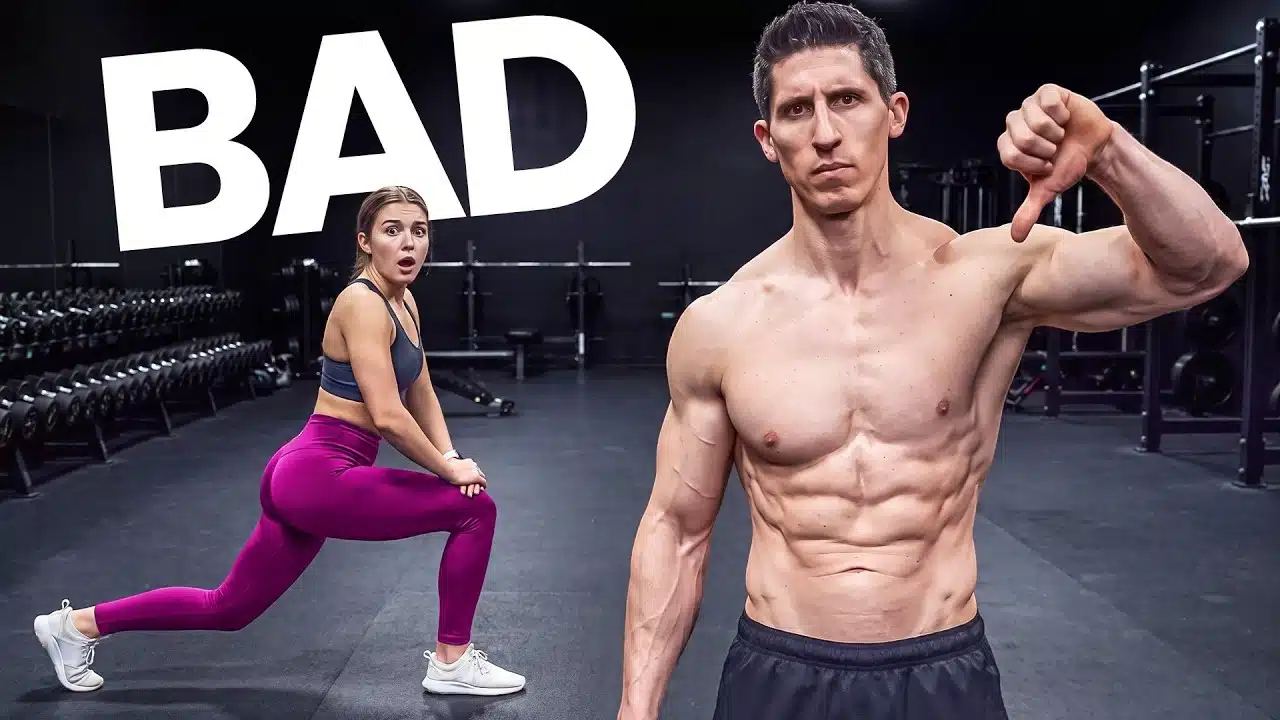
In a detailed breakdown, he explained why the backward lunge deserves to replace forward lunges in most training programs.
The biomechanical differences between these two variations could be the key to pain-free training and better results.
Jump to:
- Why Forward Lunges Damage Knees
- Reverse Lunges Eliminate Impact Stress
- Better Biomechanics Mean Better Muscle Growth
- The Walking Lunge Alternative
- Foot Placement Makes or Breaks Balance
- Upper Body Rotation Creates Stability
- Torso Angle Determines Muscle Focus
- Loading Strategy Matches Body Position
- Depth Guidelines and Limitations
- Implementation Checklist
Why Forward Lunges Damage Knees
Forward lunges place 4.6 times your body weight directly onto the patellofemoral joint and patellar tendon when your foot strikes the ground.
But weight alone doesn’t tell the whole story. Cavaliere emphasized that how quickly that force gets applied matters even more than the total load.

If you want something simple that actually works, this is one of the most effective tools I’ve used to build strength, conditioning, and endurance without needing a full gym setup.
- Full-body training with one weight using swings, squats, and presses
- Solid cast iron build that feels stable and lasts for years
- Comfortable grip that makes high-rep workouts easier to handle
When we step, this leg is free until the moment it hits the ground. And when it does, we have to quickly be able to adapt to that stress.
That rapid impact creates a shock wave through the knee joint. Even knees capable of handling significant weight can buckle under this rate of force application, leading to chronic pain and inflammation.
Reverse Lunges Eliminate Impact Stress
Stepping backward fundamentally changes the mechanics.
The front leg maintains contact with the ground throughout the entire movement. No jarring impact. No sudden force absorption. Just smooth, controlled lowering that keeps stress distributed evenly.
If we step backwards, that front leg stays in contact with the ground. It’s not stepping up and applying itself down every single time.
This simple directional change provides immediate relief for anyone experiencing knee discomfort during lunges.
Better Biomechanics Mean Better Muscle Growth
Forward lunges encourage a critical compensation pattern. When pushing out of the bottom position, lifters instinctively slide their hips backward before standing.
This hip-dominant movement reduces quad activation and turns what should be a quad-focused exercise into something more glute-dominant.
If you want something simple that actually works, this is one of the most effective tools I’ve used to build strength, conditioning, and endurance without needing a full gym setup.
- Full-body training with one weight using swings, squats, and presses
- Solid cast iron build that feels stable and lasts for years
- Comfortable grip that makes high-rep workouts easier to handle
Reverse lunges eliminate this compensation automatically. The movement pattern forces lifters to drive straight up from the bottom position, maintaining knee bend throughout and maximizing quad engagement.
Full hip extension happens naturally at the top without any backward weight shift.
The Walking Lunge Alternative
Forward lunges aren’t completely off-limits. Cavaliere pointed out that walking lunges—where lifters step forward continuously rather than returning to start—maintain better biomechanics than stationary forward lunges.
You step forward and rather than having to try to compensate backwards, you just simply rise up and step through and take your next step.
Walking lunges fix the compensation patterns but still create that problematic impact stress on the knee joint with each step.
Foot Placement Makes or Breaks Balance
Stepping directly back in a straight line transforms lunges into what Cavaliere called “a field sobriety test.”
Balance becomes the limiting factor instead of leg strength. The solution? Step back and out—at least two shoulder-widths apart.
If you want something simple that actually works, this is one of the most effective tools I’ve used to build strength, conditioning, and endurance without needing a full gym setup.
- Full-body training with one weight using swings, squats, and presses
- Solid cast iron build that feels stable and lasts for years
- Comfortable grip that makes high-rep workouts easier to handle
This wider base provides stability without requiring constant balance corrections. Lifters can focus entirely on working their legs rather than fighting to stay upright.
The Toe-Touch Rule for Depth
Step-back distance varies based on leg length, but Cavaliere shared a simple guideline: reach back with your toe until it contacts the ground, then drop straight down.
This creates GPS-like accuracy for proper foot placement regardless of individual proportions.
Upper Body Rotation Creates Stability
Though lunges target lower body muscles, upper body positioning directly impacts performance and safety.
Cavaliere recommended rotating shoulders slightly toward the front leg during each rep. This creates mild internal rotation at the hip while locking the pelvis in place.
Every time I step back, I want to turn my body just a little bit from my shoulders in the direction of the forward lunging leg.
That subtle rotation prevents wobbling and provides a stable platform for heavy loading.
If you want something simple that actually works, this is one of the most effective tools I’ve used to build strength, conditioning, and endurance without needing a full gym setup.
- Full-body training with one weight using swings, squats, and presses
- Solid cast iron build that feels stable and lasts for years
- Comfortable grip that makes high-rep workouts easier to handle
Torso Angle Determines Muscle Focus
Upright torso positioning shifts emphasis to the quadriceps, similar to front squats. Leaning forward from the hips creates what Cavaliere called a “sprinter lunge” that loads the glutes and hamstrings more effectively.
Neither option is superior—they simply target different muscle groups.
- Upright torso: Maximum quad activation, anterior chain emphasis
- Forward lean: Posterior chain focus, glute and hamstring development
Lifters should choose based on their specific goals and which muscles need priority attention.
Loading Strategy Matches Body Position
Equipment selection connects directly to torso angle. Forward-leaning, posterior-focused variations work best with dumbbells held at the sides.
The arms hang independently, allowing torso tilt without creating excessive low back stress.
Upright, quad-focused lunges accommodate goblet holds, rack positions, or barbells on the back. The vertical torso keeps weight centered over the base of support.
If you want something simple that actually works, this is one of the most effective tools I’ve used to build strength, conditioning, and endurance without needing a full gym setup.
- Full-body training with one weight using swings, squats, and presses
- Solid cast iron build that feels stable and lasts for years
- Comfortable grip that makes high-rep workouts easier to handle
I can tilt my torso forward but not have that affected by the position of the dumbbells that hangs just straight down.
Depth Guidelines and Limitations
Contrary to popular belief, the back knee can touch the ground—just not with force.
Cavaliere clarified that a light “kiss” of the ground provides feedback for reaching full depth without creating damaging impact.
Ankle mobility often limits depth before knee position becomes an issue. Tight calves or Achilles tendons restrict dorsiflexion, preventing full descent.
Lifters shouldn’t compensate by pitching forward excessively. Instead, work within available range of motion while gradually improving ankle flexibility through dedicated mobility work.
Even elite athletes face these limitations. Cavaliere noted that Dwayne “The Rock” Johnson’s Achilles injury likely created the mobility restrictions visible in his lunge technique—but his form remained effective within those constraints.
Implementation Checklist
Mastering reverse lunges requires attention to multiple details simultaneously:
If you want something simple that actually works, this is one of the most effective tools I’ve used to build strength, conditioning, and endurance without needing a full gym setup.
- Full-body training with one weight using swings, squats, and presses
- Solid cast iron build that feels stable and lasts for years
- Comfortable grip that makes high-rep workouts easier to handle
- Direction: Always step backward to protect knees
- Width: Step back and out, two shoulder-widths apart minimum
- Distance: Reach with toe, drop when contact occurs
- Rotation: Turn shoulders slightly toward front leg
- Torso angle: Upright for quads, forward lean for glutes/hamstrings
- Loading: Dumbbells for forward lean, goblet/barbell for upright
- Depth: Back knee lightly touches ground or stops at mobility limit
These technical adjustments transform lunges from a potentially damaging exercise into a safe, effective leg builder that delivers results without creating chronic knee problems.