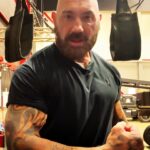
Luke Hemsworth didn’t just act his way through Season 2 of The Terminal List—he lifted his way into character.
At 45 years old, the eldest of the Hemsworth brothers deliberately packed on muscle mass to embody Jules Landry, a character whose psychological deterioration is mirrored by his increasingly intimidating physical presence.

What makes this transformation remarkable isn’t just the physical achievement—it’s that Hemsworth did it entirely on his own terms, without studio trainers or prescribed meal plans, relying instead on old-school bodybuilding principles and a uniquely Australian approach to wellness.
His methods—and the controversial recovery tools he openly discusses—offer a fascinating window into how actors transform their bodies when the cameras aren’t watching.
Jump to:
Physical Transformation as Storytelling
For his role as Jules Landry in Amazon Prime Video’s The Terminal List Season 2, Hemsworth made a creative decision that would define months of his life: use muscle gain as a narrative device.
As Landry’s mental state unravels throughout the season, his physical size increases—a visual metaphor that required genuine transformation, not movie magic.
The physical growth represents psychological unravelling.
This approach stands in stark contrast to typical Hollywood physique work, where studios invest heavily in trainers, nutritionists, and carefully monitored protocols. Hemsworth chose a different path entirely.
He designed his own program, drew on his already rigorous baseline of daily activity in Byron Bay, and trusted decades of training intuition to guide the process.
The Old-School Blueprint
Hemsworth’s training philosophy for the role was deliberately simple: heavy compound movements, low rep ranges, and relentless consistency.
His cornerstone lift? Deadlifts at 140 kilograms (308 pounds) for three sets of ten repetitions, five days per week.
This is old-school bodybuilding at its core—the kind of programming that built physiques before social media coaching and algorithm-driven periodization became the norm.
Three sets of ten with that kind of load places enormous mechanical tension on muscle tissue, the primary driver of hypertrophy according to decades of strength research. It’s also brutally demanding on recovery systems, especially at 45.
Five training days weekly with deadlifts as a centerpiece represents significant volume. Most contemporary strength programs would caution against deadlifting that frequently at high intensity due to cumulative fatigue and injury risk, particularly for the lower back and central nervous system.
Research on resistance training frequency suggests that while higher frequencies can be effective for hypertrophy when volume is equated, they require careful management of intensity and adequate recovery—factors that become increasingly critical with age.
The Age Factor
Training this intensively at 45 introduces variables that younger lifters can often ignore.
Recovery capacity naturally declines with age. Connective tissue becomes less elastic. Hormonal profiles shift. Sleep quality often diminishes.
Yet Hemsworth’s approach appears designed to work with these realities rather than against them, leveraging both conventional wisdom and emerging recovery technologies.
The Byron Bay Training Culture
All three Hemsworth brothers—Luke, Chris, and Liam—live near each other in Byron Bay, New South Wales, and they’ve built something unusual: a rotating family gym culture.
Each brother has constructed a home gym, and they work out together regularly, moving between facilities and pushing each other through sessions.
This isn’t just celebrity lifestyle pageantry—it’s a functional training environment with built-in accountability, competition, and motivation.
Having training partners who understand your goals, match your intensity, and show up consistently is one of the most underrated variables in long-term fitness adherence. Research consistently shows that social support significantly improves exercise compliance and performance outcomes.
Luke’s baseline activity level also includes daily surfing sessions, a full-body activity that enhances cardiovascular fitness, mobility, and functional strength while remaining low-impact enough to complement heavy lifting.
The Controversial Recovery Stack
Perhaps most noteworthy—and contentious—is Hemsworth’s open discussion of his recovery protocol, which includes peptides commonly referred to as the “Wolverine stack.”
Specifically, he uses BPC-157 and TB-500, two synthetic peptides that have gained significant attention in athletic and biohacking circles for their purported regenerative properties.
What Are BPC-157 and TB-500?
BPC-157 (Body Protection Compound-157) is a synthetic peptide derived from a protective protein found in gastric juice. Proponents claim it accelerates healing of muscles, tendons, ligaments, and even gut tissue.
TB-500 (Thymosin Beta-4 fragment) is another synthetic peptide believed to promote tissue repair, reduce inflammation, and improve recovery time.
Both have gained cult status among athletes, bodybuilders, and aging fitness enthusiasts desperate for faster recovery and injury prevention.
The problem? There is minimal robust human clinical trial data supporting these claims.
Most evidence comes from animal studies or anecdotal reports. Neither peptide has been approved by major regulatory bodies like the FDA or Australia’s Therapeutic Goods Administration (TGA) for general medical use, though they circulate widely in grey-market wellness communities.
Legal Status in Australia
In Australia, both BPC-157 and TB-500 are classified as Schedule 4 prescription-only medicines.
This means possession or use without a valid prescription from a registered medical practitioner is illegal. The regulatory framework exists precisely because these substances lack sufficient safety and efficacy data for unsupervised use.
Hemsworth’s candid discussion of using these peptides highlights a growing tension in wellness culture: the gap between what’s legally and medically sanctioned versus what’s practically accessible and experientially popular.
PRP Therapy: More Mainstream, Still Complex
In addition to peptides, Hemsworth also uses PRP (platelet-rich plasma) injections as part of his recovery toolkit.
PRP therapy involves drawing a patient’s own blood, processing it to concentrate platelets, and injecting that concentrate into injured or inflamed tissue.
Unlike peptides, PRP has considerably more clinical backing. Studies have shown promise for conditions like tendinopathy, osteoarthritis, and soft tissue injuries, though results remain somewhat mixed and protocol-dependent.
PRP is increasingly offered by sports medicine clinics and orthopedic specialists worldwide, making it more accessible and medically supervised than underground peptide use.
Still, it’s expensive, often not covered by insurance, and best approached with realistic expectations rather than miracle-cure mentality.
Sleep: The Non-Negotiable Foundation
Amid exotic peptides and heavy deadlifts, Hemsworth emphasizes something decidedly unglamorous: sleep.
Sleep is his non-negotiable wellness foundation.
This isn’t throwaway advice. Sleep is where recovery actually happens—where damaged muscle fibers rebuild, where growth hormone peaks, where cognitive function restores, and where metabolic health resets.
Research consistently demonstrates that inadequate sleep undermines training adaptations, impairs performance, increases injury risk, and disrupts hormonal balance. For someone training as intensively as Hemsworth at 45, sleep quality isn’t optional—it’s structural.
Prioritizing seven to nine hours of quality sleep nightly may be the single most evidence-backed wellness intervention available, yet it remains chronically undervalued in fitness culture obsessed with supplements and hacks.
The Hemsworth Comparison
Luke Hemsworth stands approximately 5’9″, notably shorter than his younger brothers Chris and Liam, who both stand around 6’3″.
Chris Hemsworth’s transformation into Thor remains one of Hollywood’s most iconic physique evolutions—backed by studio budgets, full-time trainers, nutritionists, and years of meticulous programming.
Luke has spoken openly and humorously about Chris having a “superhero gene,” yet his own approach reflects something equally valuable: sustainable, self-directed fitness built into daily life rather than episodic transformation tied to film schedules.
While Chris’s physique work is undeniably impressive, Luke’s method—integrated into family routines, informed by decades of personal trial and error, and rooted in lifestyle rather than contract—offers a more replicable model for most men.
Practical Takeaways for Everyday Lifters
What can regular lifters learn from Luke Hemsworth’s approach?
- Compound movements matter: Deadlifts, squats, presses—these multi-joint exercises recruit maximum muscle mass and deliver efficient hypertrophy stimulus.
- Consistency trumps complexity: Hemsworth’s program wasn’t elaborate—it was disciplined. Five days weekly, heavy load, simple structure.
- Training partners enhance adherence: Working out with brothers who share goals creates accountability that apps and trackers can’t replicate.
- Recovery is multifaceted: Sleep, active recovery like surfing, and evidence-informed therapies like PRP can extend training longevity.
- Peptides remain unproven and legally restricted: While anecdotal reports abound, BPC-157 and TB-500 lack robust human data and carry legal risks in many jurisdictions including Australia.
- Age requires adaptation, not surrender: Hemsworth proves that 45 isn’t a ceiling—it’s a context that demands smarter programming and prioritized recovery.
The Bigger Picture
Luke Hemsworth’s transformation for The Terminal List Season 2 represents more than an actor bulking up for a role.
It’s a case study in self-directed fitness, the power of social training environments, and the increasingly blurred line between mainstream wellness and experimental biohacking.
His willingness to discuss peptides openly—despite their murky legal and scientific status—reflects a broader cultural shift where wellness conversations are moving beyond gyms and doctor’s offices into podcasts, social media, and men’s magazines.
Whether that’s progress or peril depends largely on individual discernment, medical guidance, and respect for both evidence and regulation.
What’s undeniable is this: at 45, without studio support, Hemsworth built a physique that served both artistic and personal goals—and he did it by blending timeless training principles with modern recovery tools, good and controversial alike.
That kind of autonomy and commitment offers inspiration regardless of whether you have access to peptides, PRP, or a Hollywood paycheck.
Sources
- Australian Men’s Health: https://menshealth.com.au/luke-hemsworth-training-diet-wellness-rituals/