Mark Kerr faced an unusual task when production began on The Smashing Machine, the A24 MMA drama starring Dwayne “The Rock” Johnson.
He had to get back in fighting shape to help choreograph fight scenes for the film—based on his own legendary career.
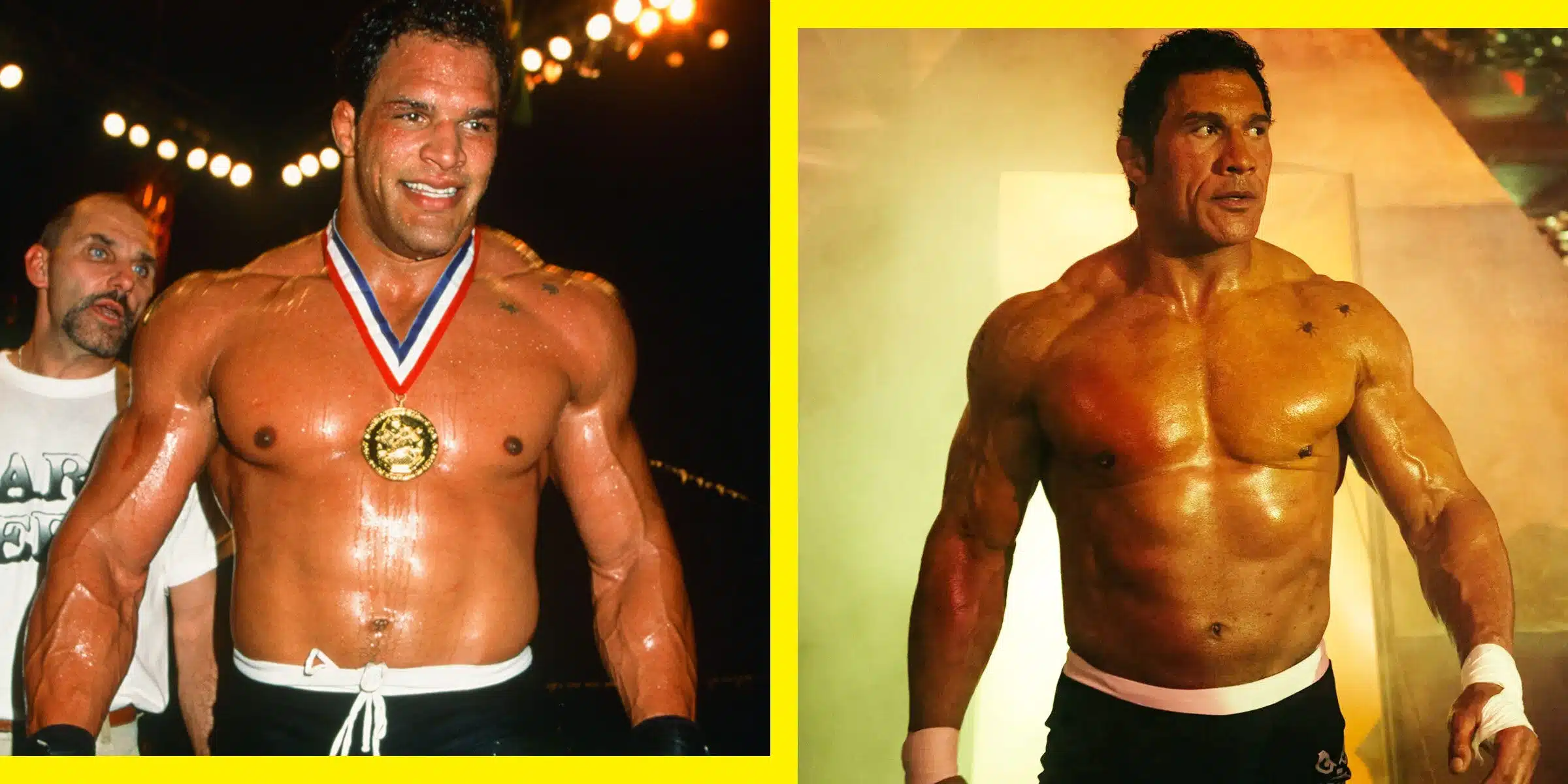
At 56 years old, Kerr needed to move like his younger self to teach one of Hollywood’s biggest stars how to convincingly portray “The Smashing Machine” himself.
His approach to training has evolved dramatically since his days as an MMA pioneer and UFC heavyweight champion.
Jump to:
From Fighting Champion to Movement Coach
Kerr made his name during MMA’s formative years in the 1990s, transitioning from championship-level collegiate wrestling to become one of the sport’s early dominant forces. He fought in the fledgling UFC and competed for various promotions during an era when mixed martial arts was still finding its identity.
Now retired from competition, Kerr maintains a fitness routine that prioritizes longevity over raw power. His training philosophy has shifted from building strength for cage combat to maintaining quality of life and functional movement.
Everything that I did when I fought was purposeful, and I had to get back into the gym with that same intention: what’s purposeful. I’m working towards quality of life, I’m working towards longevity, being able to stay active.
Training With Purpose, Not Just Power
Kerr’s current workout reflects this mature approach to fitness. Gone are the days of maximal heavyweight compound lifts designed purely for strength gains.
Instead, his routine centers on mobility work and functional strength training, primarily using kettlebells. These exercises reinforce movement patterns he uses both on the wrestling mats and in everyday activities—a smart strategy for sustainable fitness after 50.
The kettlebell focus isn’t arbitrary. These versatile tools excel at developing the type of dynamic, rotational strength that translates directly to grappling and real-world movement. They also build stability and control rather than just brute force.
Who Would Win? Kerr vs. The Rock
Working closely with Johnson on The Smashing Machine gave Kerr unique insight into the actor’s competitive nature. He says their collaboration brought them together on a “very personal level.”
That closeness hasn’t stopped them from engaging in the age-old fighter’s debate: what if we actually fought?
If the Rock and I were to get into an MMA fight, we said it would be a draw, because he’s determined, I’m determined. We just kind of said we’ll leave it up to everybody else to decide who’s the toughest.
It’s a diplomatic answer that speaks to mutual respect—and perhaps avoids creating awkward tension on set.
The Smashing Machine Workout Breakdown
Kerr’s training routine emphasizes movement quality and functional strength. Here’s what he used to prepare for the film’s demanding action sequences.
Mobility and Warm-Up
Double Knee T-Spine Rotation: 10 to 12 reps per side
This exercise opens up thoracic spine mobility—critical for grappling, throwing, and avoiding injury. Many people develop stiff mid-backs from sitting, making this movement especially valuable for overall health.
Kettlebell Hip Opener: 5 to 6 reps per side
Hip mobility directly impacts athletic performance and injury prevention. Wrestlers and grapplers need exceptional hip range of motion for takedowns and ground work.
Strength and Power Work
Kettlebell Goblet Squat: 2 sets of 10 to 12 reps
Holding weight in front forces proper squat mechanics and builds leg strength while maintaining upright posture. It’s gentler on the spine than back squats while still delivering serious benefits.
Single-Arm Kettlebell Swing: 2 sets of 10 reps per side
This explosive hip hinge movement develops power and cardiovascular conditioning simultaneously. The single-arm variation adds anti-rotation core work.
Kettlebell Deadlift: 8 to 10 reps
A fundamental strength builder that reinforces proper hip hinge mechanics. Deadlifts strengthen the entire posterior chain—glutes, hamstrings, and back muscles essential for grappling.
Technical Skill Movements
Single-Arm Kettlebell Snatch: 8 to 10 reps per arm
This advanced movement combines power, coordination, and shoulder stability. It mimics the explosive pulling movements common in wrestling and MMA.
Floor Bottoms-Up Kettlebell Press: 8 to 10 reps per arm
Holding the kettlebell upside-down demands intense grip strength and shoulder stability. Performing this from the floor adds a unique challenge that builds functional pressing strength.
Core and Recovery
Plank: 30 seconds
Simple but effective. Planks build the anti-extension core strength necessary for maintaining posture under load and resisting opponent pressure.
Meditation: 2 minutes
Kerr closes his sessions with brief meditation—a practice increasingly recognized for its benefits to recovery, stress management, and mental clarity. Combat athletes have long understood the connection between mental and physical performance.
Training Lessons From a Legend
Kerr’s approach offers valuable lessons for anyone interested in sustainable fitness. His shift from maximum-intensity training to purposeful, mobility-focused work demonstrates how training should evolve with age and changing goals.
The workout isn’t flashy. There are no complex periodization schemes or cutting-edge techniques. Instead, it’s built on fundamental movements performed with intention.
That simplicity makes it accessible and sustainable—qualities often missing from celebrity workout routines that prioritize spectacle over substance.
For someone in his mid-50s with decades of combat sports wear on his body, Kerr’s focus on mobility and functional strength is exactly right. It’s a template worth studying for anyone looking to stay active and healthy long-term.
The fact that this routine prepared him to move convincingly enough to train Dwayne Johnson speaks volumes about its effectiveness.