Building muscle isn’t just about getting bigger—it’s about crafting a physique that reflects who you are and what you want your body to do.
That’s the philosophy fitness content creator Adam Sinicki, better known as The Bioneer, explored in a recent video where he challenges traditional bodybuilding assumptions.
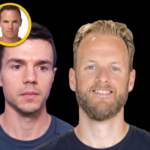
After training with fellow fitness enthusiast Grant in Birmingham, Sinicki reflected on why he prefers the term “body crafting” over bodybuilding—and why that distinction matters more than you might think.
His approach might just change how you think about your own training goals.
Jump to:
- Why “Bodybuilding” Might Be Holding You Back
- You Need Less Size Than You Think
- Your Body Should Reflect Your Goals—Not Someone Else’s
- Picking the Right Physique Inspiration
- Form Should Follow Function
- The Compounding Effect of Movement History
- The Venn Diagram Approach to Physique Design
- Enjoyment Is Non-Negotiable
- Building a “Sleeper” Physique
- The Training Split That Works for Different Goals
- Crafting Over Building: A Philosophical Shift
- The Problem With Chasing Instagram Aesthetics
- Practical Takeaways for Body Crafting
- The Path Forward
Why “Bodybuilding” Might Be Holding You Back
The term bodybuilding carries baggage. It implies one primary goal: get bigger, indefinitely, at all costs.
But as Sinicki points out, this mindset can actually work against you, even if aesthetics are your main focus.
You can’t just keep getting bigger indefinitely. Otherwise, you’ll meet diminishing returns. You’ll be spending more time training, more effort, and you’ll likely start to see other aspects of your health and performance drop off.
He contrasts modern mass-monster bodybuilders—often criticized for bloated, distended physiques—with classic bodybuilders like Frank Zane, who prioritized balance and definition alongside size.
The result? A physique that resembled a Greek statue rather than a science experiment gone wrong.
You Need Less Size Than You Think
Sinicki’s biceps measure around 15 to 15.5 inches when contracted. By bodybuilding standards, that’s modest.
Yet he’s been accused of steroid use in the comments section ever since completing a body recomposition—despite being smaller than he was six months prior.
I’m actually smaller than I was 6 months ago. But it’s only now that everyone thinks I look enhanced.
The secret? Definition, proportion, and strategic muscle placement.
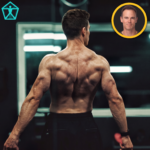
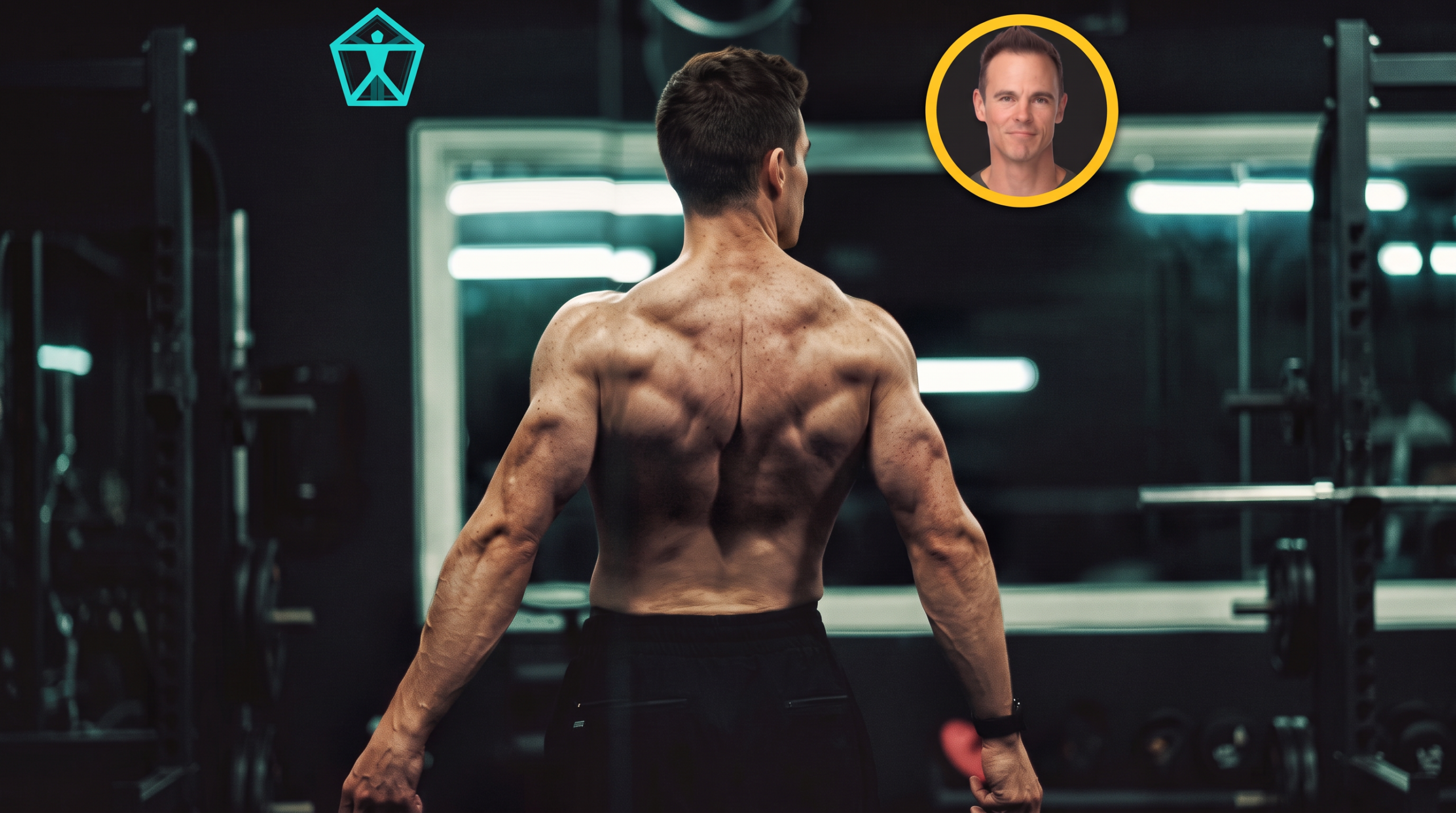
His arms appear large relative to his frame because he’s built size around his shoulders and neck. Visible veins and muscle striations create the illusion of enhanced muscularity.
The takeaway is clear: you don’t need massive arms or a 300-pound bench press to look impressive. You need the right muscle in the right places.
Your Body Should Reflect Your Goals—Not Someone Else’s
Sinicki aims for what he calls a “Batman physique”—a functional, athletic build with emphasis on chest, traps, and arms. His stocky frame naturally suits this look.
Grant, on the other hand, has a leaner, more martial-arts-oriented build. His goal is closer to a fighter’s physique, reminiscent of characters like Togeus.
Our bodies express our personalities. You see, in this way, body crafting can be a way to express who you really are on the inside.
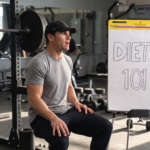
Their training reflects these differences. Sinicki performs high-rep bodyweight exercises—push-ups, pull-ups, kettlebell work—often outdoors or at home in cargo shorts.
Grant trains with cable machines and isolation movements in grungy boxing gyms, wearing dark hoodies. Their aesthetics match their training style, personality, and performance goals.
Picking the Right Physique Inspiration
Sinicki emphasizes choosing role models who share your body type.
If he tried to look like Grant—or vice versa—the results would be disappointing. Their natural builds, proportions, and skeletal structures differ significantly.
- Height matters: A 5’7″ stocky frame won’t develop the same aesthetic as a 6’2″ lean frame
- Bone structure shapes outcomes: Narrow shoulders versus wide clavicles create entirely different silhouettes
- Muscle belly length is genetic: Some people naturally develop fuller biceps or calves
Instead of chasing an incompatible ideal, find someone with a similar build who’s already achieved a look you admire. That’s your roadmap.
Form Should Follow Function
Sinicki’s physique has been described as “military-looking”—and for good reason.
His training mirrors military-style conditioning: lots of push-ups, pull-ups, and high-rep work that builds strength-endurance rather than pure maximal strength.
I have a good amount of strength, but also explosiveness and endurance, and my body reflects that.
Grant’s physique tells a different story. His massive lats and shoulders developed from years of martial arts before he ever touched weights. When he added resistance training, those muscle groups exploded.
His body looks agile and explosive—like a cat—because that’s exactly how he’s trained for most of his life.
The Compounding Effect of Movement History
Grant’s ability to stay lean and recover quickly stems from years of explosive, high-frequency martial arts training. When he layered weightlifting on top of that foundation, progress accelerated dramatically.
This demonstrates an important principle: stacking different training modalities creates compounding results.
Your training history shapes your body’s responsiveness. Someone with a background in endurance sports will respond differently to strength training than someone who’s been sedentary.
The Venn Diagram Approach to Physique Design
Sinicki advises looking at the overlap between aesthetics, performance, and lifestyle.
Wanting to look like an oak tree but move like a gymnast? That’s extremely rare and difficult to achieve. Wanting sprint speed while training like a powerlifter? The training doesn’t match the goal.
You do have to choose to an extent. And that’s the great thing about functional training. If you train hard enough, your body visually expresses what you can actually do.
Compromises are inevitable. The key is finding the sweet spot where your training supports all your priorities—not just one dimension.
Enjoyment Is Non-Negotiable
Even the perfect physique blueprint means nothing if you hate the training required to build it.
Sinicki gravitates toward high-rep bodyweight training because it feels explosive, can be done anywhere, and aligns with his lifestyle. He’s not grinding through workouts he despises just to hit an aesthetic ideal.
If you dread every session, adherence will eventually crumble. Sustainable training is enjoyable training.
Building a “Sleeper” Physique
Sinicki describes his build as a “sleeper physique”—not enormous, but impressive when revealed.
His arms look big for his frame. His shoulders and neck create the illusion of greater overall size. Vascularity and definition amplify the effect.
This approach prioritizes visual impact over absolute measurements. A 15.5-inch arm can look more impressive than a 17-inch arm depending on how it’s built and presented.
The Training Split That Works for Different Goals
During their Birmingham workout, Sinicki struggled to keep up with Grant’s isolated cable exercises for lats. His form deteriorated quickly, and he had to lower the weight.
I think I did those T-bar rows with my hamstrings.
This wasn’t a sign of weakness—it was evidence of specificity. Sinicki’s training emphasizes compound, closed-chain movements. Grant’s focuses on isolation and targeted hypertrophy.
Neither approach is superior. They’re different tools for different goals.
Crafting Over Building: A Philosophical Shift
Sinicki and Grant both view their training—and their bodies—as forms of artistic expression. Their physiques are tools for creating content and embodying the personas they project.
Sinicki trains in forests and home gyms, wearing cargo shorts. His videos emphasize functional movement, explosiveness, and real-world performance.
Grant trains in gritty boxing gyms in dark hoodies. His aesthetic is darker, more combat-oriented, more Bruce Lee than Captain America.
Their bodies align with their identities. That congruence makes the training meaningful beyond just looking good shirtless.
The Problem With Chasing Instagram Aesthetics
Sinicki criticizes the trend of blindly copying influencers or trying to “look like a bodybuilder” without considering personal context.
Simply trying to get bigger or look like those people on Instagram or look like a bodybuilder to me just feels uninspired and uninteresting.
This approach ignores individuality. It treats physique development like a paint-by-numbers project rather than a creative endeavor.
Your body is yours. It should reflect your goals, your lifestyle, your movement patterns, and your personality—not someone else’s.
Practical Takeaways for Body Crafting
- Define your aesthetic and performance goals clearly: Write them down. Be specific.
- Choose role models with similar builds: Don’t compare yourself to someone with a completely different body type.
- Prioritize proportion and definition over sheer size: Strategic muscle placement beats indiscriminate mass.
- Align training with lifestyle: If you hate going to gyms, build a home training routine. If you love martial arts, incorporate that.
- Accept compromises: You can’t maximize every attribute. Find your personal Venn diagram overlap.
- Enjoy the process: If you dread training, you won’t stick with it long enough to see results.
The Path Forward
Sinicki’s training now consists almost entirely of high-rep bodyweight work, bodyweight skills, kettlebells, and functional drills. He hasn’t set foot in a gym regularly for 12 to 18 months.
Yet his physique continues to draw accusations of steroid use—proof that strategic training beats generic bodybuilding programs for many aesthetic goals.
His message is simple: don’t just build your body. Design it. Sculpt it. Tune it. Craft it.
Whether you want to look like Batman, a martial artist, a Greek statue, or something entirely unique, the principles remain the same. Understand your body type. Define your goals. Train accordingly. And most importantly, enjoy the journey.
Because a physique built on someone else’s blueprint will never feel like home.