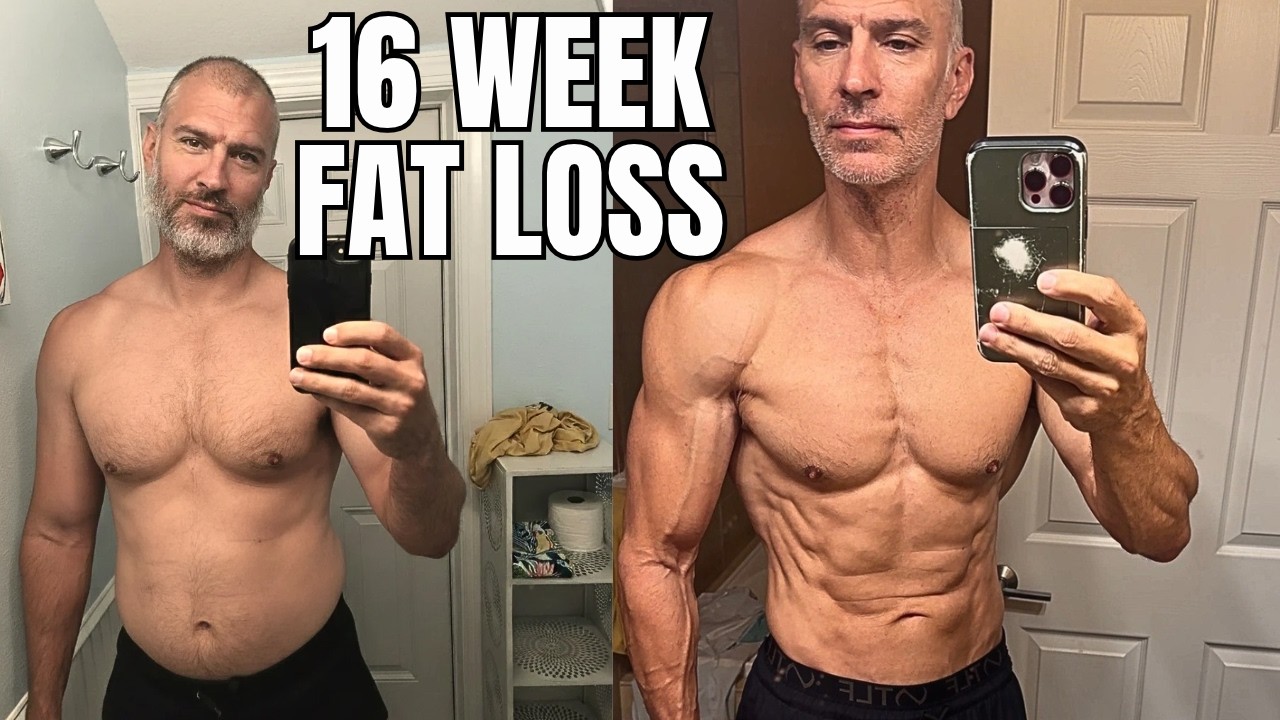
Weight loss coach Par Vale has spent more than 15 years helping people shed body fat and build muscle, and there’s one question he keeps hearing over and over.
Someone wants to lose 25 to 30 pounds, and they want it gone fast.
Maybe they’re considering a crash diet or extreme calorie restriction to speed things up.
But Vale, who holds degrees in exercise science, physiology, and kinesiology, says this rush-to-the-finish mindset is precisely what keeps people trapped in cycles of weight loss and regain—and he’s got research-backed strategies to break that pattern for good.
Jump to:
- The Real Problem Isn’t Losing Weight—It’s Keeping It Off
- The 1% Rule: How Fast Should You Actually Lose Weight?
- Why Your Body Fights Back: Understanding Metabolic Adaptation
- The Breaking Point: When Willpower Isn’t Enough
- The MATADOR Study: A Smarter Approach to Fat Loss
- How to Implement Strategic Diet Breaks
- Muscle vs. Fat: The Maintenance Paradox
- Why Extreme Diets Set You Up for Failure
- The Sustainable Approach: Accountability Over Restriction
- How Long Should 30 Pounds Actually Take?
- Reframing Success: Process Over Outcome
- Sources
The Real Problem Isn’t Losing Weight—It’s Keeping It Off
Vale starts with a pointed question that reframes everything about dieting success.
Was the diet really successful if you didn’t keep the weight off?
He references his friend Lane Norton’s observation about what he calls society’s actual weight problem.

If you want something simple that actually works, this is one of the most effective tools I’ve used to build strength, conditioning, and endurance without needing a full gym setup.
- Full-body training with one weight using swings, squats, and presses
- Solid cast iron build that feels stable and lasts for years
- Comfortable grip that makes high-rep workouts easier to handle
We don’t have a weight loss problem, we have a weight regain problem. Because a lot of people have lost hundreds of pounds over the years. But they end up in a cycle where they gain it back.
Research supports this frustrating reality. Studies show approximately 80% of people who lose weight regain it within one year, according to a 2018 review in Medical Clinics of North America by Hall and Kahan.
Vale points out something even more troubling: statistics actually show the more overweight somebody is, the more times they’ve tried losing weight. Each attempt often leads to regaining more than was lost, creating upward weight trajectories over time.
The 1% Rule: How Fast Should You Actually Lose Weight?
Vale recommends what he calls “the safest way to lose body fat”: about 1% of your body weight per week.
This guideline aligns with CDC recommendations of 1-2 pounds per week for most adults and is well-supported by research showing this rate minimizes muscle loss while supporting long-term adherence.
Here’s how that looks in practice:
- At 250 pounds: You’d aim for 2.5 pounds per week
- At 200 pounds: You’d target 2 pounds per week
- At 150 pounds: You’d shoot for 1.5 pounds per week
The rate naturally slows as you get leaner because you have less fat to lose. Vale emphasizes this isn’t a linear journey from point A to point B.
If you want something simple that actually works, this is one of the most effective tools I’ve used to build strength, conditioning, and endurance without needing a full gym setup.
- Full-body training with one weight using swings, squats, and presses
- Solid cast iron build that feels stable and lasts for years
- Comfortable grip that makes high-rep workouts easier to handle
The way you have to look at this approach to lose 30 lb and keep it off forever is not as point A to point B, but point A to point B to point C to point D.
Why Your Body Fights Back: Understanding Metabolic Adaptation
Vale explains what happens when someone restricts calories and increases cardio: they eventually stall.
Maybe you start eating 2,000 calories daily while running 30 minutes each day, and you lose 10 pounds. Eventually, those same 2,000 calories and 30-minute runs stop producing results.
This is metabolic adaptation in action.
Research published in the International Journal of Obesity by Rosenbaum and Leibel confirms metabolic adaptation—also called adaptive thermogenesis—is well-documented. Studies show total daily energy expenditure decreases beyond what’s expected from weight loss alone.
Your body requires fewer calories for several reasons:
- Reduced body mass: Smaller bodies need less energy
- Exercise efficiency: You burn fewer calories doing the same workout as you get fitter
- Lower thermic effect: Processing less food requires less energy
- Metabolic slowdown: Your body downregulates various processes to conserve energy
The typical response? Cut more calories. Add more cardio. This creates what Vale describes as an unsustainable spiral.
If you want something simple that actually works, this is one of the most effective tools I’ve used to build strength, conditioning, and endurance without needing a full gym setup.
- Full-body training with one weight using swings, squats, and presses
- Solid cast iron build that feels stable and lasts for years
- Comfortable grip that makes high-rep workouts easier to handle
The Breaking Point: When Willpower Isn’t Enough
Vale has encountered people on sub-1,000 calorie diets for months—sometimes six months—doing hours of daily cardio.
They lose incredible amounts of weight. But every single case reaches what he calls a breaking point.
Once you’ve become metabolically adapted, meaning your maintenance calories are now so low, your endurance for cardiovascular exercise becomes so high, meaning you burn far fewer calories because you’re just in better shape. It’s honestly a badge of honor, but when it comes to weight loss, it just means you have to work that much harder.
Breaking points trigger frustration, bingeing, overeating, or simply taking needed breaks. Then comes rapid weight regain—5, 10, 15 pounds—followed by panic.
This cycle is the problem, not the solution.
The MATADOR Study: A Smarter Approach to Fat Loss
Vale references breakthrough research that changed his coaching approach: the MATADOR study.
Published in the International Journal of Obesity in 2018 by Byrne and colleagues, this study compared two groups of obese men over 16 weeks of dieting.
If you want something simple that actually works, this is one of the most effective tools I’ve used to build strength, conditioning, and endurance without needing a full gym setup.
- Full-body training with one weight using swings, squats, and presses
- Solid cast iron build that feels stable and lasts for years
- Comfortable grip that makes high-rep workouts easier to handle
Group 1: Dieted continuously for 16 straight weeks
Group 2: Alternated 2 weeks in a caloric deficit with 2 weeks eating at maintenance calories
Group 2’s approach meant their 16 weeks of actual dieting stretched across 30 total weeks when accounting for maintenance phases.
The results surprised many:
- Greater fat loss in the intermittent group
- Better muscle retention
- Less metabolic adaptation
- Higher energy expenditure
- Reduced diet fatigue after completion
- Better weight maintenance post-diet
Vale calls these maintenance phases “diet breaks”—not breaks from dieting itself, but breaks from caloric deficits.
How to Implement Strategic Diet Breaks
Vale admits determining maintenance calories during diet breaks is “a bit of an art form” for coaches.
If you want something simple that actually works, this is one of the most effective tools I’ve used to build strength, conditioning, and endurance without needing a full gym setup.
- Full-body training with one weight using swings, squats, and presses
- Solid cast iron build that feels stable and lasts for years
- Comfortable grip that makes high-rep workouts easier to handle
As general guidance, he suggests:
Calorie increases: Boost intake by 15-20%, focusing mostly on carbohydrates
Cardio reduction: Cut cardiovascular exercise by 40-60%, depending on current volume
- Doing 90 minutes daily? Reduce to around 35 minutes
- Doing 20 minutes daily? Possibly maintain current levels
Vale emphasizes he doesn’t just track whether clients are losing weight—he monitors hunger levels, energy, sleep quality, and fatigue to determine when diet breaks are needed.
Muscle vs. Fat: The Maintenance Paradox
Vale draws a powerful parallel between maintaining muscle and maintaining fat loss.
It is so hard to build muscle. It takes time. It takes consistency. It takes progression. Maintaining muscle doesn’t take any of that. It takes less time. It takes less intensity. It takes zero progression to maintain.
Research by Bickel and colleagues in the Journal of Applied Physiology supports this, showing muscle can be maintained with as little as one-third the volume used to build it.
If you want something simple that actually works, this is one of the most effective tools I’ve used to build strength, conditioning, and endurance without needing a full gym setup.
- Full-body training with one weight using swings, squats, and presses
- Solid cast iron build that feels stable and lasts for years
- Comfortable grip that makes high-rep workouts easier to handle
Similarly, maintaining fat loss is dramatically easier than achieving it—but only if you don’t return to old habits.
Why Extreme Diets Set You Up for Failure
Vale cautions against approaches people can’t sustain long-term.
Extended fasting, carnivore diets, ketogenic eating—these can produce results. But Vale asks a critical question: Can you see yourself doing this forever?
He’s coached people through ketogenic diets who eventually told him the same thing.
I like the ketogenic diet. I don’t like how restrictive it is on me living my life. That’s really the barrier to entry.
When diets end and previously restricted foods return, overeating becomes almost inevitable. Bodies crave what they’ve been denied. Accountability disappears.
Weight comes flooding back.
If you want something simple that actually works, this is one of the most effective tools I’ve used to build strength, conditioning, and endurance without needing a full gym setup.
- Full-body training with one weight using swings, squats, and presses
- Solid cast iron build that feels stable and lasts for years
- Comfortable grip that makes high-rep workouts easier to handle
The Sustainable Approach: Accountability Over Restriction
Vale’s philosophy centers on what he calls accountability rather than restriction.
His approach includes:
- No forbidden foods: Everything fits within reason
- Balanced macronutrients: Proteins, carbs, and fats all have their place
- Calorie and macro tracking: Understanding intake creates flexibility
- Lifestyle integration: Building habits you’ll maintain forever
He emphasizes this isn’t about timelines—it’s about building a daily routine you can enjoy for life.
When you understand accountability and you understand how to track calories and macros, it just makes everything easier.
How Long Should 30 Pounds Actually Take?
Following Vale’s 1% guideline with strategic diet breaks, here’s realistic timing:
Starting at 200 pounds:
- Week 1-2: Lose 4 pounds (now 196 pounds)
- Week 3-4: Maintenance phase
- Week 5-6: Lose 3.9 pounds (now 192 pounds)
- Week 7-8: Maintenance phase
- Continue pattern for approximately 30-40 weeks total
Yes, that’s 7-10 months to lose 30 pounds sustainably.
If you want something simple that actually works, this is one of the most effective tools I’ve used to build strength, conditioning, and endurance without needing a full gym setup.
- Full-body training with one weight using swings, squats, and presses
- Solid cast iron build that feels stable and lasts for years
- Comfortable grip that makes high-rep workouts easier to handle
Compare that to crash diets promising the same results in 8-12 weeks—then regaining it all (and more) within months.
Reframing Success: Process Over Outcome
Vale’s final message challenges conventional diet culture thinking.
When we go through these processes and you just make it a part of your daily routine, it’s no longer about a timeline. It’s about the rest of your life loving the way you look and feel. And then it becomes very attainable.
Losing 30 pounds isn’t painful when you’re enjoying walks, paying attention to nutrition, and hitting the gym as part of your lifestyle rather than temporary punishment.
The real question isn’t “How fast can I lose 30 pounds?”
It’s “How can I lose 30 pounds and never find them again?”
According to Vale’s experience coaching hundreds of transformations over 15 years, the answer lies not in speed but in strategic patience, accountability, and building habits you’ll maintain when nobody’s watching.
If you want something simple that actually works, this is one of the most effective tools I’ve used to build strength, conditioning, and endurance without needing a full gym setup.
- Full-body training with one weight using swings, squats, and presses
- Solid cast iron build that feels stable and lasts for years
- Comfortable grip that makes high-rep workouts easier to handle
Sources
- CDC Weight Loss Guidelines: https://www.cdc.gov/healthyweight/losing_weight/index.html
- Byrne NM, et al. “Intermittent energy restriction improves weight loss efficiency in obese men: the MATADOR study.” International Journal of Obesity. 2018;42(2):129-138.
- Rosenbaum M, Leibel RL. “Adaptive thermogenesis in humans.” International Journal of Obesity. 2010;34 Suppl 1:S47-55.
- Hall KD, Kahan S. “Maintenance of Lost Weight and Long-Term Management of Obesity.” Medical Clinics of North America. 2018;102(1):183-197.
- Bickel CS, et al. “Time course of molecular responses of human skeletal muscle to acute bouts of resistance exercise.” Journal of Applied Physiology. 2005.