Building muscle after 40 isn’t just about showing up to the gym and eating more food.
Most men think they’re on the right track because the scale is moving up, but weight gain alone doesn’t mean muscle growth.
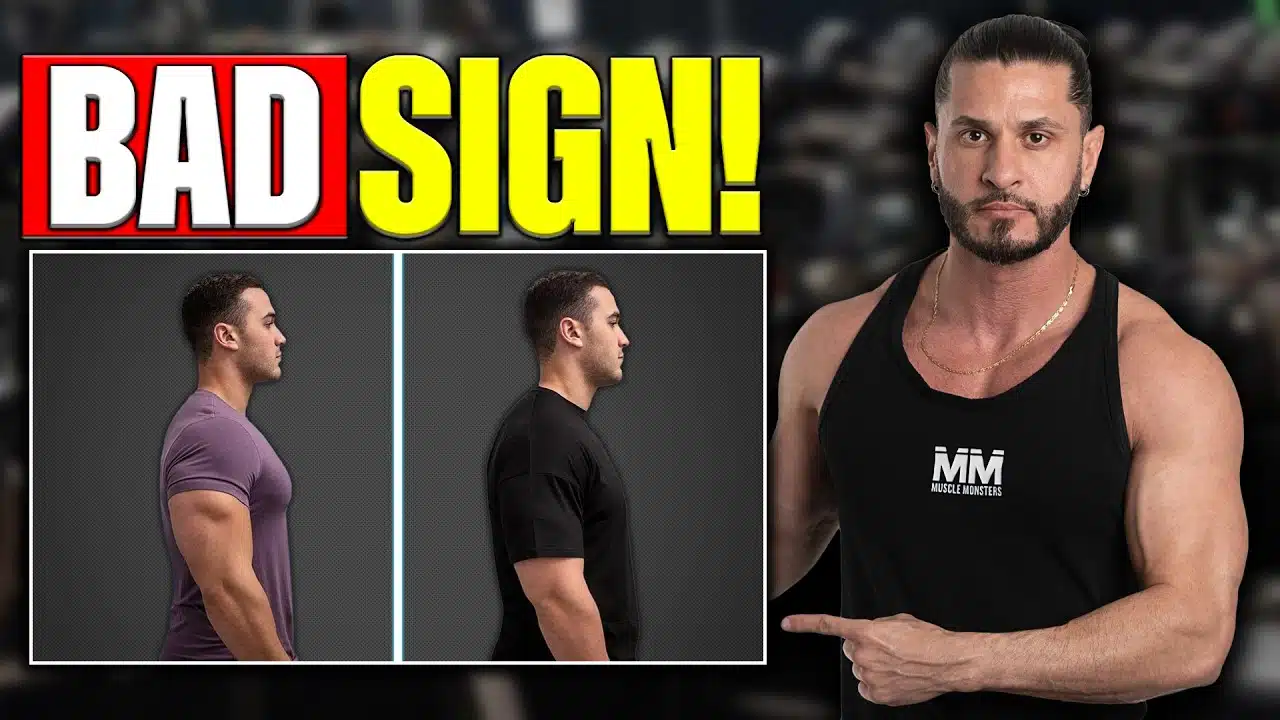
In fact, there are several clear, measurable signs that reveal whether someone is actually building lean tissue or simply storing fat.
Align Gonzalez, a coach who has worked with thousands of men over 40, recently broke down five critical indicators that separate real muscle gain from unwanted fat accumulation—and some of these signs might be showing up every single day without being noticed.
Jump to:
Lack of Gym Progress Reveals the Truth
One of the most reliable signs that muscle isn’t being built is stagnation in the gym. If someone is eating enough protein, training consistently, and showing up week after week without any measurable improvement, muscle growth simply isn’t happening.
Gonzalez explains that muscle produces force, so when new muscle tissue is added, performance should reflect that change.
Progression is your body telling you, “We adapted, we added tissue, we built more contractile fibers.”
That progression can show up in three key ways:
- Lifting heavier in the same rep range: Moving from 225 pounds for six reps to 235 pounds for six reps isn’t just skill—it’s new muscle tissue doing the work.
- Getting more reps with the same weight: Increasing from six reps to eight reps with 225 pounds signals adaptation and growth.
- Smoother, cleaner reps: When sets that used to involve grinding or form breakdown now feel controlled and fluid, that’s evidence of added strength and muscle.
According to research, fat tissue doesn’t generate force. Weight gain in the form of fat doesn’t result in significant strength improvements. Meanwhile, strength gains almost always correlate with increases in lean mass.
So if weights aren’t going up, reps aren’t increasing, and form isn’t improving, chances are high that weight gain is coming from fat, not muscle.
The Scale Is Moving Faster Than Muscle Can Build
Muscle grows slowly. Fat accumulates quickly. That’s biology, not opinion.
Gonzalez points out that decades of research and real-world data confirm how limited muscle-building rates actually are, even under ideal conditions.
- Beginners: Around 1.5 to 2 pounds of muscle per month
- Intermediate lifters: Roughly 1 pound of muscle per month
- Advanced trainees: Between 0.25 and 0.5 pounds of muscle per month
Muscle is metabolically expensive tissue that requires stimulus, recovery, and adequate protein. Fat, on the other hand, can be stored almost instantly when calorie intake exceeds what’s needed for training adaptation and daily metabolic demands.
If you’re gaining one, two, or even three pounds per week, a lot of that gain is not muscle mass. Your physiology simply cannot create muscle tissue at that speed.
To track progress accurately, Gonzalez recommends weighing in every morning under identical conditions—after using the bathroom, before eating—and calculating weekly averages.
If weekly averages are climbing faster than target muscle gain rates, calorie intake should be reduced by 100 to 150 per day. If averages aren’t moving at all, someone is at maintenance and can either pursue body recomposition or add 100 to 200 calories daily to support growth.
Weight Is Up, but Arms Haven’t Changed
This sign is surprisingly common and often overlooked. The scale moves up, so progress is assumed. But muscle and fat don’t distribute the same way.
When muscle is built, it tends to fill out areas that are trained most—shoulders, chest, and arms. Fat, however, accumulates primarily around the waist, love handles, and lower chest.
Gonzalez emphasizes that muscle is dense and takes up less space per pound. Fat is the opposite—it occupies more space and creates noticeable changes quickly, especially around the midsection.
If you gain 5 pounds of muscle, your waist won’t change much, but your shirts will start fitting better across your shoulders and arms. If you gain 5 pounds of fat, your arms will look the same, but your waistline will grow.
Tracking only scale weight misses this distinction entirely. Instead, measuring key areas—shoulders, chest, arms, and waist—provides much clearer feedback.
If waist circumference is increasing faster than upper body measurements, fat storage is the culprit. If sleeves are getting tighter while waist measurements stay stable or shrink, that’s real muscle growth.
Sleep Is Being Neglected
This is one of the most underestimated factors in body composition. Without consistent sleep of 7 to 9 hours per night, building muscle becomes nearly impossible—and gaining fat becomes almost inevitable.
Sleep deprivation disrupts how the body partitions calories. Multiple studies show that even a few nights of poor sleep cause hunger and fat storage hormones to shift unfavorably.
- Ghrelin increases: Hunger spikes
- Leptin decreases: Satiety drops
- Cortisol rises: Abdominal fat storage increases
One well-known study found that people in a calorie deficit who slept only 5.5 hours lost 55% less fat and 60% more muscle compared to those who slept 8.5 hours—same diet, same calories, drastically different outcomes.
Another study showed that just one week of sleeping 5 hours per night dropped testosterone levels by 10 to 15%, equivalent to aging a decade or more.
Worse yet, poor sleep creates a vicious cycle. Lack of sleep increases hunger and promotes fat gain. Fat gain, especially around the torso, increases the risk of snoring, airway obstruction, and sleep apnea—all of which further degrade sleep quality.
If your sleep sucks, you gain more fat. And the more fat you gain, the worse your sleep becomes.
No amount of protein or training intensity can compensate for chronic sleep deprivation. Sleep must be prioritized if muscle growth is the goal.
Energy, Mood, and Libido Are Declining
When muscle is being built, most people feel better. Energy stabilizes, mood improves, and libido remains healthy. Fat gain does the opposite.
Research shows that as body fat increases, testosterone levels drop. Fat tissue produces aromatase, an enzyme that converts testosterone into estrogen. Higher body fat also reduces sex hormone-binding globulin (SHBG), lowering the amount of active testosterone available for use.
Lower testosterone manifests as reduced libido, weaker morning erections, diminished drive, and less motivation overall.
Fat gain also increases chronic low-grade inflammation, which leads to fatigue, joint stiffness, slower recovery, and a general sense of feeling worn down. Workouts feel harder. Movement feels less fluid.
Another consequence is insulin resistance. As fat accumulates, insulin sensitivity declines, leading to energy crashes, intense cravings, erratic blood sugar, and brain fog. Post-meal fatigue becomes common. Afternoons drag. Nights become restless.
If you’re gaining muscle, you’re going to feel better overall. If you’re noticing a decrease in energy, motivation, libido, or mood, it’s likely not that you’re getting older, it’s that you’re getting fatter.
These aren’t just minor inconveniences—they’re physiological red flags that body composition is shifting in the wrong direction.
Catching These Signs Early Makes All the Difference
Most men don’t realize they’re gaining fat instead of muscle until months have passed and results are visibly off track. By then, reversing course requires more effort, more discipline, and more time.
But when these five signs are recognized early—stagnant gym performance, rapid weight gain beyond muscle-building capacity, unchanged arm size despite scale increases, poor sleep habits, and declining energy or libido—adjustments can be made quickly and effectively.
Building muscle after 40 is absolutely possible. But it requires precision, not just effort. Tracking the right metrics, prioritizing recovery, and staying honest about what the body is actually doing separates those who transform their physiques from those who simply gain weight.