New research suggests targeted fat loss might actually be possible, challenging decades of fitness wisdom.
A fitness coach decided to put this controversial theory to the ultimate test using MRI scans—the most precise measurement tool available.
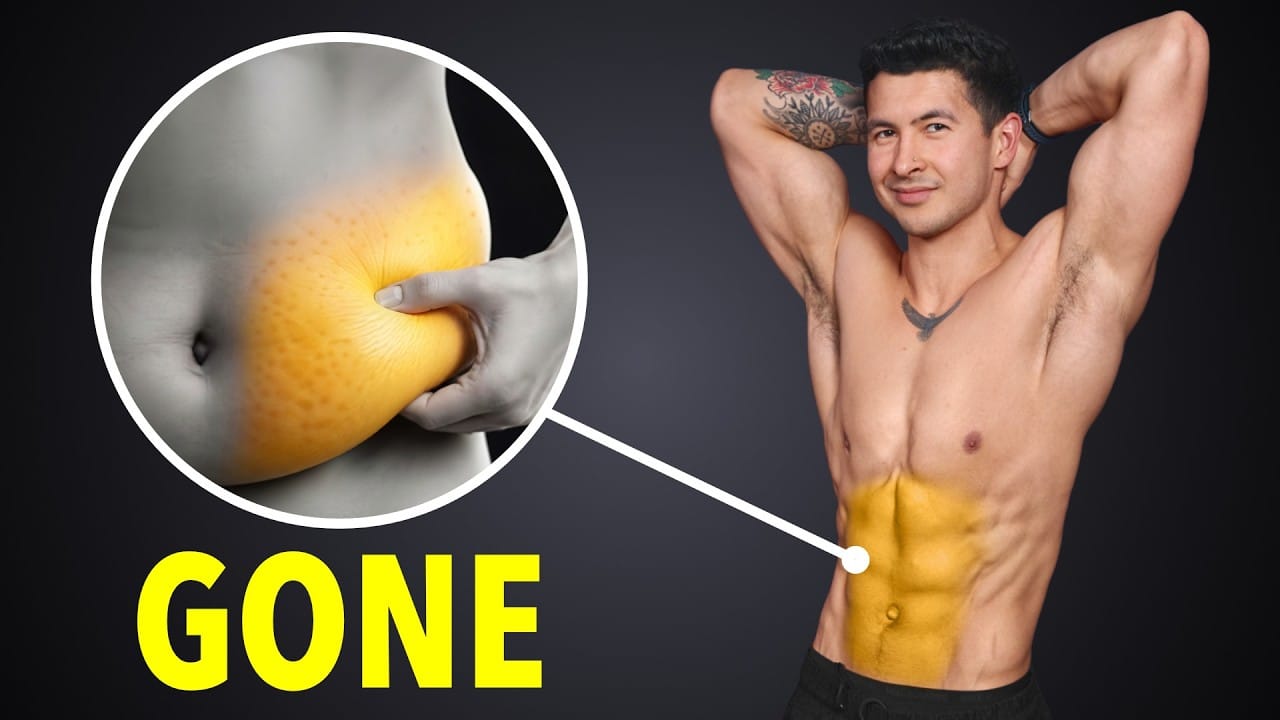
Two participants followed a scientifically-backed “spot reduction” protocol for 30 days, then switched to traditional fat loss methods for another 30 days.
The results were shocking, even for a published researcher, and reveal what actually works for burning stubborn belly fat.
Jump to:
- Meet the Participants Fighting Stubborn Belly Fat
- The Science Behind Spot Reduction
- Phase One: The Spot Reduction Protocol
- Phase One Results: The Verdict on Spot Reduction
- Why Men Store More Belly Fat
- Phase Two: Traditional Fat Loss Approach
- Phase Two Results: Dramatic Transformation
- Key Takeaways From This Experiment
Meet the Participants Fighting Stubborn Belly Fat
Dennis, a creative director, has struggled with belly fat since childhood despite working out four days weekly and maintaining a relatively clean diet. His MRI revealed a total body fat percentage of 17.5%, with belly fat at 16%.
When I look at someone, I look at their face first, and then I look at their abs. I don’t look at anything else.
Vicky, equally active, showed a total body fat percentage of 31.8% with surprisingly lower belly fat at 24.7%. Interestingly, she stored less fat in her midsection compared to other body parts—a pattern that would become significant later.
The Science Behind Spot Reduction
Before fat can burn, it must first release from fat cells through a process called mobilization. Training specific muscles increases blood flow to surrounding areas, theoretically boosting fat mobilization in those regions.
Previous studies testing this concept failed spectacularly. One had participants complete over 5,000 sit-ups in 27 days with zero results.
The Missing Piece of the Puzzle
Researchers discovered the critical second step: burning the released fat before it gets stored again. The solution? Low-to-moderate intensity cardio immediately following targeted training.
A 2023 study tested this refined approach. One group jogged for 45 minutes straight. The spot reduction group jogged for only 27 minutes, then immediately performed ab training—burning identical total calories.
After 10 weeks, both groups lost similar total body fat. But the spot reduction group lost approximately 2.5 times more belly fat specifically.
Why This Experiment Goes Further
Those studies used DEXA scans, which measure total body fat accurately but lack precision for specific areas. This experiment uses MRI technology—rarely utilized in research due to extreme cost—to track exact fat thickness changes across upper, middle, and lower belly regions.
Phase One: The Spot Reduction Protocol
Dennis and Vicky followed an upgraded version of the 2023 study protocol every other day:
- 25 minutes of moderate-intensity cardio (incline walking or StairMaster)
- Four sets of weighted crunches targeting upper abs
- Four sets of reverse crunches for lower abs
- Progressive overload—increasing weight or reps each workout
One crucial difference: Vicky performed only cardio and ab work, while Dennis maintained his existing 3-day lifting routine. This distinction would prove massively important.
Early Progress and Observations
Within a week and a half, Dennis noticed visible ab improvements under favorable lighting. By week two, both participants reported seeing upper ab definition emerging.
I will say I do feel like I can kind of see like upper ab definition. I don’t know if I’m seeing as much improvement in my lower region, but for sure in the upper ab region you can kind of see some abs coming in here.
Lower belly fat proved stubbornly resistant—and science explains why.
Why Lower Belly Fat Is So Stubborn
Fat cells contain two receptor types: alpha-2 receptors that slow fat release and beta receptors that accelerate it. Lower belly fat has significantly higher alpha-2 receptor ratios, making it biologically slower to burn.
Additionally, visible abs require two factors: low body fat and substantial muscle thickness. Upper abs typically grow thick and prominent, while lower abs remain thinner—some people genetically have minimal lower ab development regardless of training.
The Lighting Trap
Dennis began sending nightly progress photos showing dramatically different results depending on lighting conditions—photos taken the same day looked completely different.
Influencers exploit this constantly. Even extremely lean individuals don’t maintain that shredded appearance in every environment, which is precisely why this experiment relies on precise measurements rather than visual assessment alone.
Phase One Results: The Verdict on Spot Reduction
After 375 minutes of cardio and 15 ab training sessions over 30 days, MRI scans revealed surprising outcomes.
Dennis’s Results
Dennis gained half a pound but underwent body recomposition, dropping from 17.5% to 17% body fat. However, his belly fat decreased by only 0.3%—essentially no change. Most fat loss came from arms and hips instead.
No evidence of spot reduction for Dennis.
Vicky’s Results
Vicky lost 5 pounds, but the composition was alarming: 60% came from lean mass, only 40% from actual fat. Her body fat percentage barely budged—31.8% to 31.5%.
She did lose belly fat, especially in the upper region. But when examining her entire body, belly fat loss was proportionate to fat lost from arms, shoulders, and legs—some areas actually showed greater reductions.
No evidence of targeted belly fat loss.
The Positive Finding: Massive Ab Muscle Growth
While spot reduction failed, ab muscle development exceeded expectations.
Dennis’s abs grew approximately 20% larger on average across all regions—explaining why they appeared more prominent under proper lighting.
Vicky lost muscle size everywhere except her abs, which grew roughly 15% bigger despite losing lean mass overall from cardio-only training.
Why Men Store More Belly Fat
Analysis of eight years of DEXA scans from nearly 18,000 people revealed clear patterns: women predominantly store fat around hips, legs, and arms, while men consistently accumulate more abdominal fat.
This pattern intensifies dramatically once body fat exceeds 25-30%. When tracking fat loss across body parts, belly fat consistently changes slowest, while arms and legs lean out first.
Phase Two: Traditional Fat Loss Approach
Phase two eliminated all cardio and ab training completely. Instead, participants focused exclusively on strength training and controlled nutrition.
No more cardio, no more ab training. Zero. At all? Zero.
The Two Simple Rules
Rule 1: Track everything consumed to hit daily calorie targets. The formula used: body weight in pounds multiplied by 12. Each meal built around fist-sized portions of lean protein to preserve muscle mass.
Rule 2: Consistent strength training. Vicky followed a 3-day full-body program hitting every major muscle group. Dennis continued his 4-day upper-lower split.
Smart Dieting Strategies That Emerged
Both participants developed practical tactics for sustainable fat loss:
- Sauce control: Dennis requested sauces on the side when dining out, reducing hollandaise sauce from 400 calories to under 100 by controlled dipping
- Protein swaps: Switching from fatty meats to white fish or shrimp provided more protein for fewer calories
- Pre-weighing meals: Dennis prepared portions in advance, knowing exact remaining daily calories
- Social strategies: Dennis swapped whiskey for tea at parties to avoid awkward social pressure while staying on track
The Cardio Conundrum
When Vicky consumed 300 liquid calories from a matcha drink, she realized burning it off required either 60 minutes of incline walking or 30 minutes of running. This illustrates why you cannot outrun a bad diet.
Research shows people often subconsciously eat more or move less after cardio sessions, frequently losing less than half their expected weight when relying primarily on cardio for fat loss.
Combined with Vicky’s muscle loss in phase one, this experiment deliberately eliminated cardio to isolate the effectiveness of diet and strength training alone.
The Ab Training Concern
With zero direct ab work, would Dennis and Vicky’s ab muscles shrink despite heavy compound lifts like squats and deadlifts that activate core muscles?
Twenty days in, visible progress was undeniable—both showed dramatically more belly fat loss than phase one. But the ab muscle question remained unanswered until final measurements.
Phase Two Results: Dramatic Transformation
After 30 days of exclusively dieting and strength training, results were staggering.
Vicky’s Transformation
Phase one: Lost 5 pounds (only 2 pounds actual fat), body fat dropped minimally from 31.8% to 31.5%, belly fat decreased just 3%.
Phase two results:
- Body fat plummeted to 27.5%—a massive 4% reduction
- Gained nearly 3 pounds of lean muscle mass
- Belly fat dropped 30% on average—ten times more than phase one
Regarding ab muscles: Phase one grew them 15%. Phase two with zero direct ab training? They maintained completely without shrinking, likely because compound movements provided sufficient stimulus for the beginner trainee.
Dennis’s Transformation
Phase one: Gained half a pound, body fat decreased 0.5%, belly fat dropped just 0.3%.
Phase two results:
- Lost 5 pounds on the scale
- Body fat dropped to 14.4%—a 3% reduction in one month
- Belly fat decreased 26.3%—nearly 88 times more than phase one
I was tracking everything including even just a spoon of like peanut butter.
However, Dennis’s abs shrank approximately 16% in size—essentially returning to pre-experiment dimensions. Unlike Vicky, his intermediate training status required direct ab work to maintain the muscle growth achieved in phase one.
Key Takeaways From This Experiment
Spot reduction didn’t work. Despite following scientifically-designed protocols with precise MRI measurements, targeted belly fat loss showed no advantage over general fat loss patterns dictated by genetics and body composition.
Diet plus strength training demolished belly fat. Phase two produced 10x better belly fat loss for Vicky and 88x better results for Dennis compared to the spot reduction protocol.
Cardio alone causes muscle loss. Sixty percent of Vicky’s phase one weight loss came from lean tissue, not fat—a metabolism-damaging outcome reversed completely when strength training was prioritized.
Direct ab training matters for intermediate lifters. Beginners like Vicky maintained ab size through compound movements alone. Experienced lifters like Dennis require targeted ab work to preserve muscle in that area.
Consistency beats perfection. Simple strategies like pre-weighing food, smart restaurant choices, and tracking everything—even a spoonful of peanut butter—made adherence sustainable and results dramatic.
Dennis was so motivated by these results that he’s continuing the protocol, adding back direct ab training, targeting 12% body fat to achieve the definition he’s wanted since childhood.