It might sound like an inspiring challenge: 100 push-ups and 50 pull-ups in under 10 minutes.
But when U.S. Health Secretary Robert F. Kennedy Jr., 71, and Defense Secretary Pete Hegseth, 45, issued this bold physical fitness test — dubbed the “Pete and Bobby Challenge” — experts quickly cautioned that not everyone should be joining in.
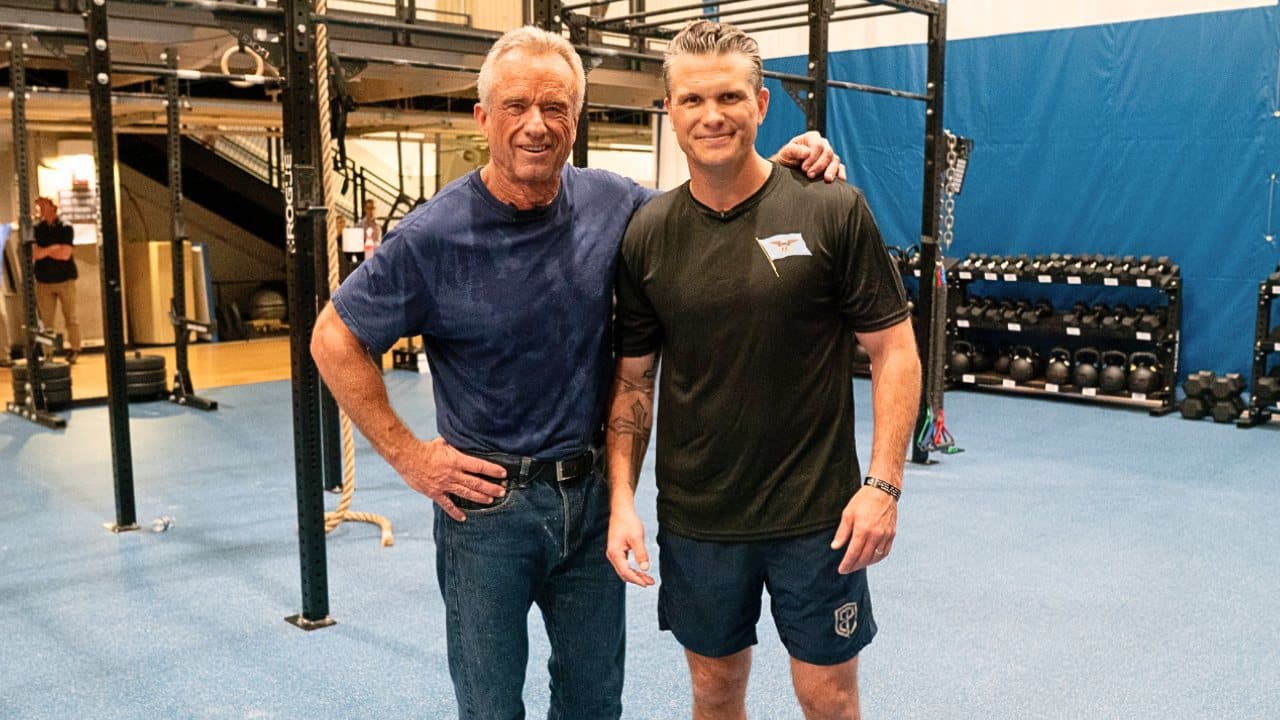
The video, which quickly went viral across social media and official government channels, was pitched as a national call to action to get Americans back in shape.
But according to trainers, physical therapists, and elite athletes, the routine is far from beginner-friendly — and attempting it without preparation could cause more harm than good.
Jump to:
Inspired by Military Fitness — But Missing the Fundamentals
In the challenge video, Kennedy, wearing a tucked-in T-shirt and jeans, and Hegseth, in gym gear, urge viewers to complete both exercises — 100 push-ups and 50 pull-ups — in less than 10 minutes. Preferably in under five minutes each.
“Thank you, President Trump, for setting the example,” said Hegseth, referring to the administration’s campaign to “Make America Healthy Again.”
The challenge bears a striking resemblance to elite military training. The Navy SEAL Physical Screening Test (PST), for instance, includes both push-ups and pull-ups — with the minimum requirement being 50 push-ups in two minutes and 10 pull-ups, unbroken.
Fitness professionals recognize the inspiration but highlight a critical difference: these movements are performed by trained candidates who have built up the required strength, technique, and stamina over months or years.
“High-volume bodyweight workouts are deceptively tough,” said Ben Bergeron, founder of CompTrain. “The movements themselves are simple, but when performed in the 50 to 100 rep range or more — most people aren’t prepared for it.”
The Danger of Skipping Progression
While Kennedy and Hegseth may have finished the challenge in under six minutes, their performance — short range of motion and incomplete reps — raised eyebrows among coaches.
“That is not how you do a qualified, correct pull-up in the military,” said Jess Hviid Skov, a former Danish military sergeant and current gym owner. Proper form, he emphasized, requires the chin clearing the bar and a full extension of the arms.
Pushing through fatigue often leads to compensation — using momentum, partial reps, or straining muscles not meant to carry the load. This can spike the risk of:
- Shoulder impingement
- Bicep tendonitis
- Elbow strain
- Lower back injury (especially with poor push-up form)
“Most people can’t even perform five strict push-ups with proper form, or a single pull-up, without compensating,” said Chris Smits, a Toronto-based personal trainer. “Pushing for such high numbers without the necessary strength foundation can quickly lead to injury.”
Even CrossFit Athletes Scale Workouts Like This
The format isn’t new. The infamous “Murph Challenge” — a CrossFit hero workout completed annually on Memorial Day — requires 100 pull-ups, 200 push-ups, 300 squats, and two one-mile runs, all while wearing a weighted vest.
But even among elite CrossFitters, strict pull-ups aren’t the standard. Most opt for kipping or butterfly variations that use momentum to reduce strain and increase speed.
“As the sport of CrossFit evolved, so too did the movement requirements needed,” said John Christian Singleton, owner of The Progrm training app. These modifications weren’t shortcuts — they were developed to protect joints and increase efficiency.
In contrast, Kennedy and Hegseth appeared to attempt strict reps, but their technique revealed shortened ranges and incomplete control.
A Smarter Approach: Build the Foundation First
According to Dallin Pepper, a CrossFit Games competitor, the smart path forward is progressive overload — gradually increasing your strength and volume over time.
“For the average person, I would definitely recommend building volume in these movements over three to four weeks before giving it a go,” he advised.
That means starting with:
- Assisted pull-ups using resistance bands or machines
- Knee push-ups or incline push-ups to build pressing strength
- Form drills to practice full range of motion
- Lower volume goals like 10 push-ups x 5 sets or 5 pull-ups x 3 sets
Once a strong base is developed, you can add reps, reduce rest, and increase intensity. But the quality of each rep must remain the top priority.
“Focus on the quality of the movements, not just the number or speed,” said Cesar Toledo, a physiotherapist based in Toronto. “The goal of getting people moving is great — but this challenge dramatically increases the risk of shoulder injury, especially when done unprepared.”
Public Health Messaging vs. Performance Feats
The broader goal of Kennedy and Hegseth — to encourage more Americans to move, eat well, and prioritize their health — is undeniably important. But the method matters.
“Fitness challenges like this can motivate some,” said Smits, “but they also set an unrealistic bar that may intimidate beginners or, worse, lead them into injury.”
A more inclusive campaign would offer tiered fitness options, catering to various levels and abilities. That could include:
- Daily 5-10 minute movement routines
- Push-up and pull-up progression guides
- Low-impact alternatives for older adults
- Mobility and recovery routines for desk workers
The excitement and competitiveness of public challenges are appealing, but public health efforts must prioritize safety and scalability over spectacle.
Final Thoughts
Robert F. Kennedy Jr. and Pete Hegseth may have had good intentions when issuing their viral fitness challenge, but their high-octane example risks alienating — or injuring — the very people they’re trying to inspire.
Before accepting the “Pete and Bobby Challenge,” consider where your fitness level stands today. Then, work your way up safely, with proper guidance and realistic expectations.
Your long-term health is not a race — and you don’t need 50 pull-ups to win.