An ultrarunner just did something that was supposed to be impossible.
Nick Fowler has shattered the men’s overall Pacific Crest Trail fastest known time record — running the entire 2,653-mile route completely self-supported, without a crew, without pacers, and without anyone handing him food or a warm place to sleep.
That achievement alone would be extraordinary, but here’s what makes it truly jaw-dropping: he finished faster than every supported record in history.
And waiting for him at the finish line was a surprise that made the whole grueling journey feel like something out of a movie.
Jump to:
45 Days, a Desert, and a Finish Line He’ll Never Forget
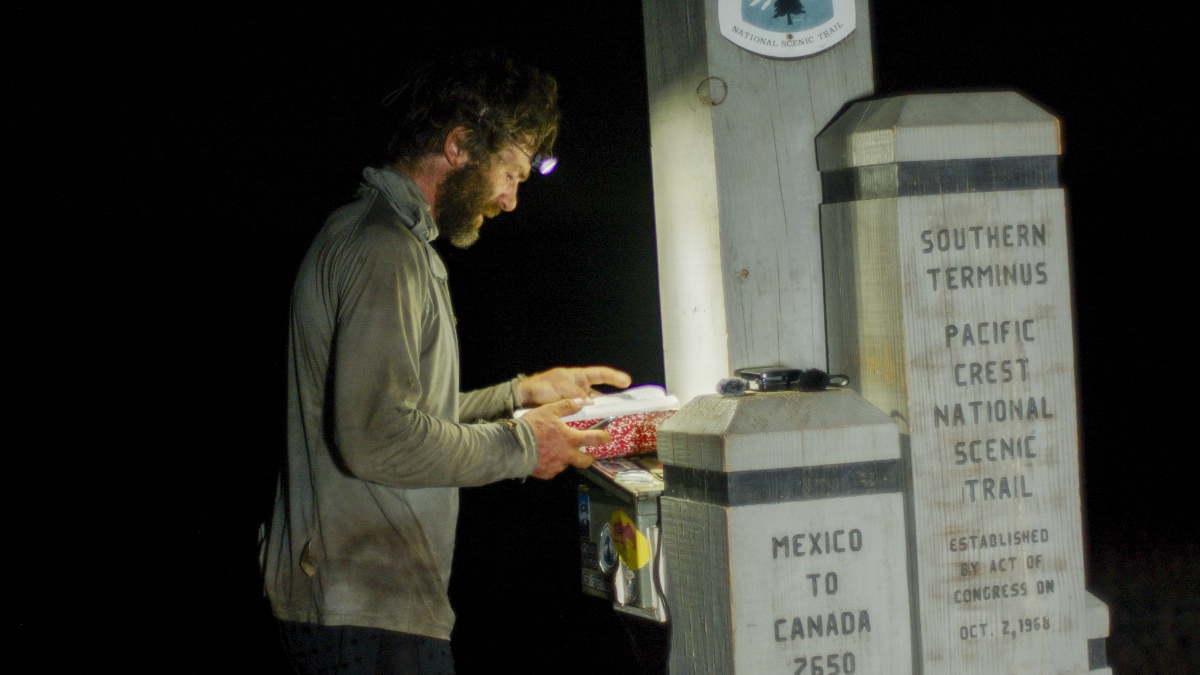
On August 22, 2026, Fowler crossed the finish line at Campo, California, clocking in at 45 days, 17 hours, and 47 minutes — erasing roughly two and a half hours from Aurélien Sanchez’s men’s supported record of 45 days, 20 hours, and 15 minutes, which had only been set weeks earlier.
Let that sink in for a moment.

If you want something simple that actually works, this is one of the most effective tools I’ve used to build strength, conditioning, and endurance without needing a full gym setup.
- Full-body training with one weight using swings, squats, and presses
- Solid cast iron build that feels stable and lasts for years
- Comfortable grip that makes high-rep workouts easier to handle
Every previous record holder had a full support crew behind them. Fowler carried his own camping gear, his own water, and days’ worth of food at a time — and still beat them all.
What greeted him at the end of that punishing journey was entirely unexpected.
The most special part was being surprised by my wife, Hannah, and son, Canyon, at the end. Canyon was born exactly one year to the day after I completed the PCT in 2023, so getting to see him at the end of this journey made the whole thing feel especially full circle.
What Running 2,653 Miles Self-Supported Actually Looks Like
The Pacific Crest Trail is one of America’s “big three” long trails, stretching from the U.S.-Mexico border in California all the way to the U.S.-Canada border in British Columbia. It winds through the Sonoran and Mojave deserts, climbs the Sierra Nevada and Cascade ranges, crosses 24 national forests, seven national parks, and 33 wilderness areas — accumulating a staggering 400,000 feet of elevation gain across three states.
Fowler tackled all of it heading south — a less common direction that meant finishing in triple-digit California heat.
His daily numbers are almost hard to process.
- 56.7 miles covered per day, on average
- Up to 18 hours of movement daily
- Approximately 12,000 calories consumed every single day
- All gear, water, and food carried entirely by himself between resupply stops
He had pre-arranged supply caches along the route — including multiple fresh pairs of shoes — but every step between those points was taken entirely on his own terms.
If you want something simple that actually works, this is one of the most effective tools I’ve used to build strength, conditioning, and endurance without needing a full gym setup.
- Full-body training with one weight using swings, squats, and presses
- Solid cast iron build that feels stable and lasts for years
- Comfortable grip that makes high-rep workouts easier to handle
The Rivals Who Became Supporters
What makes Fowler’s story even more compelling is how the ultrarunning community rallied around him — including the man whose record he was chasing.
[Sanchez] was cheering me on throughout the adventure.
Fowler was quick to credit his broader circle too, reflecting on what this achievement taught him about belief and community.
One of my greatest takeaways is that big things can happen when you’re surrounded by true friends who believe in you: JJ, Katie, Jameson, Stefan, and Chris, as well as a few others — it couldn’t have been done without their (virtual) support. They believed in me more than I believed in myself.
This Isn’t His First Time Rewriting the Record Books
Fowler isn’t new to this level of achievement — not even close.
Back in 2023, he set a then-record self-supported PCT time of 52 days, 9 hours, and 18 minutes. His latest run sliced nearly a full week off that personal benchmark, a margin of improvement that elite athletes almost never achieve at this level.
His record collection spans some of the most demanding trails on the continent.
- Overall FKT on the 817-mile Arizona Trail (2024)
- Self-supported record on the 407-mile Oregon Coast Trail
- Self-supported record on the 230-mile Ozark Trail in Missouri
- Self-supported record on the 1,200-mile Pacific Northwest Trail across Washington, Idaho, and Montana
The pattern is clear: Fowler doesn’t just run trails. He owns them.
If you want something simple that actually works, this is one of the most effective tools I’ve used to build strength, conditioning, and endurance without needing a full gym setup.
- Full-body training with one weight using swings, squats, and presses
- Solid cast iron build that feels stable and lasts for years
- Comfortable grip that makes high-rep workouts easier to handle
A Record That Had Been Shrinking for Years
The men’s PCT FKT has been fiercely contested throughout the 2020s.
Karel Sabbe held it with a time of 46 days, 12 hours, and 50 minutes, set in 2023 — itself an improvement on Timothy Olson’s 2021 mark of 51 days, 16 hours, and 55 minutes, which had beaten Sabbe’s own earlier record. Each of those runs was completed with full crew support.
Then Sanchez pushed things further in the summer of 2026. Then Fowler arrived — carrying everything himself — and rewrote the whole story.
Self-supported. Faster than all of them. The bar has never been set this high on the Pacific Crest Trail, and the ultrarunning world is still catching its breath.