Strength coach Dr. Mike Israetel recently put wellness competitor Taylor Torres through an intense lower body workout just days after her overall win at the NPC Sun City competition.
What followed was a masterclass in strategic training—the kind that builds championship physiques without breaking athletes down.
The session, filmed for Renaissance Periodization, focused exclusively on glutes and hamstrings using minimal equipment but maximal intensity.
For anyone looking to build stronger, more developed lower body muscles—especially glutes—this training approach offers practical lessons worth implementing.
Jump to:
- Starting Fresh: The Mesocycle Advantage
- Exercise Selection: Compound Movements First
- Stiff-Legged Deadlifts: Hamstring and Glute Stretch
- The Finisher: Lunge Superset Protocol
- Training With Minimal Equipment
- Volume Management: Less Is More Initially
- The Transformation Behind the Training
- Practical Takeaways for Your Training
- Building Championship Physiques Strategically
- Sources
Starting Fresh: The Mesocycle Advantage
Torres began what’s called a mesocycle—a structured training block typically lasting 4-8 weeks—immediately following her competition deload week.
This timing matters significantly. After pushing through a competition prep and allowing recovery during deload, her body was primed to respond to new training stimulus.
No products found.
The first week strategy was intentionally conservative—high effort but manageable volume to ease back into progressive training without overwhelming recovery capacity.
Exercise Selection: Compound Movements First
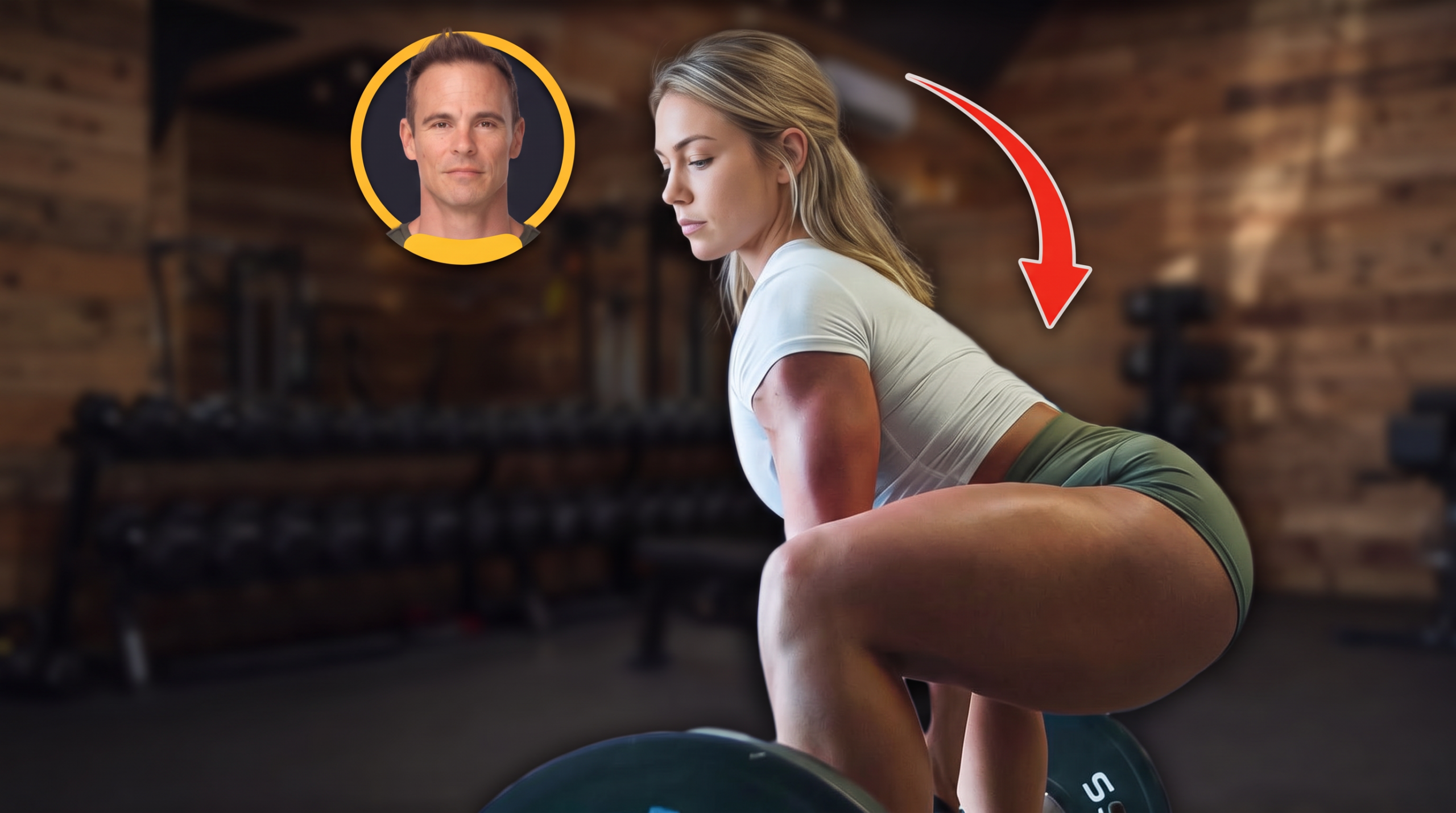
Israetel’s workout started with deficit sumo deadlifts, a variation that increases range of motion and glute activation compared to standard deadlifts.
Sometimes the compound basics that hit some hamstrings and hit some adductors and hit some quads are also really good.
By standing on a platform, Torres had to pull from a deeper position. This extended range dramatically increases glute recruitment, particularly at the bottom of the movement where hip extension demands are highest.
The sumo stance itself—feet wide, toes pointed out—shifts emphasis from lower back and quads toward glutes and adductors.
Technique Cues That Matter
Throughout the deficit sumo deadlifts, Israetel emphasized several critical form points:
- Hips down, chest up: Prevents the deadlift from becoming a stiff-legged variation
- Knees tracking outward: Engages glutes maximally and protects knee joints
- Controlled tempo: Quality over quantity, every rep performed with intention
- Full hip extension: Squeezing glutes hard at the top of each repetition
Big breath in there you go breath out… don’t let the chest cave first. Remember you’re opening your hips.
Stiff-Legged Deadlifts: Hamstring and Glute Stretch
The second exercise targeted the posterior chain from a different angle—stiff-legged deadlifts with an almost exaggerated range of motion.
No products found.
Torres demonstrated exceptional mobility, keeping her back tight while pushing hips far back and lowering the barbell well below knee level.
Taylor here has essentially a flawless stiff-legged deadlift technique… Use this video and her technique as the gold standard to aspire to.
This isn’t achievable for everyone immediately. Israetel cautioned viewers not to force this depth without proper flexibility and control.
The key principle: maximize stretch under tension without compensating through spinal flexion.
Why Stiff-Legged Deadlifts Work
By keeping knees relatively straight, hamstrings remain lengthened throughout the movement. This creates significant mechanical tension in the stretched position—a powerful stimulus for muscle growth.
Glutes must work overtime to extend the hips from this disadvantaged position, particularly through the eccentric (lowering) phase where muscle damage accumulates.
The Finisher: Lunge Superset Protocol
After heavy bilateral work, Torres faced walking lunges immediately superseded by sumo squats—no rest between exercises.
No products found.
This combination creates what exercise scientists call metabolic stress, one of three primary mechanisms for muscle hypertrophy alongside mechanical tension and muscle damage.
The strategy was deliberate: lunges pre-exhaust the glutes, making them the limiting factor during subsequent sumo squats.
The lunges definitely pre-fatigue the glutes like crazy and then the glutes tend to be the limiting factor on sumo squats after which is a great way to use less load on sumo squats but accomplish a ton of muscle activation.
This approach allows meaningful training stimulus with lighter loads—critical when managing fatigue or working in less-equipped training environments.
Walking Lunges: Distance Over Reps
Rather than counting repetitions, Torres completed lunges for distance around the training area.
This time-under-tension approach ensures adequate volume regardless of stride length variations. Coaching cues emphasized:
- Upright torso: Keeps tension on glutes rather than shifting to quads
- No pauses between steps: Maintains metabolic stress
- Controlled tempo: Slow eccentrics maximize time under tension
- Continuous movement: No rest until transitioning to sumo squats
Training With Minimal Equipment
One practical advantage demonstrated throughout this session: effective training doesn’t require fancy machines.
No products found.
Israetel highlighted how stance and grip variations multiply exercise options exponentially:
You say okay I have a bar I can bench press it well you can do wide grip medium close if you have an adjustable bench you can do wide medium close on incline there are six exercises for your chest.
For deadlifts specifically, changing stance width and hand position creates distinct training stimuli—regular deadlifts, wide stance, sumo, deficit sumo, and more variations all targeting muscles differently.
The strategic approach: Select one or two variations per mesocycle. When progress stalls or exercises feel stale after several weeks, rotate to different variations.
Volume Management: Less Is More Initially
Despite the workout’s intensity, total volume remained conservative—approximately seven working sets across three exercises.
Jared Taylor, who coached Torres to her competition victory, explained this deliberate restraint:
She just came off of a deload she did her show she was pretty fatigued this mesocycle we are entering into higher volumes again after that deload so since it’s week one instead of going right to just ultra crazy… you kind of want to ease into the mesocycle.
This approach establishes minimum effective volume (MEV)—the least amount of training needed to produce adaptation.
No products found.
Starting conservatively allows progressive volume increases across subsequent weeks without immediately reaching maximum recoverable volume where overtraining risks emerge.
The Progressive Overload Framework
Week one serves as foundation for systematic progression:
- Week 1: Conservative volume, establish baseline
- Weeks 2-4: Gradually increase sets, reps, or load
- Week 5-6: Peak volume as fatigue accumulates
- Week 7: Deload to dissipate fatigue and sensitize for next block
This undulating approach prevents both under-training and overreaching while maximizing long-term progress.
The Transformation Behind the Training
Torres’ journey to the competition stage required losing 37 pounds over approximately two years—a testament to patient, intelligent dieting.
Taylor noted she accomplished the majority before working together, using principles aligned with Renaissance Periodization’s evidence-based approach.
Sustainable fat loss requires modest caloric deficits maintained consistently, typically losing 0.5-1% of body weight weekly to preserve muscle mass while shedding fat.
No products found.
Aggressive crash diets sacrifice lean tissue alongside fat, compromising both physique quality and metabolic health.
Practical Takeaways for Your Training
Several actionable principles emerge from this training session:
- Prioritize compound movements: Deadlift variations and lunges provide more stimulus than isolation exercises alone
- Manipulate variables strategically: Stance width, deficit positions, and tempo variations multiply exercise options
- Start mesocycles conservatively: Leave room for progressive increases rather than beginning at maximum volume
- Use supersets intelligently: Pre-fatigue techniques allow meaningful training with lighter loads
- Master technique first: Perfect form under control before adding load or volume
- Think long-term: Sustainable progress over months and years trumps short-term intensity
Remember that Torres’ mobility and work capacity developed over years of consistent training. Attempting to replicate her technique without proper preparation invites injury rather than progress.
Focus on gradual improvement—adding small increments of range, load, or volume each training cycle while maintaining impeccable form.
Building Championship Physiques Strategically
What separates successful physique athletes from those who plateau isn’t genetic superiority or training secrets—it’s systematic application of fundamental principles over extended periods.
Torres’ overall victory resulted from years of patient fat loss, consistent progressive training, and intelligent periodization that balanced stimulus with recovery.
No products found.
This single glute-focused workout demonstrates how evidence-based programming translates theory into practice: exercise selection targeting specific muscles, volume management preventing overtraining, technique emphasis maximizing safety and effectiveness.
Whether competing on stage or simply pursuing personal fitness goals, these same principles apply universally—start conservatively, progress systematically, prioritize recovery, and trust the process across months and years rather than seeking immediate transformation.
Sources
No external research sources were provided in the research brief for this content.