Millions struggle daily with what feels like a nervous system stuck in overdrive.
Constant mental chatter, physical tension that never fully releases, exhaustion during daylight hours followed by wide-awake rumination at bedtime—it’s an all-too-familiar pattern that can persist for years.
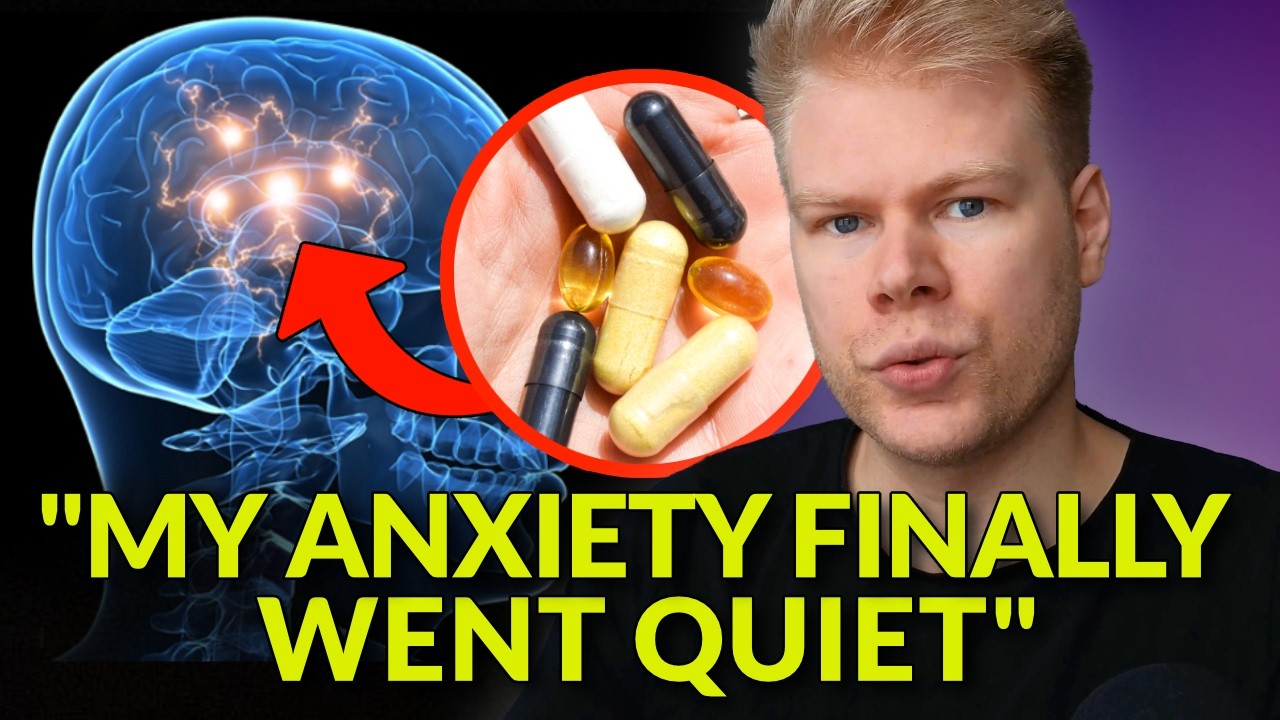
One wellness content creator recently shared his personal journey through this exact struggle, revealing four supplements that he claims helped quiet his overactive stress response when nothing else seemed to work.
Rather than searching for a single miracle cure, he discovered that targeting different aspects of the stress response simultaneously made all the difference.
Jump to:
The Underrated Adaptogen That Surprised Him Most
First on his list wasn’t the expected ashwagandha, but rather Bacopa monnieri—an adaptogenic herb traditionally used in Ayurvedic medicine.
Most people associate Bacopa with cognitive enhancement, focus, and learning. That’s exactly why he tried it initially—not to calm down, but to sharpen concentration.
No products found.
What happened instead caught him completely off guard.
After taking it consistently for a few days, I noticed that my brain simply became quieter. I wasn’t constantly replaying conversations in my head anymore, and my thoughts weren’t jumping from one thing to the next all day long.
He described feeling less reactive to stressful situations and finding it genuinely easier to sit down and relax—a stark contrast to the mental sprint his brain had been running for years.
The research here shows promise, but with an important caveat. A 2014 meta-analysis published in the Journal of Ethnopharmacology found that Bacopa does support cognitive function and may reduce anxiety—but the timeline matters. Most studies showing clear benefits ran for 8 to 12 weeks, not just a few days.
A 2008 study in Phytotherapy Research confirmed anxiety reduction with 300mg daily, though effects built gradually over weeks.
His rapid response was unusual. Most people should expect Bacopa’s calming effects to strengthen week by week rather than hitting immediately.
How Bacopa Works on the Stressed Brain
Researchers believe Bacopa supports multiple calming neurotransmitters simultaneously while also protecting brain cells from oxidative stress damage.
No products found.
That’s likely why users often report feeling mentally calmer yet still focused—not sedated or foggy, just quieter inside.
For dosing, he found success with 500mg daily of a standardized extract containing approximately 100mg of bacosides (the active compounds). Taking it with breakfast improved absorption since Bacopa is fat-soluble.
Despite Bacopa becoming one of his favorites, he doesn’t recommend starting there.
The Foundation: Why Magnesium Comes First
If forced to choose just one supplement for relaxation, he’d pick magnesium every single time.
If I had to build a relaxation protocol from scratch, and I was only allowed to choose one supplement, it would almost always be magnesium.
Magnesium participates in over 300 biochemical reactions throughout the body, many directly influencing nervous system regulation. Muscles require it to release tension, neurons need it to prevent excessive firing, and it supports production of GABA—the brain’s primary calming neurotransmitter.
The evidence backing magnesium for stress is robust. A 2017 systematic review published in Nutrients found that roughly 50% of people in the United States and Europe consume less than recommended amounts. A 2012 study in Magnesium Research directly linked deficiency to increased anxiety and stress reactivity.
No products found.
Modern life creates a perfect storm for magnesium depletion:
- Contemporary diets contain less magnesium than in previous generations
- Chronic stress accelerates magnesium loss
- Intense exercise increases requirements
- Poor sleep creates a vicious cycle—low magnesium worsens sleep, and sleep deprivation makes it harder to retain magnesium
When he finally committed to consistent daily magnesium instead of sporadic supplementation, two distinct changes emerged.
First, physical relaxation. His shoulders finally released chronic tension, and that underlying tightness throughout his body began dissolving.
Second, mental resilience. Minor stressors stopped triggering outsized reactions. It felt like someone had simply turned down the volume on his stress response.
Choosing the Right Magnesium Forms
Not all magnesium supplements deliver equal results—a mistake he sees constantly.
He personally combines magnesium glycinate with magnesium threonate for stress management.
No products found.
Glycinate excels at raising overall magnesium levels while providing glycine, another calming amino acid. Research published in Neuropharmacology in 2016 showed that threonate crosses the blood-brain barrier more effectively than other forms, though it contains less elemental magnesium per dose and costs significantly more.
His take? Threonate gets somewhat overhyped, but it genuinely supports relaxation—so the combination works well if budget allows.
For those watching costs, magnesium glycinate alone delivers excellent stress relief at reasonable prices.
He recommends 300-500mg of elemental magnesium daily, split into two or three doses: one with breakfast, another mid-afternoon, and a final dose one to two hours before bed or with dinner.
If I had to remove every supplement from this list except one, again, magnesium would stay.
When Your Brain Refuses to Leave Fight-or-Flight
Even with optimized magnesium intake, some days his brain felt trapped in survival mode—exhausted yet unable to switch off.
That’s when phosphatidylserine entered the picture.
No products found.
This phospholipid compound targets a specific pattern: feeling completely drained physically while mentally wired. Lying in bed replaying five-year-old conversations, catastrophizing tomorrow’s to-do list, somehow planning your entire future at 1 AM.
Phosphatidylserine works differently than magnesium. Rather than primarily supporting relaxation pathways, it’s best known for helping regulate the body’s cortisol response—particularly when stress hormones stay elevated longer than appropriate.
The research on phosphatidylserine is real but more modest than for magnesium. A 2004 study in the European Journal of Clinical Nutrition found that 300mg reduced cortisol response to acute stress. Research published in Nutritional Neuroscience in 2010 showed that 200-400mg improved mood under stressful conditions.
The evidence base isn’t as extensive as magnesium’s, but the findings are consistent.
I didn’t stop experiencing stress, but I stopped staying stressed for that long. Things that would have ruined my day would suddenly become something I dealt with and then moved on.
That faster recovery—not stress elimination, but shortened stress duration—was the game-changer.
He takes 150-300mg daily with lunch or dinner, since phosphatidylserine absorbs best with dietary fats. High-quality products like SunPS (sunflower-derived) often deliver results at just 150mg based on both research and personal experience.
No products found.
The Unexpected Amino Acid Duo
The final recommendation surprised even him: lysine and arginine taken together.
Most people associate amino acids exclusively with muscle building, not stress management. But your nervous system relies on amino acids for neurotransmitter production and countless regulatory functions.
A Japanese study published in Biomedical Research in 2007 gave participants lysine plus arginine daily for just one week. The results were striking: anxiety scores dropped significantly, and male participants experienced an 18% cortisol reduction in that short timeframe.
What makes this combination particularly interesting is how each amino acid approaches stress from different angles.
Lysine influences brain pathways involved in anxiety regulation. It interacts with the same calming neurotransmitter systems targeted by anti-anxiety medications—though far more gently. Lysine also affects serotonin activity in the gut, which explains why some users notice improvements in both digestive comfort and mental state.
Arginine takes a different route entirely. As the primary building block for nitric oxide—a compound that relaxes blood vessels—it helps shift the body away from fight-or-flight mode and back toward rest-and-recovery.
No products found.
One works predominantly through the brain; the other helps the body physically relax. Together, they form an unexpectedly powerful team.
The Caveat About This Combo
Here’s what makes lysine-arginine fascinating yet uncertain: the evidence base is thin. That Japanese study exists and shows impressive results, but it hasn’t been widely replicated in Western research literature. This is essentially one or two studies, not the systematic reviews and meta-analyses backing magnesium.
The biochemical mechanisms make sense—arginine’s conversion to nitric oxide is well-established science—but the specific stress-reduction effects need more investigation.
The dosing from that study was 2.64 grams each—an oddly specific amount. He simplified to 2-3 grams of each amino acid daily, split into two equal servings (morning and evening), matching the researchers’ protocol.
One thing I really like about this combo is that hardly anyone talks about it. Everyone knows about magnesium, and everyone has heard of ashwagandha, but these two amino acids have some really interesting research behind them, and almost nobody seems to mention them anymore.
Supplements Alone Didn’t Fix Everything
He’s careful to emphasize that these four supplements weren’t magic bullets operating in isolation.
Genuine nervous system recovery required addressing sleep quality, correcting nutritional deficiencies, and systematically reducing the lifestyle factors keeping his body trapped in survival mode.
No products found.
But when reflecting on which supplements genuinely changed how he felt day-to-day, these four stand apart from everything else he tried over several years of experimentation.
The combination approach makes biological sense. Magnesium provides the foundation—without adequate levels, other interventions struggle to work optimally. Bacopa offers broader adaptogenic support that builds over time. Phosphatidylserine specifically targets the cortisol response that keeps people wired when they should be winding down. Lysine and arginine add yet another dimension, working through neurotransmitter and vascular pathways.
Each supplement addresses a different piece of the stress puzzle. That’s likely why the combination succeeded where individual supplements fell short.
Sources
- Journal of Ethnopharmacology (2014) – Bacopa monnieri meta-analysis: https://www.sciencedirect.com/science/article/abs/pii/S0378874114004516
- Phytotherapy Research (2008) – Bacopa and anxiety study: https://pubmed.ncbi.nlm.nih.gov/18683852/
- Nutrients (2017) – Magnesium intake systematic review: https://www.mdpi.com/2072-6643/9/3/245
- Magnesium Research (2012) – Magnesium deficiency and anxiety: https://pubmed.ncbi.nlm.nih.gov/23250555/
- Neuropharmacology (2016) – Magnesium threonate and blood-brain barrier: https://pubmed.ncbi.nlm.nih.gov/26439929/
- European Journal of Clinical Nutrition (2004) – Phosphatidylserine and cortisol: https://pubmed.ncbi.nlm.nih.gov/15051841/
- Nutritional Neuroscience (2010) – Phosphatidylserine mood study: https://pubmed.ncbi.nlm.nih.gov/20211035/
- Biomedical Research (2007) – Lysine and arginine Japanese study: https://www.jstage.jst.go.jp/article/biomedres/28/2/28_2_85/_article