In a bold move backed by the Trump administration, U.S. Health and Human Services Secretary Robert F. Kennedy Jr. has called on American medical schools to overhaul their approach to nutrition education.
Frustrated by what he describes as a failure to equip doctors with the tools to prevent disease, Kennedy is demanding sweeping reforms that would embed nutrition instruction across every phase of medical training.
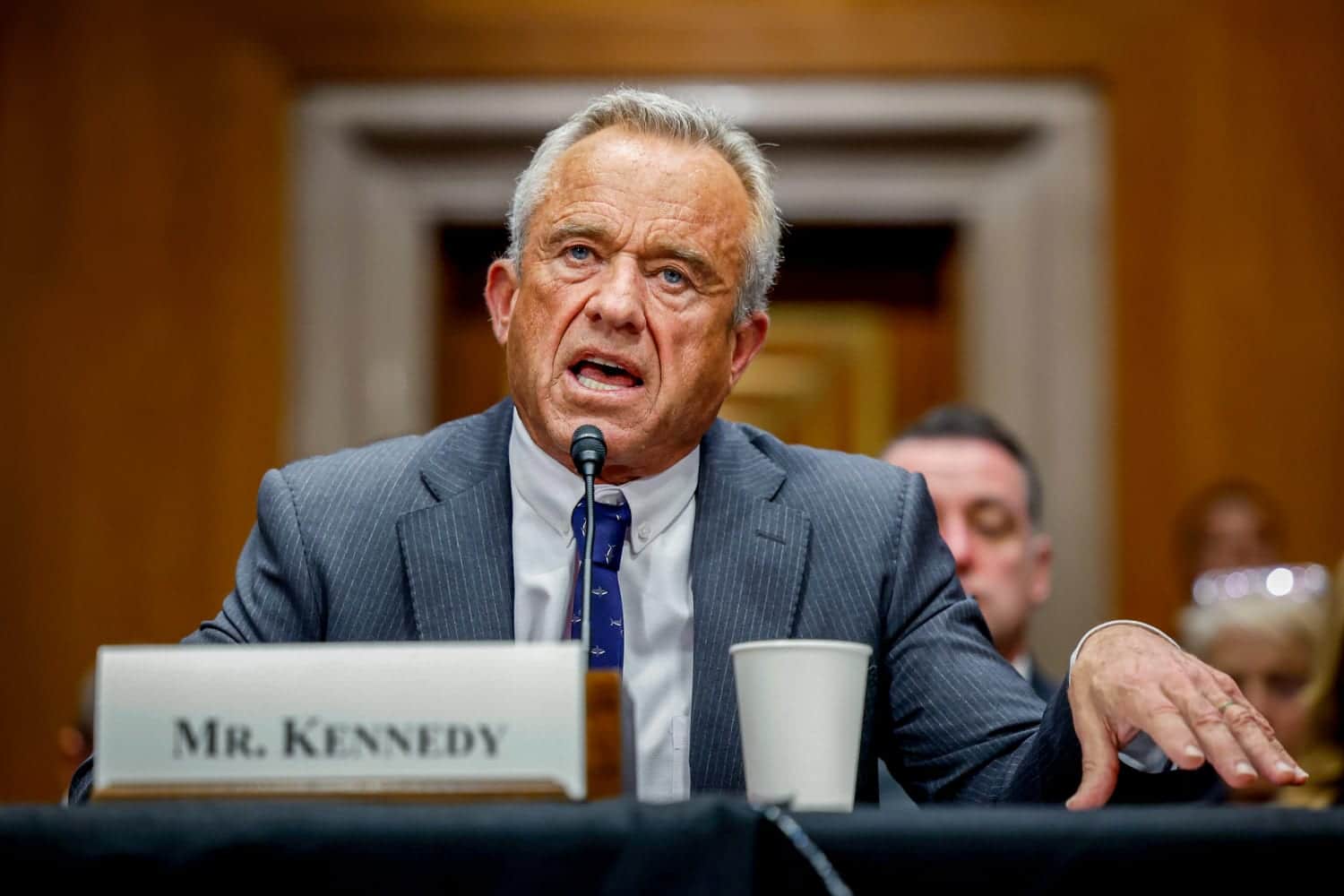
Kennedy’s initiative, supported by Education Secretary Linda McMahon, signals a major pivot in federal health strategy — one that targets prevention, not just treatment.
At stake: the health of millions of Americans and over $4.4 trillion in annual healthcare spending on largely preventable chronic illnesses.
Jump to:
- “Medical Schools Talk About Nutrition But Fail to Teach It”
- A Stark Disconnect Between Diet and Doctor Training
- A Six-Point Plan for Reform
- Institutional Pushback and Momentum
- Doctors Agree: “We’re Under-Trained in Nutrition”
- Political and Policy Support Growing
- Looking Ahead: A Cultural Shift in Medicine?
“Medical Schools Talk About Nutrition But Fail to Teach It”
Kennedy minced no words in his criticism of the current system.
“We demand immediate, measurable reforms to embed nutrition education across every stage of medical training, hold institutions accountable for progress, and equip every future physician with the tools to prevent disease—not just treat it,” he said in a statement on August 27.
His remarks come as part of the Trump administration’s Make America Healthy Again agenda, which aims to address chronic illness by shifting the healthcare focus to diet, lifestyle, and public health.
A Stark Disconnect Between Diet and Doctor Training
Despite growing evidence linking nutrition to chronic disease, most physicians graduate with minimal training in nutritional counseling.
- A 2015 study found that 71% of U.S. medical schools offered fewer than 25 hours of nutrition instruction.
- In 2023, students reported receiving just 1.2 hours of nutrition education per year.
- Research published in 2024 revealed that 75% of medical schools offer no required clinical nutrition classes, and only 14% of residency programs have mandatory nutrition curricula.
This educational gap persists even though an estimated 1 million Americans die each year from diet-related diseases like heart disease, Type 2 diabetes, and certain cancers.
Kennedy framed the issue as a systemic failure.
“We pour more than four trillion dollars annually into treating these preventable diseases, and we continue to graduate physicians unprepared to confront their root cause,” he said in a video message.
A Six-Point Plan for Reform
To close the gap, Kennedy and McMahon laid out a comprehensive six-part reform plan. They’ve asked all medical education institutions to submit implementation strategies by September 10.
The plan includes:
- Pre-Medical Standards – Nutrition must be included in undergraduate requirements.
- Medical School Curricula Integration – Required coursework and hands-on training.
- Medical Licensing Exams – Include nutrition as a scored component.
- Residency Training – Mandate nutrition competencies for all specialties.
- Board Certification Requirements – Nutrition literacy as a qualifying metric.
- Continuing Education – Ongoing training throughout a physician’s career.
“We train physicians to wield the latest surgical tools, but not to guide patients on how to stay out of the operating room in the first place,” Kennedy wrote in an op-ed published in The Wall Street Journal.
Institutional Pushback and Momentum
Some schools argue that nutrition education is already embedded in their programs. Cornell University and the University of North Carolina, for example, told ABC News they believe their offerings are sufficient.
The Association of American Medical Colleges (AAMC) also responded, stating that more than 90% of U.S. and Canadian medical schools report covering nutrition-related topics — including food access, obesity, and dietary guidelines.
Still, Kennedy and McMahon insist those efforts fall short of what’s needed.
Their proposal builds on earlier efforts within the medical community. In 2024, faculty from over 30 universities published proposed national nutrition standards that included 36 specific competencies medical students should master. Many of those recommendations are echoed in Kennedy’s plan.
Doctors Agree: “We’re Under-Trained in Nutrition”
Dr. Nate Wood, a Yale Medicine physician specializing in obesity and nutrition, supports the administration’s push.
“It’s certainly true that physicians are under-trained in nutrition and don’t feel confident addressing diet with their patients,” Wood said. “More nutrition education at all levels is sorely needed: K–12, university, medical school, and residency and fellowship training.”
However, Wood warned that doctors can’t solve the problem alone. Many patients lack access to registered dietitians, and physicians often aren’t taught how to collaborate with these professionals.
“Interprofessional collaboration with dietitians needs to be a focus of whatever nutrition education we implement… to ensure that patients receive team-based care in an evidence-based manner,” he added.
Political and Policy Support Growing
The initiative is not without precedent. In 2022, a bipartisan House resolution called for enhanced nutrition training in medical schools to help reduce the escalating financial and human toll of chronic disease.
In 2023, the Accreditation Council for Graduate Medical Education (ACGME) hosted a summit on integrating nutrition into medical training — further indicating momentum within the system.
Secretary McMahon emphasized the urgency.
“Medical schools across the country must act now to align their training with the latest research so that future physicians have the means to best help their patients stay healthy,” she said.
Looking Ahead: A Cultural Shift in Medicine?
Kennedy’s campaign may prove to be a tipping point for how the U.S. trains doctors.
The upcoming 2025 Dietary Guidelines for Americans — expected later this year — are also being positioned as a cornerstone in this broader push for preventive care.
If Kennedy’s recommendations are widely implemented, it could signal a major cultural shift in American medicine: one that values nutrition and lifestyle as front-line defenses against disease.
Until then, the clock is ticking for medical institutions to respond by the September 10 deadline.
The question now is whether the nation’s most powerful health educators are ready to prescribe food as medicine — and teach future doctors to do the same.