What if everything you thought about aging and physical decline was wrong?
Wendell “Window” Brown—a 60-year-old Olympic sprinter—is living proof that sprinting might be one of the most powerful anti-aging tools available.
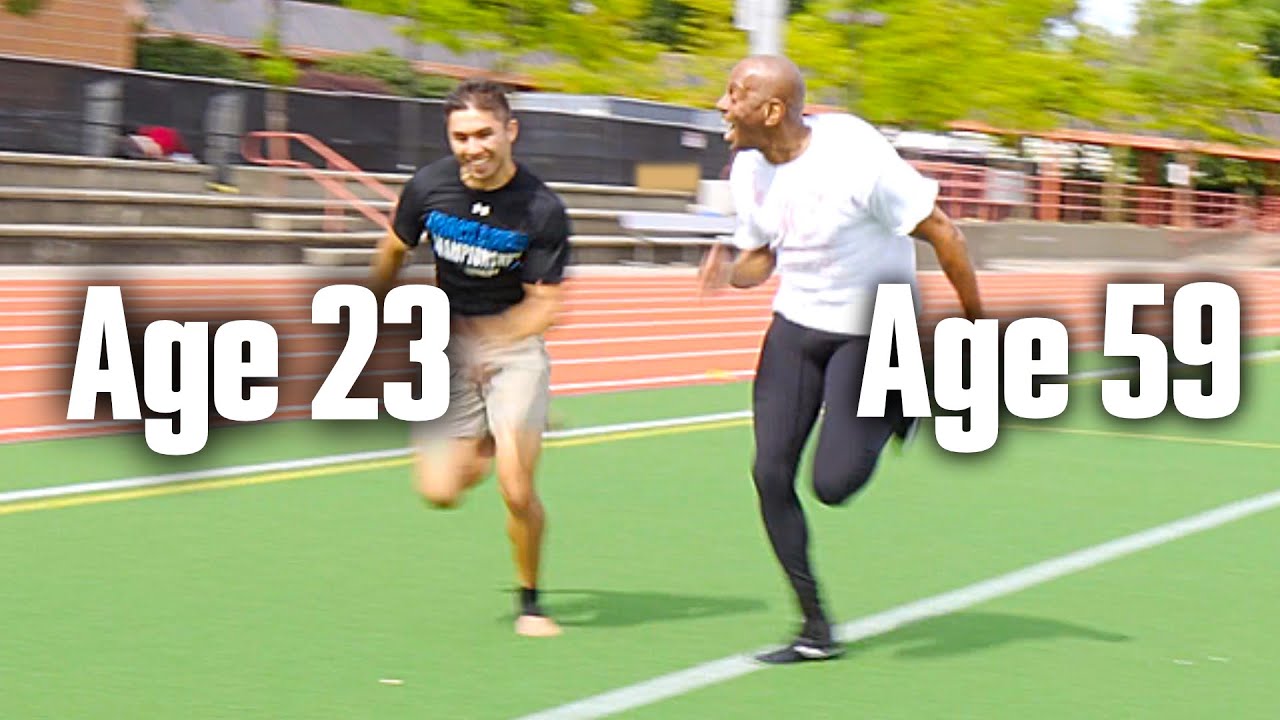
In a recent video, Caesar Bacarella, creator of the Sprint Project, shared Window’s remarkable journey from crutches to outrunning college athletes—and why sprinting should be part of your weekly routine, regardless of age.
Here’s what makes Window’s story so compelling, and why you might want to reconsider dismissing sprints as “just for kids.”
Jump to:
From Olympic Glory to Crutches: Window’s Comeback Story
Window competed as a 200-meter sprinter in the 1992 Olympics. But in 2014, a construction site accident in New York City changed everything.
The site lacked proper barriers and safety cones. Window was in the wrong place at the wrong time, and the injury left him unable to walk without crutches for three months.
I was unable to walk without crutches for 3 months. I could not walk without a limp for 7 months.
Imagine going from being the fastest man in your age group to struggling through daily activities with chronic pain. Window spent nearly a year rebuilding his body from scratch, using the same sprint training concepts he teaches today.
Now? He races college sprinters—and wins.
Racing College Athletes at 60
Window doesn’t just jog for fitness. He competes in 10-meter sprint starts against elite athletes, including Evan, a runner who holds an indoor 200-meter school record and runs the 100 meters in 10.4 seconds.
The footage is astonishing. Window’s reaction time and explosive power rival that of athletes less than half his age.
Caesar, who has run a training company since 2018, says he’s never seen anyone move like Window at 60. Very few people in the world can race record-breaking college sprinters without pulling a hamstring—let alone match their explosiveness.
Why Sprinting Is the Ultimate Anti-Aging Exercise
According to Window and Caesar, sprinting offers benefits that no other single exercise can deliver. Here’s what the science says.
Burns Massive Calories in Minutes
A study by the American Physiological Society found that just five 30-second sprints can burn up to 200 calories. Another paper showed that a single sprint session can increase calorie burn for the entire day by 950 calories.
Simply put: sprinters have lean, muscular, athletic bodies with low body fat. They might not be the biggest in the gym, but they move without pain and look incredible.
Reduces Cognitive Decline
Research by Shu Fang and colleagues in 2023 found that high-intensity interval training like sprinting helps flush out amyloid beta—a neurotoxin linked to Alzheimer’s disease—in mice with dementia symptoms.
Tommy Wood from the Department of Neuroscience notes that grip strength can predict dementia risk. If there’s a 10% or more imbalance between hands, it could signal neurological decline.
Sprinting places massive demand on the nervous system. Elite sprinters apply four to five times their body weight into the ground in fractions of a second. Maintaining sprint ability likely helps maintain neurological health.
Increases Bone Density
Finnish researchers studied Masters athletes (adults over 25) over a 10-year period. They found that those who performed strength and sprint training at least twice weekly had significantly higher bone density in their tibia—the second largest bone in the body, crucial for walking and bearing weight.
This is especially important as we age, when bone density naturally declines.
Boosts Testosterone
A 2021 study by Ambrosie and colleagues examined men aged 35 to 40—an age range where testosterone decreases by 1.6% annually. They had 30 men train just three times per week for one hour using high-intensity interval training.
The result? A 36.7% increase in testosterone levels.
Testosterone is critical for metabolism, reproductive health, and cognitive function in men, making this a game-changer for aging well.
Elevates Human Growth Hormone (HGH)
Sprinting naturally increases HGH production, responsible for muscle growth, fat burning, and recovery. Research on treadmill sprinting found that sprint-trained athletes had 10 times higher HGH levels one hour post-exercise compared to baseline.
Even endurance athletes experienced elevated HGH from sprinting, but the effect was significantly stronger in those with a history of sprint training.
Improves Range of Motion and Resilience
Sprinting moves muscles and joints through their full range of motion at high speeds. This builds resilience and reduces injury risk by exposing weaknesses before they become serious problems.
If you are sprinting just once a week from the time you’re 30 to 40 to 50, by the time you’re 50 you literally have caused your body to morph into a sprinting machine.
Addressing Common Concerns About Sprinting
Despite the benefits, many people hesitate to sprint. Here’s how Window and Caesar address the most common objections.
“I’m Not in Shape for Sprinting”
That’s exactly why you need it. Sprinting exposes every weakness—strength, mobility, stability—and forces you to address them before they become injuries.
Losing sprint ability is an early sign of declining physical health. Better to identify and fix weaknesses now than wait for serious problems later.
“I’m Afraid of Injuries”
All the reasons that people think that they shouldn’t sprint are actually the reasons that they should sprint.
People worry about knees, backs, and being out of shape. But if you sprint once a week from 30 to 50, your body gradually adapts into a “sprinting machine,” drastically reducing injury risk over time.
“I Don’t Have Access to a Track”
You don’t need one unless you’re a competitive sprinter. Sprinting on a grass field is often better—it’s easier on joints, more accessible, and just as effective.
Even Usain Bolt frequently trained on grass to protect his body.
“I Prefer Jogging”
Jogging is easier to start, but pain can build gradually and catch you by surprise. A Danish study of 120 healthy participants found that male long-distance runners had reduced bone mass and accelerated bone loss.
Sprinting on grass, by contrast, increases bone density and protects joints.
How to Get Started with Sprinting Safely
Caesar and Window recommend a gradual progression to minimize injury risk.
Start with Sprint Drills
If you can’t sprint yet, begin with sprint drills. These build coordination, balance, and strength necessary for actual sprints.
- Practice holding an A-skip position: one knee up, one leg straight, posture upright
- Progress to drills while moving, then with bounce
- Gradually increase speed with each session
- Move to fast jogging for 50 yards
Don’t try to be a superhero. Go as fast as you safely can—nothing more.
Sprint on Grass
Grass is easier on joints and just as effective as a track for improving fitness.
Balance Sprinting and Lifting
Always sprint before you lift. Sprinting requires fresh muscles and a fully charged nervous system. Lifting first will compromise your speed and increase injury risk.
A simple 3-day routine:
- Monday: Sprint
- Wednesday: Lift
- Friday: Lift
This allows high-speed performance during sprints while still building strength and hypertrophy in the gym.
Sprint Once Per Week Minimum
Once a week, are you serious? You can’t sprint once a week? Especially if you’re not injured, you’re doing some fast jogging for like 50 yards and you’re 50 years old—I’m going to consider that a sprint.
One sprint session per week is enough to maintain your ability and reap massive health benefits over the next 15 to 20 years.
The Bottom Line
Window’s story shatters the assumption that physical decline is inevitable with age. At 60, he races college athletes, maintains explosive power, and moves pain-free—all thanks to consistent sprint training.
Sprinting burns massive calories, boosts testosterone and HGH, increases bone density, reduces cognitive decline, and builds resilience. It exposes weaknesses before they become injuries and keeps your body functioning like a well-oiled machine.
You don’t need to be an Olympic athlete. You don’t even need a track. Just once per week on grass can transform your health trajectory for decades to come.
You’re not competing in a race—you’re competing to stay as young as you can, for as long as you can.