Elite athletes, CEOs, and working professionals all share one common challenge: maximizing performance under pressure.
What if the solution wasn’t found in another training session, supplement, or productivity hack, but in something you already do every night?
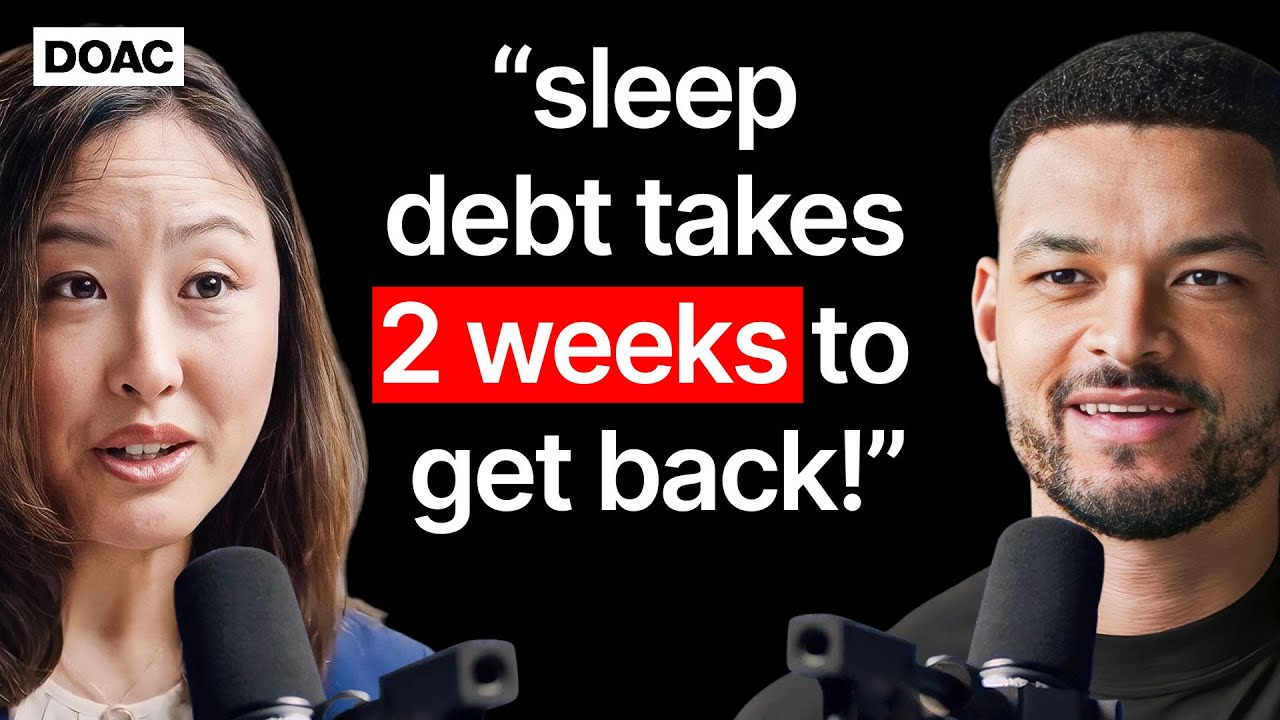
Dr. Cheri Mah, a renowned sleep physician and performance expert, has spent years proving that sleep isn’t just rest—it’s a competitive advantage.
Her research with NBA teams, NFL players, and Formula 1 athletes has revealed something remarkable: proper sleep can predict game outcomes with 86% accuracy and improve performance by double digits.
Jump to:
- Sleep as Performance Enhancement
- The Stanford Basketball Study That Changed Everything
- Predicting NBA Losses With Sleep Science
- Andre Iguodala: A Career Transformed
- Practical Sleep Strategies That Work
- Travel and Jet Lag Strategies
- Sleep Debt Is Real—And Recoverable
- Common Mistakes and Misconceptions
- The Bottom Line for Performance
Sleep as Performance Enhancement
Dr. Mah’s career centers on one powerful belief: if you don’t sleep your best, you won’t be your best.
Working with organizations like the Philadelphia Eagles, Golden State Warriors, and San Francisco Giants, she’s demonstrated how sleep optimization can transform careers.

If you want something simple that actually works, this is one of the most effective tools I’ve used to build strength, conditioning, and endurance without needing a full gym setup.
- Full-body training with one weight using swings, squats, and presses
- Solid cast iron build that feels stable and lasts for years
- Comfortable grip that makes high-rep workouts easier to handle
For my elite athletes that I work with, sufficient sleep is a game changer. For example, we saw 12% faster reaction time, a 9% improvement in free throws, and a 4% increase in faster sprint time.
These aren’t marginal gains—they’re the difference between winning championships and falling short.
The Stanford Basketball Study That Changed Everything
In her landmark 2011 study with adult male basketball players, Dr. Mah extended sleep to 9-10 hours nightly over 5-7 weeks.
Players objectively wore activity monitors to track sleep duration, then completed standardized performance tests after every practice.
The results were staggering:
- 9% improvement in free throw shots
- 9% improvement in three-point shots
- 12% faster reaction time
- 4% increase in sprint speed (from 16.2 to 15.5 seconds)
Players slept approximately 90 minutes more per night, paying back accumulated sleep debt that had masked their true performance capacity.
Predicting NBA Losses With Sleep Science
Perhaps most fascinating is Dr. Mah’s work with ESPN on the NBA Schedule Alert Project.
If you want something simple that actually works, this is one of the most effective tools I’ve used to build strength, conditioning, and endurance without needing a full gym setup.
- Full-body training with one weight using swings, squats, and presses
- Solid cast iron build that feels stable and lasts for years
- Comfortable grip that makes high-rep workouts easier to handle
Could sleep patterns predict when teams would lose—without even considering team strength?
I was 76% to 86% correct on accurately predicting when an NBA team will be at highest risk of losing strictly based on the schedule.
Travel schedules, time zone crossings, and insufficient sleep windows created predictable performance deficits.
The body clock advantage is particularly striking in Monday Night Football: West Coast teams beat the Las Vegas point spread 68% of the time over 25 seasons when playing East Coast opponents during night games.
Why? Performance peaks between 4-8 PM on your body clock, giving West Coast teams a physiological edge regardless of location.
Andre Iguodala: A Career Transformed
Golden State Warriors player Andre Iguodala came to Dr. Mah in 2014 as an established All-Star.
At 28, he knew his career would eventually sunset and wanted to extend it as long as possible.
If you want something simple that actually works, this is one of the most effective tools I’ve used to build strength, conditioning, and endurance without needing a full gym setup.
- Full-body training with one weight using swings, squats, and presses
- Solid cast iron build that feels stable and lasts for years
- Comfortable grip that makes high-rep workouts easier to handle
His routine? Playing video games until the early morning hours, sleeping a few hours, practicing, then taking 2-3 hour “power naps.” For a decade.
Dr. Mah implemented strategic changes: wind-down routines, managing racing thoughts outside of bed, optimizing sleep environment, shortening naps to 20-30 minutes timed closer to games, and extending total sleep from under 7 hours to over 8 hours.
Third-party quantification showed remarkable improvements:
- Two-fold increase in three-point percentage
- 88.9% increase in free throw shots (matching the 9% from the Stanford study)
- 29% improvement in points per minute
- 45% decrease in fouls
The following season, the Warriors won their first championship in years. Iguodala won Finals MVP and subsequently earned three more championship rings, extending his career for 10 additional years.
When you experience what it feels like to be well rested, you never want to go back.
Practical Sleep Strategies That Work
Create a Cave-Like Sleep Environment
Your bedroom should be dark, quiet, cool, and comfortable.
Dark: Blackout curtains and eye masks block light exposure that disrupts sleep.
If you want something simple that actually works, this is one of the most effective tools I’ve used to build strength, conditioning, and endurance without needing a full gym setup.
- Full-body training with one weight using swings, squats, and presses
- Solid cast iron build that feels stable and lasts for years
- Comfortable grip that makes high-rep workouts easier to handle
Quiet: Earplugs and white noise machines mask external sounds you can’t control. Adaptive white noise machines automatically increase volume when sudden noises occur, then decrease again.
Cool: Aim for 60-67°F (16-20°C). Core temperature drops during sleep, so cooler environments facilitate this natural process. Smart mattress covers can accommodate different temperature preferences for bed partners.
Time Your Shower Strategically
Hot showers or baths increase core temperature temporarily, but you need temperature to drop for sleep.
Schedule hot showers 90 minutes before bed—not immediately before. This timing allows temperature to drop naturally, potentially decreasing time to fall asleep and enhancing deep sleep for muscle recovery.
Smart Pre-Sleep Nutrition
Avoid heavy, fried, fatty meals right before bed. If you’re genuinely hungry, choose a pre-sleep snack with 50% complex carbs and 50% lean protein:
- Cereal (whole grain, not sugary) and milk
- Cottage cheese and fruit
- 100% whole wheat crackers and peanut butter
- Nuts with yogurt and berries
These combinations provide slow-digesting fuel through your 7-9 hour sleep period without causing digestive distress.
If you want something simple that actually works, this is one of the most effective tools I’ve used to build strength, conditioning, and endurance without needing a full gym setup.
- Full-body training with one weight using swings, squats, and presses
- Solid cast iron build that feels stable and lasts for years
- Comfortable grip that makes high-rep workouts easier to handle
What destroys sleep? Alcohol, caffeine, fried foods, and sugary carbs before bed significantly impair sleep quality and increase nighttime awakenings.
The Nappuccino Strategy
For working professionals needing an afternoon boost, try the “nappuccino”: consume your favorite caffeinated beverage, then immediately take a 20-30 minute power nap.
Caffeine takes about 15 minutes to kick in. If you fall asleep within 5-10 minutes, both the nap and caffeine hit simultaneously when you wake.
Research shows this combination improves alertness and performance more than caffeine or napping alone.
Manage Racing Thoughts Outside the Bed
Spend 10 minutes processing thoughts outside of bed in dim light every night. Options include:
- Stretching or deep breathing exercises
- Journaling
- Writing tomorrow’s to-do list
This activates your parasympathetic nervous system (rest and digest) while dampening your sympathetic system (fight or flight).
If you want something simple that actually works, this is one of the most effective tools I’ve used to build strength, conditioning, and endurance without needing a full gym setup.
- Full-body training with one weight using swings, squats, and presses
- Solid cast iron build that feels stable and lasts for years
- Comfortable grip that makes high-rep workouts easier to handle
It’s easier to slowly pump the brakes and sleep than to go 60 mph and suddenly slam them.
Travel and Jet Lag Strategies
Most people have zero strategy for travel beyond getting on a plane and hoping for the best.
Pre-flight: Don’t panic pack the night before—it cuts sleep short. Get at least 7 hours (or your optimal amount) for 1-2 nights before travel. Start shifting your body clock by going to bed 30 minutes earlier for 2-3 days before eastward travel.
In-flight: Hydrate consistently (dehydration worsens jet lag). Synchronize with destination time zone for sleep and meals. Build a travel sleep kit with eye mask, earplugs, noise-cancelling headphones, and travel pillow.
Post-flight: Seek sunlight at strategic times (or avoid it with sunglasses, depending on direction of travel). Give yourself at least one day to acclimate before important meetings or maximal exercise. Use caffeine and power naps strategically during afternoon alertness dips.
Rule of thumb: expect one day of readjustment per time zone crossed.
If you want something simple that actually works, this is one of the most effective tools I’ve used to build strength, conditioning, and endurance without needing a full gym setup.
- Full-body training with one weight using swings, squats, and presses
- Solid cast iron build that feels stable and lasts for years
- Comfortable grip that makes high-rep workouts easier to handle
Sleep Debt Is Real—And Recoverable
If you need 8 hours nightly but only get 6, you accumulate 2 hours of debt per night. Over five weekdays, that’s 10 hours.
Sleeping 10 hours Saturday pays back just 2 hours—leaving 8 hours outstanding.
Research shows reaction times don’t return to baseline after just one recovery night or weekend. Dr. Mah’s studies suggest multiple weeks of extended sleep effectively pay back significant debt, with biggest improvements in the first 1-2 weeks.
Even 5 days of one additional hour showed improvements in cognitive reaction time and processing speed in professional baseball players.
Small changes add up: Just 15 minutes more sleep nightly equals almost 2 hours weekly—the difference between an A student and B student in research on high schoolers.
Common Mistakes and Misconceptions
The snooze button: Hitting snooze five times for 30 minutes creates fragmented, low-quality sleep. Set your alarm for when you actually need to wake up, maximizing consolidated REM sleep in those crucial morning hours for memory consolidation.
If you want something simple that actually works, this is one of the most effective tools I’ve used to build strength, conditioning, and endurance without needing a full gym setup.
- Full-body training with one weight using swings, squats, and presses
- Solid cast iron build that feels stable and lasts for years
- Comfortable grip that makes high-rep workouts easier to handle
Technology in bed: Only sleep and sex belong in bed. Everything else—work, phones, computers—should stay outside. Strengthen the brain’s association between bed and sleep, not wakefulness.
Snoring isn’t normal: About 26% of people aged 30-70 have obstructive sleep apnea, where airways partially or fully collapse during sleep. It causes fragmented sleep, daytime fatigue, early morning awakenings, and gasping. Get tested if you or bed partners notice these symptoms.
Naps should be short: Longer naps (2-3 hours) lead to sleep inertia—that groggy, sluggish feeling. Keep naps to 20-30 minutes in late morning or early afternoon, staying in lighter sleep stages for alertness boost without disrupting nighttime sleep.
The Bottom Line for Performance
Whether you’re an athlete, CEO, or working professional, sleep isn’t the end of your day—it’s the beginning of tomorrow.
Insufficient sleep impairs decision-making, slows reaction time, increases injury risk, dysregulates appetite hormones, and diminishes emotional regulation. The Challenger space shuttle disaster investigation cited fatigue and insufficient sleep among key decision-makers as contributing factors.
Getting 15 more minutes tonight might seem insignificant, but it’s the difference between elite performance and mediocrity.
If you want something simple that actually works, this is one of the most effective tools I’ve used to build strength, conditioning, and endurance without needing a full gym setup.
- Full-body training with one weight using swings, squats, and presses
- Solid cast iron build that feels stable and lasts for years
- Comfortable grip that makes high-rep workouts easier to handle
Start with one change: optimize your environment, establish a wind-down routine, or schedule showers strategically. These small adjustments create compounding benefits over weeks and months.
As Dr. Mah’s research proves, you can’t out-train, out-think, or out-perform chronic sleep deprivation. But when you finally experience what it feels like to be well-rested, you’ll never want to go back.
Sleep isn’t negotiable—it’s your most powerful performance enhancer.