Mitochondrial decline doesn’t just happen overnight.
It’s a slow, silent process that begins in your 30s and accelerates with each passing decade, robbing your cells of the energy they need to function at peak capacity.
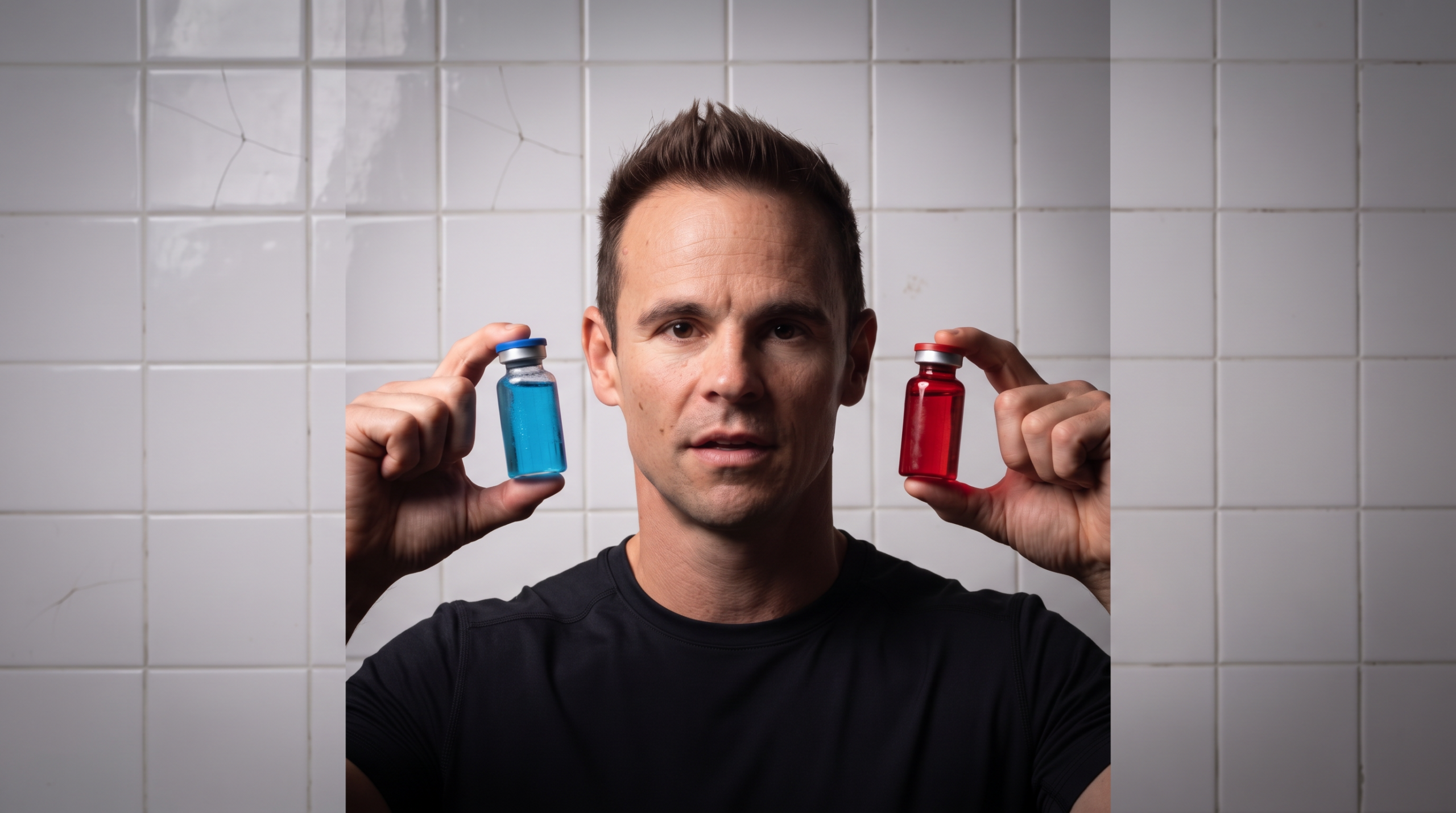
While most people blame testosterone or aging for their declining energy and stubborn fat loss, the real culprit might be hiding deep inside every cell in your body.
Two naturally occurring peptides, MOTS-c and NAD+, are gaining attention for their potential role in restoring cellular function and metabolic efficiency.
Jump to:
Understanding Mitochondrial Decline
Mitochondria serve as the power plants of cells, converting food into ATP, the energy currency that fuels everything from movement to cognition to recovery.
As people age, mitochondrial function deteriorates. Fewer mitochondria are produced, and existing ones become less efficient, creating oxidative stress—cellular damage that accumulates faster than the body can repair it.
This decline manifests as low energy, slower fat loss, extended recovery times, and reduced exercise capacity. While testosterone decline and general aging contribute to these symptoms, they’re downstream effects of deeper cellular dysfunction.
Addressing mitochondrial health targets the root cause rather than masking individual symptoms with multiple interventions.
MOTS-c: The Mitochondrial Messenger
MOTS-c stands apart from other peptides because of its unique origin.
While most peptides like BPC-157 and TB-500 are encoded in nuclear DNA, MOTS-c is encoded in mitochondrial DNA—a separate genome housed within mitochondria themselves.
This peptide isn’t a synthetic compound. It’s a signaling molecule the body produces naturally, though production declines significantly with age.
How MOTS-c Works
During intense exercise, mitochondria release MOTS-c as a messenger. This signal travels to the cell nucleus and instructs DNA to build more mitochondria, shift metabolism toward fat burning, and protect cells from oxidative damage.
Researchers have labeled MOTS-c an “exercise mimetic” because it creates internal signals similar to those generated during hard training sessions.
MOTS-c activates AMPK, a master metabolic switch that determines whether the body stores or burns fat. When AMPK is activated, the body shifts toward using stored fat for fuel rather than holding onto it.
This mechanism underlies the potential for improved recovery, sustained energy, and accelerated fat loss.
The Catch With MOTS-c
MOTS-c places metabolic demand on cells, asking mitochondria to produce more and repair faster.
If cells are already stressed from years of inflammation, poor sleep, or chronic overtraining, adding more demand without addressing underlying dysfunction can backfire.
Many people start MOTS-c alone and expect immediate results. Instead, they feel worse before feeling better, leading them to abandon the protocol prematurely.
This is where proper preparation becomes critical.
SS-31: Cleaning the Engine Before Stepping on the Gas
SS-31 is another mitochondrial peptide, but it performs a fundamentally different function than MOTS-c.
While MOTS-c asks cells to produce more, SS-31 goes in first to clean up. It targets mitochondrial membranes and clears accumulated oxidative stress.
Think of MOTS-c as stepping on the gas pedal. SS-31 ensures the engine isn’t running on dirty oil before acceleration begins.
Running SS-31 for seven to fourteen days before introducing MOTS-c creates a cleaner cellular environment, reducing the risk of feeling overstimulated or fatigued when MOTS-c enters the picture.
The Role of NAD+ in Cellular Energy
NAD+ exists in every cell and is essential for converting food into ATP.
Without adequate NAD+, this conversion process slows or stalls entirely. Like mitochondria, NAD+ levels decline with age—by the time someone reaches their 40s, levels may drop to half of what they were in their 20s.
NAD+ is not a stimulant. It won’t deliver an immediate energy spike. Instead, it supports long-term cellular fuel systems.
Because MOTS-c takes weeks to fully compound in the bloodstream and create noticeable shifts, NAD+ doesn’t need to be introduced during the early transition window.
Introducing NAD+ around weeks four or five allows MOTS-c to establish its effects first, then NAD+ enters to support long-term cellular health without competing for attention.
NAD+ Dosing
For injectable NAD+, dosing should remain conservative: 200 to 600 micrograms twice per week maximum.
Daily dosing isn’t necessary, and higher doses don’t produce better results—they increase the risk of side effects like facial flushing and chest tightness.
NAD+ plays the long game. While MOTS-c handles the heavy lifting in performance and metabolic optimization, NAD+ supports cellular health over months and years.
The Complete Stacking Protocol
Proper sequencing and timing make all the difference in how this stack performs.
Week One: SS-31 Alone
Begin with SS-31 to clear oxidative stress and prepare mitochondrial membranes. This cleanup phase prevents the overstimulation and fatigue that many experience when jumping straight into MOTS-c.
Weeks Two Through Eight: Add MOTS-c
Introduce MOTS-c at 5 to 10 mg per week, split across two to three injections (or up to five smaller doses Monday through Friday if preferred).
Take at least two days off each week. Daily dosing isn’t beneficial and adds unnecessary cellular stress.
Continue SS-31 parallel to MOTS-c at a lower, steady dose throughout the entire cycle to maintain a clean cellular environment.
Week Four: Introduce NAD+
By week four, MOTS-c has had sufficient time to compound. NAD+ can now be layered in to support long-term cellular energy without interfering with the initial transition.
Injectable NAD+ should be dosed at 200 to 600 micrograms twice weekly.
Coming Off the Stack
There’s no need to taper. Simply stop all peptides when the cycle concludes.
Blood Work and Tracking
Comprehensive blood work should be completed before starting and after finishing the protocol.
Key markers to track include:
- Fasting insulin
- Glucose
- Hemoglobin A1C
- Lipid panel
- Inflammatory markers
Beyond blood work, subjective tracking provides valuable insight:
- Energy levels
- Body temperature
- Sleep quality
- Recovery time
- Resting heart rate and HRV
These metrics reveal whether the stack is producing meaningful changes or if adjustments are needed.
What Happens Outside the Injections Matters
Peptides optimize cellular machinery, but they don’t replace foundational habits.
Training
MOTS-c mimics the internal signal from exercise, but it doesn’t replace training itself.
Training activates the full effect of what MOTS-c does to cells. Stick to four to five days per week of resistance training, plus 30 minutes of Zone 2 cardio two to three times weekly.
Sleep
Mitochondria repair and regenerate during deep sleep. Prioritize six to nine hours with consistent sleep and wake times.
Irregular sleep schedules undermine mitochondrial recovery and blunt the stack’s effectiveness.
Nutrition
This stack optimizes how efficiently the body uses fuel, which means the quality of that fuel matters.
Aim for at least 0.5 to 1 gram of protein per pound of lean body mass daily, with carbohydrates timed around training sessions.
Avoid fasted training or relying on protein bars and shakes immediately before workouts, as these practices can interfere with peptide effectiveness.
Supportive Supplements
Consider adding the following if deficiencies exist:
- Vitamin D
- Magnesium
- CoQ10
- Omega-3 fatty acids
- B-complex vitamins
Final Considerations
This protocol isn’t about masking symptoms with another pharmaceutical intervention.
It targets the cellular machinery responsible for energy production, fat metabolism, and recovery—systems that decline naturally with age but can be supported through strategic peptide use.
MOTS-c and NAD+ work synergistically when introduced at the right time, with proper preparation, and supported by foundational lifestyle habits.
Results don’t appear overnight. Mitochondrial adaptation takes weeks to compound, but once the machinery is optimized, the effects on energy, recovery, and body composition can be substantial.
Always consult with a qualified medical professional before beginning any peptide protocol. Blood work, individualized dosing, and medical oversight ensure safety and effectiveness.