Dietitian and trainer Rebecca knows the frustration intimately: having all the right knowledge but still feeling stuck.
She had the degree, understood calories, knew protein mattered, and could explain why strength training works—yet her body wasn’t changing.
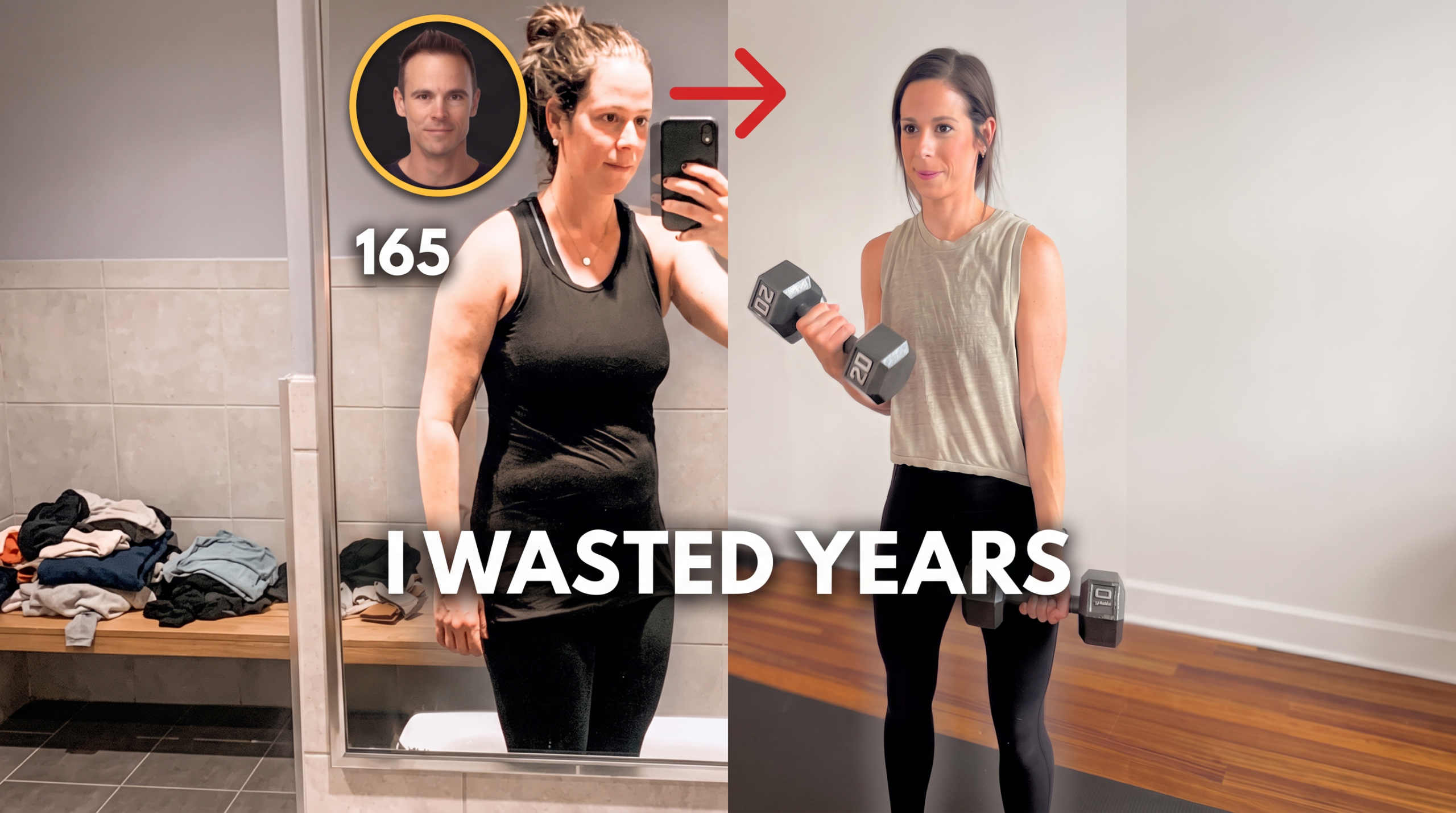
In a recent video to her audience of busy moms, she revealed the breakthrough that finally made everything click.
It wasn’t about finding a better plan or learning something new—it was about bridging the gap between knowing what to do and actually becoming someone who does it consistently.
Jump to:
The Problem Isn’t Your Plan
Most women approach body transformation by focusing on the obvious: meal plans, workout schedules, calorie targets, macro breakdowns.
Rebecca explains these elements matter, but they’re not the whole story.

If you want something simple that actually works, this is one of the most effective tools I’ve used to build strength, conditioning, and endurance without needing a full gym setup.
- Full-body training with one weight using swings, squats, and presses
- Solid cast iron build that feels stable and lasts for years
- Comfortable grip that makes high-rep workouts easier to handle
Your body is not just responding to the plan you meant to follow. It is responding to what you actually repeat.
Your body adapts to the meals eaten most often, the protein consumed most days, workouts actually completed—not the perfect schedule pinned to Pinterest.
It responds to how you sleep, handle weekends, and eat when tired, stressed, or off routine.
What Are You Teaching Your Body?
Rebecca reframes the entire question around body change.
The question is not, am I changing my body or not? The question is, what am I teaching my body to adapt to?
Following a perfect plan for four days then undoing it for three doesn’t confuse your body—it teaches a pattern of inconsistency.
This insight completely shifts how to approach fat loss. The issue wasn’t needing a better plan; it was forcing results before building a lifestyle that could support those results.
Why “Right Things” Don’t Always Work
Many women doing technically correct things—eating protein, strength training, walking more, tracking food—still feel frustrated.
If you want something simple that actually works, this is one of the most effective tools I’ve used to build strength, conditioning, and endurance without needing a full gym setup.
- Full-body training with one weight using swings, squats, and presses
- Solid cast iron build that feels stable and lasts for years
- Comfortable grip that makes high-rep workouts easier to handle
Rebecca identifies the missing piece: repeatability over intensity.
Protein works when it becomes normal eating patterns, not occasional efforts. Strength training changes body composition when muscles receive consistent signals week after week. Walking creates results as lifestyle, not during challenges only.
Research strongly supports this principle. While the body does adapt to sustained training and nutrition patterns over weeks and months, day-to-day fluctuations matter less than the overall trend—making consistency the true driver of long-term change.
The Perfect Version Trap
Most plans require the perfect version of you: well-rested, meal-prepped, stress-free, with no sick kids and full workout time.
But that version of you is not the one who needs the plan. The tired version of you needs the plan. The busy version of you needs the plan.
Plans working only when life is calm aren’t actually sustainable, Rebecca emphasizes repeatedly.
The version who has 20 minutes instead of an hour, who forgot to thaw chicken, who’s running on five hours of sleep—that’s who your plan must serve.
If you want something simple that actually works, this is one of the most effective tools I’ve used to build strength, conditioning, and endurance without needing a full gym setup.
- Full-body training with one weight using swings, squats, and presses
- Solid cast iron build that feels stable and lasts for years
- Comfortable grip that makes high-rep workouts easier to handle
The Three Signals That Matter Most
Rather than overhauling everything simultaneously, Rebecca recommends starting with three foundational signals:
- Protein – Helps maintain fullness, supports muscle retention, and makes fat loss easier
- Strength training – Signals body to preserve muscle during fat loss, actually changing body shape
- Daily movement – Increases overall energy burn without requiring exhausting workouts
These three pillars align well with evidence-based fat loss research, though they represent a simplified approach. The protein recommendation particularly reflects solid science—studies in the American Journal of Clinical Nutrition and sports medicine reviews consistently show protein supports satiety and muscle preservation during caloric deficits.
Strength training’s role in maintaining lean mass during weight loss is extensively documented in applied physiology research, while increased daily movement taps into NEAT (Non-Exercise Activity Thermogenesis), a well-established contributor to energy expenditure.
Start With What You Can Actually Repeat
Before worrying about perfect execution, Rebecca suggests asking three questions:
- Am I getting protein consistently?
- Am I strength training consistently?
- Am I moving my body most days?
If answering no, start there—not with detoxes, random challenges, or slashing calories further.
The goal is not to impress yourself for 5 days, the goal is to build something your actual life can support.
Making It Realistic for Real Life
Rebecca offers specific starting points that prioritize sustainability over perfection.
If you want something simple that actually works, this is one of the most effective tools I’ve used to build strength, conditioning, and endurance without needing a full gym setup.
- Full-body training with one weight using swings, squats, and presses
- Solid cast iron build that feels stable and lasts for years
- Comfortable grip that makes high-rep workouts easier to handle
Protein: Start With One Meal
Instead of overhauling the entire day, focus on breakfast first. Can you hit 30 grams of protein most mornings?
The specific 30-gram target is reasonable, though research shows benefits across a range of 20-40 grams per meal. More importantly, total daily protein intake matters most for body composition—meal-by-meal distribution is secondary for most people. Still, starting with breakfast creates an achievable habit.
Simple options include:
- Greek yogurt with berries and chia seeds
- Eggs with egg whites and sourdough toast
- Protein smoothie
- Protein bar paired with fruit and yogurt
The key is choosing something simple enough to avoid reinventing breakfast daily.
Strength Training: Quality Over Quantity
Don’t start with five weekly sessions. Begin with two or three workouts, just 20-30 minutes each.
Rebecca emphasizes getting workouts on the calendar so they stop being daily decisions and become automatic routines.
If you want something simple that actually works, this is one of the most effective tools I’ve used to build strength, conditioning, and endurance without needing a full gym setup.
- Full-body training with one weight using swings, squats, and presses
- Solid cast iron build that feels stable and lasts for years
- Comfortable grip that makes high-rep workouts easier to handle
Walking: Small Steps Add Up
Skip massive step goals initially. Start with a 10-minute walk after dinner, walking while kids ride bikes, getting outside during lunch, or treadmill time during shows.
Rebecca acknowledges these habits might sound too simple—and that’s precisely why people skip them, seeking something feeling substantial enough to work.
Your body does not need dramatic. It needs consistent and consistency starts with choosing something you can actually do again tomorrow.
Building Momentum Through Simplicity
Rebecca suggests this week’s only goals might be:
- 30 grams protein at breakfast
- Three strength workouts
- 10-minute walk after dinner most nights
That’s it. Nothing more.
This might feel underwhelming compared to dramatic resets changing everything simultaneously. But behavioral psychology research consistently shows that adherence trumps intensity for long-term success.
Once breakfast becomes automatic, lunch gets easier. When workouts hit calendars regularly, they stop requiring daily decisions. As walking integrates into evenings, it transforms from fitness goal to routine habit.
If you want something simple that actually works, this is one of the most effective tools I’ve used to build strength, conditioning, and endurance without needing a full gym setup.
- Full-body training with one weight using swings, squats, and presses
- Solid cast iron build that feels stable and lasts for years
- Comfortable grip that makes high-rep workouts easier to handle
That’s when your body receives consistent signals.
Fitting Into School Schedules and Real Life
If body change requires putting life on hold, it probably won’t last.
But habits fitting into school schedules, work demands, tired days, kids’ needs, dinner prep, weekends, and normal life chaos? Those create something worth building on.
If the only way you can change your body is by putting your whole life on hold, it is probably not going to last.
The Realistic Path Forward
Rebecca’s message challenges the all-or-nothing approach dominating fitness culture.
Instead of seeking stricter plans, lower calories, harder workouts, new challenges, or fresh Monday resets, focus on what actually drives body composition change: repeatable actions your real life can support.
The habits changing bodies rarely feel dramatic initially. They’re often so simple they seem insufficient—which is exactly why they work long-term.
If you want something simple that actually works, this is one of the most effective tools I’ve used to build strength, conditioning, and endurance without needing a full gym setup.
- Full-body training with one weight using swings, squats, and presses
- Solid cast iron build that feels stable and lasts for years
- Comfortable grip that makes high-rep workouts easier to handle
After losing 35 pounds following two pregnancies while raising three kids, Rebecca built her approach around this principle: sustainable beats perfect every time.
Knowledge matters, but transformation happens when you bridge the gap between knowing and doing—building habits that fit the messy, imperfect, beautifully chaotic reality of actual life.
Not the life you wish you had. The one you’re living right now.
Sources
- American Journal of Clinical Nutrition – protein and satiety research
- Journal of Applied Physiology – muscle preservation during caloric deficit
- Sports Medicine – strength training and body composition reviews
- NEAT (Non-Exercise Activity Thermogenesis) – energy expenditure research