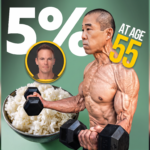
Bill Maeda is challenging everything you thought you knew about diet and body composition.
At 55, he’s maintaining single-digit body fat percentages without ever weighing his food, counting macros, or following any structured eating plan.
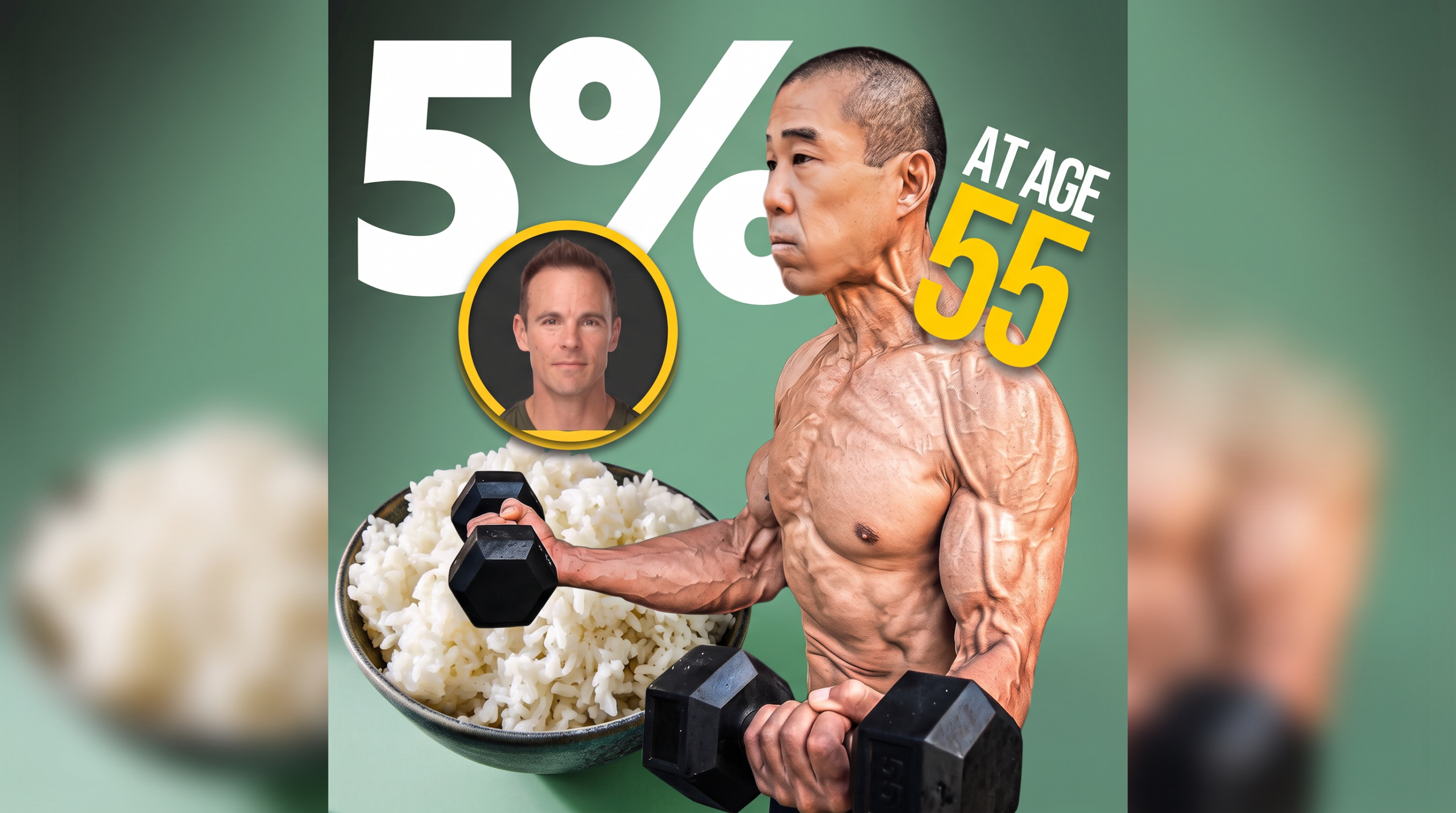
His approach flies in the face of conventional fitness wisdom, yet the results are undeniable.
In a recent conversation with fitness influencer Thomas DeLauer, Maeda revealed the surprisingly unconventional strategy behind his remarkable physique.
Jump to:
- The Foundation: Constant Movement Since High School
- The Hunger Strategy That Changes Everything
- The Food Philosophy: Fuel, Not Feelings
- What He Actually Eats: The Staples
- The Fractal Eating Pattern
- Strategic Use of “Bad” Foods
- The Carb Cycling That Isn’t Planned
- The Supplement Stack: Surprisingly Simple
- The Sleep Deficit He’s Finally Addressing
- The Natural Question: Performance Enhancing Drugs
- What You Can Actually Learn From This
- The Intangible Element
- The Career That Built The Metabolism
- The Reality Check
- Sources
The Foundation: Constant Movement Since High School
Maeda’s metabolic advantage didn’t happen by accident. He’s spent his entire adult life in constant motion.
“I have never worked a job that required me to sit down or to stay in one place for more than 10 minutes,” Maeda explained. Originally training for Special Forces before a shoulder injury derailed his military plans, he transitioned into personal training and hasn’t stopped moving since.

If you want something simple that actually works, this is one of the most effective tools I’ve used to build strength, conditioning, and endurance without needing a full gym setup.
- Full-body training with one weight using swings, squats, and presses
- Solid cast iron build that feels stable and lasts for years
- Comfortable grip that makes high-rep workouts easier to handle
This decades-long pattern of non-exercise activity thermogenesis—the calories burned through daily movement outside of structured exercise—has fundamentally shaped his metabolism.
Every job he’s held required him to be on his feet, demonstrating movements, and constantly active. This lifestyle choice has created what he calls an “AK-47 metabolism” that can run on virtually any fuel source.
The Hunger Strategy That Changes Everything
Perhaps the most crucial element of Maeda’s approach is what he calls “always being a little hungry.”
Even though I might eat disgusting amounts of stuff, I’m never stuffed with those things. I’m never maxed out. I’ll eat till I feel not hungry or I might even be a little full and then I’m going to just coast on that until I actually start feeling my kind of like my cheeks sucking in a little and then I know I’m ready to eat again.
This state of mild hunger isn’t deprivation—it’s metabolic optimization.
When hunger hormones like ghrelin are elevated, the body increases hormone-sensitive lipase and promotes lipolysis, the breakdown of stored fat for energy. By allowing himself to reach genuine hunger before eating again, Maeda keeps his body in a fat-burning state throughout much of the day.
Unlike restrictive dieting, this approach requires no calorie counting. It’s purely intuitive, driven by physiological signals rather than predetermined meal times.
If you want something simple that actually works, this is one of the most effective tools I’ve used to build strength, conditioning, and endurance without needing a full gym setup.
- Full-body training with one weight using swings, squats, and presses
- Solid cast iron build that feels stable and lasts for years
- Comfortable grip that makes high-rep workouts easier to handle
The Food Philosophy: Fuel, Not Feelings
Maeda’s relationship with food is remarkably uncomplicated. He views everything he eats as fuel, regardless of whether it’s a “clean” meal or fast food.
Whether it’s Costco hot dogs or a perfectly done macrobiotic masterpiece, it enters my body in the context of it being a fuel. I just ate a couple of pork chops with a bunch of white rice and right now I feel that that is burning. It doesn’t sit there.
This mental framework does something powerful: it maintains a constant awareness of food as energy. After eating, Maeda stays “internally connected” to what he consumed, visualizing it as a burning sun providing energy for hours.
This isn’t emotional eating or mindless consumption. It’s highly conscious fuel management.
When he eats ice cream for three days straight, it’s because his body is signaling a need for those specific nutrients. As soon as that need is met, he stops—often abruptly—and the craving disappears.
What He Actually Eats: The Staples
Despite the flexibility in his approach, certain foods appear consistently in Maeda’s diet.
- Red meat: His primary protein source, often consuming half a pound or more of steak, venison, or elk daily
- White rice: A Hawaiian staple that provides quick-burning carbohydrate fuel
- Fruit: Especially strawberries and mangoes, consumed in moderate amounts when craved
- Dairy: Including ice cream, which he uses strategically
- Processed foods: Pancakes, waffles, fast food burgers—consumed without guilt when needed
At approximately 195 pounds and 5’11”, Maeda estimates he consumes around half a pound of protein daily—roughly 224 grams if that’s all protein, though likely less given preparation methods.
If you want something simple that actually works, this is one of the most effective tools I’ve used to build strength, conditioning, and endurance without needing a full gym setup.
- Full-body training with one weight using swings, squats, and presses
- Solid cast iron build that feels stable and lasts for years
- Comfortable grip that makes high-rep workouts easier to handle
His carbohydrate intake varies wildly, from minimal amounts on some days to what he describes as “disgusting amounts” on others, particularly after periods of glycogen depletion.
The Fractal Eating Pattern
What Maeda practices intuitively is what some nutrition scientists call “fractal eating”—a random, non-uniform eating pattern that mimics how humans likely ate throughout most of evolutionary history.
Some days he might consume 5,000 calories. Other days, barely 1,000. There’s no rigid meal timing, no eating window, no scheduled refeed days.
Yesterday I needed lots of sugar. I was drinking my daughter’s apple juice and eating chocolate-covered rice crackers. But after a certain point, I stopped. That little boost of sugar helped me not overeat at dinner.
This randomness may provide metabolic benefits by preventing the body from adapting to a predictable energy intake pattern. When the body can’t predict when the next meal is coming or how large it will be, it may maintain a higher metabolic rate.
DeLauer pointed out that this approach—though it sounds chaotic—actually addresses what many consider the core issue in metabolic health: the mismatch between energy intake and energy utilization.
Strategic Use of “Bad” Foods
Perhaps most controversial is Maeda’s tactical use of hyper-palatable foods.
If you want something simple that actually works, this is one of the most effective tools I’ve used to build strength, conditioning, and endurance without needing a full gym setup.
- Full-body training with one weight using swings, squats, and presses
- Solid cast iron build that feels stable and lasts for years
- Comfortable grip that makes high-rep workouts easier to handle
He’ll consume ice cream mixed with cold brew coffee before a workout, deliberately using the sugar, caffeine, and even the psychological guilt as motivation.
Sometimes I’ll eat a croissant or a pastry before a workout because it gives me a little bit of dopamine but also gives me a little bit of guilt. Like after you ate that, you’re going to sit down and not do anything? So I’ll go out and have a powerful workout because I know you’re not tired—look at all this ice cream you just had.
This strategy works for Maeda because he immediately uses the energy. He’s not consuming these foods in a surplus or while sedentary.
After training himself from a young age to function like a soldier who might not always have optimal nutrition, he developed the metabolic flexibility to extract energy from any fuel source and burn it efficiently.
The Carb Cycling That Isn’t Planned
Without deliberately planning it, Maeda naturally carb cycles based on his body’s signals.
He’ll go days eating relatively low-carb—primarily meat with cooked cabbage. Then suddenly, his body demands carbohydrates, and he’ll load up on rice, pasta, or even sugary foods in a concentrated period.
“I think when my glycogen levels start to drop, I all of a sudden have to do this loading thing,” he explained. “I literally feel myself within hours filling up, like bodybuilders do after a competition when they want their pictures taken.”
If you want something simple that actually works, this is one of the most effective tools I’ve used to build strength, conditioning, and endurance without needing a full gym setup.
- Full-body training with one weight using swings, squats, and presses
- Solid cast iron build that feels stable and lasts for years
- Comfortable grip that makes high-rep workouts easier to handle
This intuitive approach mimics structured carb cycling protocols that many athletes follow deliberately, alternating between glycogen depletion and strategic refueling to optimize body composition and performance.
The Supplement Stack: Surprisingly Simple
For someone with such an impressive physique, Maeda’s supplement regimen is remarkably basic.
- Caffeine: Up to 500mg daily, primarily from coffee—his “primary supplement” since age 15
- Multivitamin: For homocysteine support
- Vitamin D3: Standard supplementation
- Vitamin C (Ester-C): For antioxidant support
- NAD+ (Nicotinamide Adenine Dinucleotide): To support cellular energy production
- BPC-157 and TB-500 peptides: For recovery and gut health
The peptides, which Maeda sources from Marek Health, initially helped with gut issues following colon cancer surgery 12-13 years ago. However, he learned they only work when combined with adequate recovery.
When he first used them while severely overtrained, they provided no joint benefit and may have even enabled him to push too hard. After taking three months off and prioritizing sleep, he reintroduced them with much better results.
The Sleep Deficit He’s Finally Addressing
For decades, Maeda survived on 4-5 hours of sleep nightly, having trained himself as a teenager to function on minimal rest.
This caught up with him. After four years of posting physically demanding content almost daily to social media, his ankles swelled “like elephants” from chronic overtraining.
If you want something simple that actually works, this is one of the most effective tools I’ve used to build strength, conditioning, and endurance without needing a full gym setup.
- Full-body training with one weight using swings, squats, and presses
- Solid cast iron build that feels stable and lasts for years
- Comfortable grip that makes high-rep workouts easier to handle
His current priority isn’t achieving a new physical feat—it’s retraining his circadian rhythm to accept 6+ hours of sleep.
If I can get to sleep by 9:30 instead of 11 or 11:30, that’s a win. That’s my big objective now. I’ll miss working out. If I can’t work out today because I have to go to sleep, that’s a bigger thing for me now.
Since backing off training intensity and prioritizing sleep for six months, the swelling has resolved and his knees feel better than they have in years. His social media watch time plummeted without the extreme content, but his health improved dramatically.
It’s a powerful reminder that even the most metabolically gifted individuals still need recovery.
The Natural Question: Performance Enhancing Drugs
Maeda addresses this directly and upfront in conversations about his physique.
I have never ever used any performance enhancing drugs. I do use BPC-157 and TB-500 peptides but I’ve never used any hormones, TRT, growth hormone, or anything like that.
While skepticism is understandable given his condition at 55, Maeda’s physique becomes more plausible when you consider the full picture: decades of constant movement, intuitive eating that prevents energy surplus, strategic hunger, and a metabolism trained since adolescence for extreme adaptability.
The fact that he only recently began prioritizing sleep suggests his results could actually improve further with proper recovery.
If you want something simple that actually works, this is one of the most effective tools I’ve used to build strength, conditioning, and endurance without needing a full gym setup.
- Full-body training with one weight using swings, squats, and presses
- Solid cast iron build that feels stable and lasts for years
- Comfortable grip that makes high-rep workouts easier to handle
What You Can Actually Learn From This
Before you rush to McDonald’s citing Bill Maeda as your nutrition guru, understand what’s actually replicable here.
It’s not the food choices that matter most—it’s the underlying principles.
DeLauer crystallized this perfectly during their conversation: “What you’re describing without even realizing it is you’re describing the problem of metabolic health, which is a mismatch of the utilization of energy and the improper partitioning.”
Maeda can eat hyper-palatable processed foods because:
- He immediately uses the energy through movement
- He maintains awareness of hunger and fullness signals
- He allows himself to reach genuine hunger before eating again
- He’s never sedentary long enough for energy toxicity to occur
- His eating pattern is unpredictable enough to prevent metabolic adaptation
For most people struggling with body composition, the issue isn’t the specific foods—it’s eating in an energy surplus while sedentary, with disrupted hunger signals from constant snacking and hyper-palatable foods consumed in the absence of genuine hunger.
The lesson isn’t “eat whatever you want.” It’s “develop such a strong connection to your body’s energy signals that you can eat whatever you need, when you need it, in amounts that match your output.”
If you want something simple that actually works, this is one of the most effective tools I’ve used to build strength, conditioning, and endurance without needing a full gym setup.
- Full-body training with one weight using swings, squats, and presses
- Solid cast iron build that feels stable and lasts for years
- Comfortable grip that makes high-rep workouts easier to handle
The Intangible Element
There’s something almost meditative about Maeda’s relationship with food that’s difficult to quantify.
He describes staying “internally connected” to food for hours after eating, visualizing it as fuel burning like a sun inside him. This isn’t just poetic language—it’s a profound awareness of the energetic state of his body.
Most people lose this connection the moment food leaves their mouth. It becomes abstract, disconnected from the physical sensation of energy.
Maeda maintains a constant dialogue between intake and output. When energy is high, he moves. When glycogen depletes, he refuels. When recovery is needed, he rests.
This intuitive approach is what many people attempt to replicate through elaborate tracking systems and meal plans. For Maeda, it’s simply how he’s operated since childhood.
The Career That Built The Metabolism
It’s impossible to separate Maeda’s physique from his career path. Becoming a personal trainer immediately after being rejected from Special Forces meant he never experienced sedentary work.
If you want something simple that actually works, this is one of the most effective tools I’ve used to build strength, conditioning, and endurance without needing a full gym setup.
- Full-body training with one weight using swings, squats, and presses
- Solid cast iron build that feels stable and lasts for years
- Comfortable grip that makes high-rep workouts easier to handle
For decades, every working hour involved movement—demonstrating exercises, training alongside clients, staying on his feet.
This lifestyle created a metabolic environment where food intake almost always matched or lagged behind energy expenditure. Combined with his natural tendency toward shorter sleep and high caffeine intake, his body adapted to operate at a consistently high metabolic rate.
It’s a powerful argument for career choice as a metabolic determinant—perhaps more significant than any specific diet protocol.
The Reality Check
Maeda’s approach works for him, but it’s not universally applicable, and he’d likely be the first to admit that.
Decades of hyper-palatable food consumption without consequences requires either exceptional genetics, extreme activity levels, or both. Most people attempting to eat ice cream and burgers intuitively while working desk jobs would rapidly gain fat.
The research on processed foods and metabolic dysfunction is clear: in sedentary populations consuming modern ultra-processed diets in ad libitum conditions, obesity and metabolic disease are the norm, not the exception.
If you want something simple that actually works, this is one of the most effective tools I’ve used to build strength, conditioning, and endurance without needing a full gym setup.
- Full-body training with one weight using swings, squats, and presses
- Solid cast iron build that feels stable and lasts for years
- Comfortable grip that makes high-rep workouts easier to handle
What makes Maeda an outlier isn’t just his food choices—it’s the entire lifestyle context surrounding them. Remove the constant movement, and the strategy falls apart.
However, the principles underlying his success—intuitive eating matched to genuine hunger, staying in mild energy deficit between meals, random eating patterns, and immediate utilization of consumed energy—are universally applicable when adapted to individual contexts.
Sources
- Thomas DeLauer YouTube conversation with Bill Maeda
- Marek Health (peptide provider mentioned)