What if there were a simple set of strength and fitness benchmarks that could serve as the entry fee into meaningful debates about health, supplements, and diets?
According to longevity expert Dr. Peter Attia, there is—and it starts with mastering the fundamentals of physical strength, endurance, and mobility.
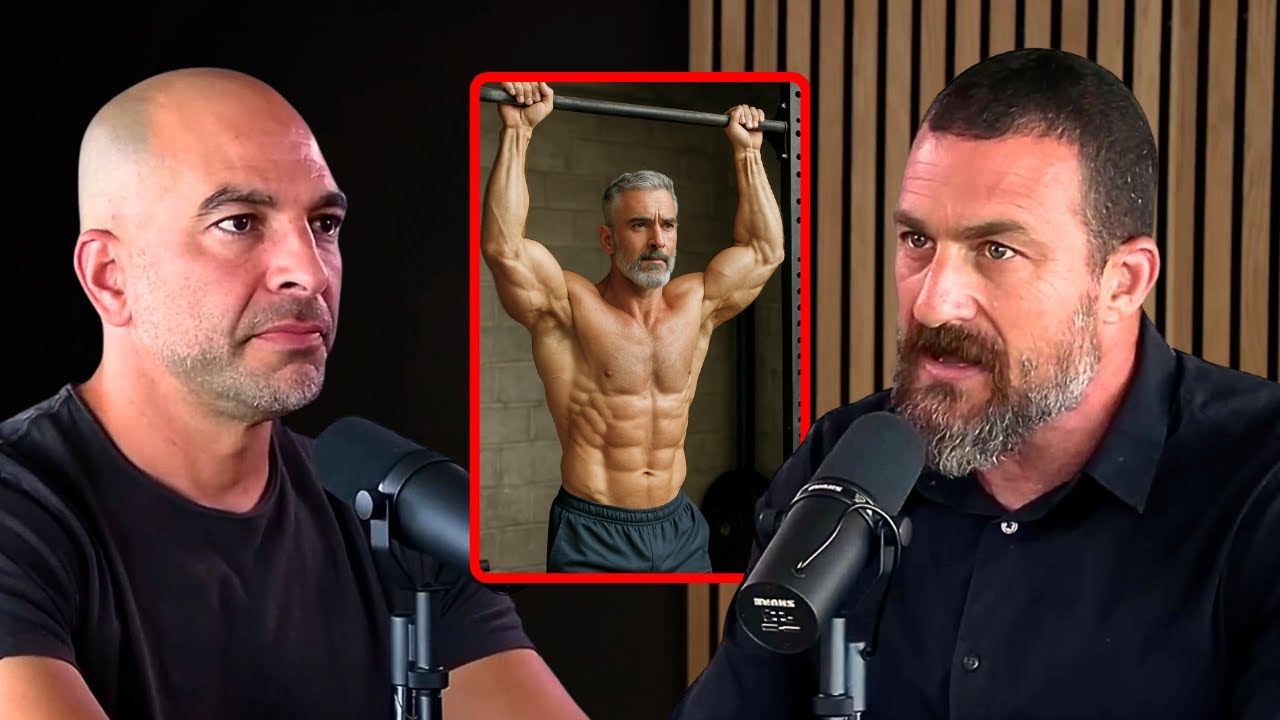
In a recent conversation with neuroscientist Dr. Andrew Huberman, Attia passionately laid out a framework for what he calls “Aia’s Rule”—a tongue-in-cheek but deeply insightful guideline suggesting no one should bother obsessing about niche health debates until they meet specific physical-performance metrics.
These benchmarks aren’t random. They’re based on a growing body of research tying physical performance to long-lasting brain health, disease prevention, and a better quality of life in late age.
Jump to:
Why Physical Performance Is Your Ultimate Health Screen
In his deep dive into Alzheimer’s prevention, Attia spent nearly a year reviewing all known interventions—supplements, drugs, diets, and lifestyle—and what emerged shocked even him.
“The single greatest efficacy we can point to is exercise,” explained Attia. “It’s not just BDNF [brain-derived neurotrophic factor], it’s vascular endothelium, glucose disposal, insulin signaling… exercise just touches every aspect of the brain.”
He initially doubted this conclusion. Could workouts really beat out cutting-edge neuroscience or pharmaceutical advances in protecting the brain?
But the evidence won him over. And from that journey came a powerful realization: before worrying about diet details or nootropics, people really need to get their “exercise house in order.”
The Aia’s Rule: Fitness First, Then Everything Else
Aia’s Rule, coined humorously during the conversation, recommends meeting a set of physical performance metrics before diving into debates about diet ratios or supplement stacks.
Though satirical in naming, the rule is rooted in serious intentions and supported by real-world standards from strength, endurance, and stability testing.
Baseline Metrics to Strive For
Dr. Attia and his team came up with these key goals, which he believes every healthy adult should aim to hit—adjusted appropriately for age and sex:
- Dead hang: Men (40 years old) should aim for 2 minutes; women the same age for 90 seconds.
- Wall squat / air squat hold (90 degrees): 2 minutes is the standard for both men and women.
- Farmer carry: Men should carry their total body weight (half in each hand) for 2 minutes. Women: aim for about 75% of their body weight for the same time.
- VO₂ max: 75th percentile for your age and sex. If you can run a mile in under 7–8 minutes, that’s a decent proxy according to Attia.
Notably, these aren’t all max-effort elite standards. They’re practical, longevity-focused goals that reflect real resilience.
Exercise: Not Just Brain-Protective, But Life-Extending
When Dr. Andrew Huberman asked about the mechanism behind exercise’s profound effects, Attia offered an enriching perspective borrowed from animal studies.
In rodents, cutting off movement and sensory input leads to accelerated neuronal atrophy and brain shrinkage. The inverse—frequent movement and environmental enrichment—boosts neural connections and may even stimulate new neuron growth.
“It’s very difficult for me to say that the same is not true in humans,” said Attia.
Studies in humans have shown enormous reductions in Alzheimer’s risk for those performing regular physical activity. Most of the benefit comes from going from sedentary to moderately active, with diminishing returns at elite training volumes.
According to Attia, achieving about 15 MET hours per week (e.g., 5 hours of moderate effort or 2.5 hours of vigorous activity) may reduce Alzheimer’s risk by as much as 50%.
That’s just one example of a mounting pile of research showing that mobility, strength, and cardiovascular capacity are strongly predictive of longevity and late-life independence.
A Call to Prioritize What Truly Matters
Attia isn’t against supplements or specific dietary frameworks. But he’s adamant that obsessing over omega-3 timing or cyclical keto protocols is misguided if foundational fitness is lacking.
“You shouldn’t be arguing about carnivore vs paleo vs vegan until you can deadlift your body weight for 10 reps,” he joked. The message: Stop majoring in the minors.
How to Get Started
- Assess your current fitness baseline: Try the dead hang or squat tests, or estimate your VO₂ max using online calculators based on mile-run times.
- Target weak links: If grip strength or squat endurance isn’t there, build weekly routines that focus on improving those specifically.
- Track progress over time: Simple, repeatable metrics provide clear feedback loops and motivation.
- Don’t wait for perfection: Remember, shifting from nothing to something in exercise yields the biggest benefits.
Final Thoughts: Physical Health as a Gateway to Cognitive Vitality
The next time you hear someone debating creatine uptake timing or keto-adaptation phases, remember Attia’s Rule. Have they built the capacity to carry their own body weight, endure a sustained wall squat, or run a fast mile?
If not, that’s where the true transformation begins—not at the bottom of a supplement bottle, but through movement.
“The most kick-ass centenarians,” as Attia puts it, aren’t necessarily the ones with the cleanest meal plans but those who can carry groceries easily, stand tall, walk briskly, and stay cognitively sharp.
Before obsessing over infrared saunas or turmeric stacking, build the foundation. Your brain—and future self—will thank you.