Growing thicker hands might sound impossible, but one fitness enthusiast’s 100-day transformation proves otherwise.
His journey wasn’t smooth—it involved swollen hands, bleeding calluses, an arm wrestling tournament, and some unexpected relationship cardio.
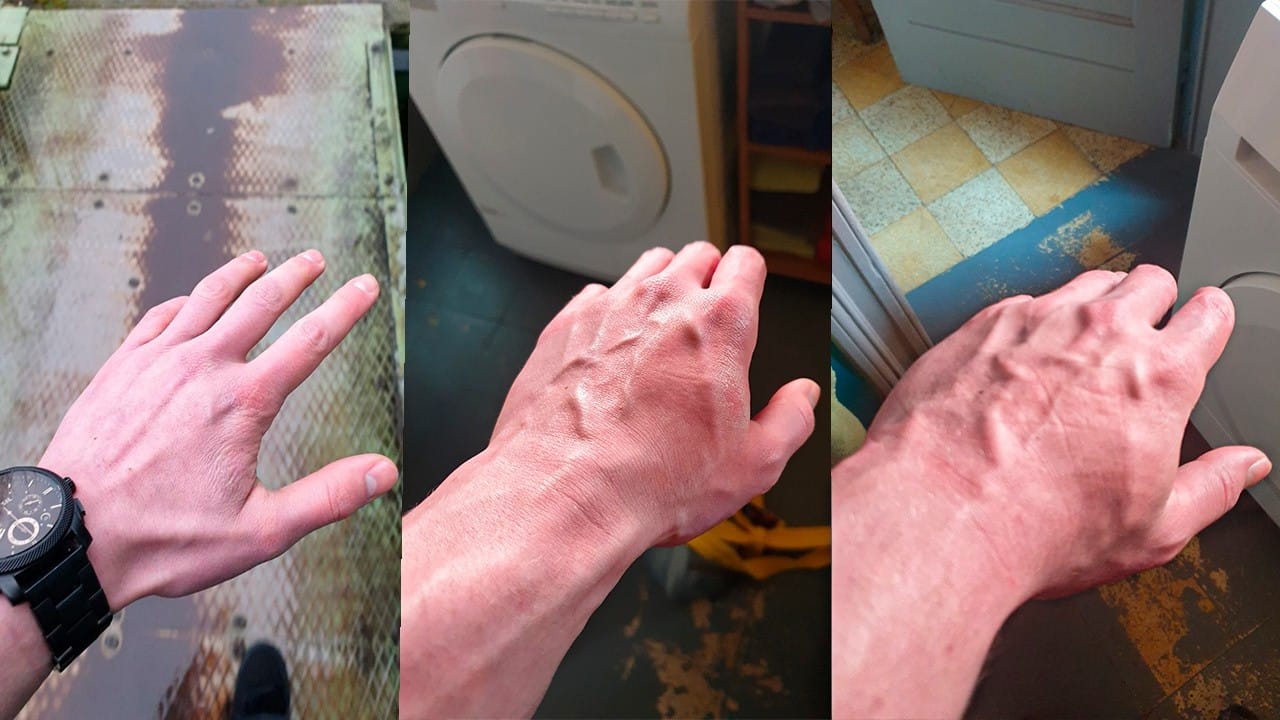
But the results? Measurable growth in hand, wrist, and forearm size that even his students replicated.
Here’s exactly what happened during those 100 days, including the mistakes, breakthroughs, and practical lessons anyone can apply.
Jump to:
- The Deceptive First Day: When Swelling Looked Like Gains
- The Real Changes: Vascularity First, Size Second
- The Unexpected Break: Five Days of “Cardio”
- Pain Management: Learning What Not To Do
- Testing Strength: The Arm Wrestling Reality Check
- The Bulking Decision: Amplifying Results
- Lizard Skin and Bleeding Calluses: The Ugly Middle Phase
- The Training Protocol That Actually Worked
- Wrist Growth: The Childhood Watch Test
- Student Results: Proof Beyond Individual Genetics
- The Visible Transformation: Day 2 vs. Day 100
- Key Takeaways for Replicating These Results
The Deceptive First Day: When Swelling Looked Like Gains
When he started his daily routine of pronation and wrist raises, his hands appeared massively bigger after just one workout.
After my first ever hand workout on day one, they had gotten massive. I couldn’t believe my eyes and decided to make it a series thinking I had found the ultimate technique to grow fake hands fast.
Reality hit hard on day two. The “gains” vanished completely—they were just inflammation from muscles shocked by novel stimulus.
Already committed to documenting the journey publicly, he pushed forward despite the initial disappointment.
The Real Changes: Vascularity First, Size Second
Actual adaptations emerged gradually over weeks, not days. Vascularity exploded first—prominent veins appeared across forearms and biceps during everyday activities.
Specific muscle groups began developing next:
- Brachioradialis (forearm muscle) showed noticeable thickness
- Thumb muscles developed substantial size and definition
- Hypothenar muscles (pinky side of palm) became more prominent
- Overall hand volume increased when making a fist
He trained nearly every day using 10 kilograms for five sets of 60 repetitions across two exercises—pronation and wrist raises.
The Unexpected Break: Five Days of “Cardio”
On day 11, training paused for an international trip to visit a romantic interest.
We did cardio for 5 days straight to the point I lost 4 kilos during my stay.
Despite dropping from 71 to 67 kilograms rapidly, hand development remained intact. His companion even photographed his forearms—unexpected validation that progress was real.
This accidental experiment proved hand muscle gains persist through significant weight fluctuation, suggesting structural changes rather than temporary swelling.
Pain Management: Learning What Not To Do
Joint pain emerged as a major obstacle, particularly in wrists. Two primary culprits caused problems:
- Excessive weight: “Heavy days” with maximum loads destroyed wrist joints
- Poor movement control: Throwing weights around rather than controlling them precisely
He eventually reduced training weight from 10 to 6 kilograms for recovery periods, allowing tendons to adapt without constant inflammation.
It also happened to me at the start because my wrists were fragile, but now I don’t have pain anymore.
Progressive adaptation proved more important than aggressive loading for sustainable growth.
Testing Strength: The Arm Wrestling Reality Check
Around mid-transformation, he entered an arm wrestling tournament in the 70-kilogram weight class, weighing approximately 69 kilograms.
His opponent? Pipo, the person who taught him arm wrestling fundamentals.
The match revealed a crucial distinction: hand size doesn’t automatically translate to functional strength. Poor technique and hand placement created disadvantages his developing musculature couldn’t overcome.
Rather than discouragement, the loss sparked commitment to comprehensive forearm training beyond just pronation and wrist raises.
The Bulking Decision: Amplifying Results
Post-tournament, he initiated his first serious bulk after years of staying lean but undersized due to poor appetite.
All my life, I wanted to be massive and large. But I was always stuck at a low body weight due to my poor appetite.
This nutritional shift accelerated visible changes. Combined with returning to gym training after a four-month back injury hiatus, his frame transformed rapidly.
Forearms expanded from 33 centimeters to 35.5 centimeters while gaining just 4 kilograms of mostly lean mass (71 to 75 kilograms).
Lizard Skin and Bleeding Calluses: The Ugly Middle Phase
Around day 50, friction from training equipment created what he called “lizard skin” on his thumb—hardened, textured tissue that initially looked impressive.
Curiosity drove him to see how large these calluses could become. Eventually they cracked open and bled, creating painful wounds inappropriate for social situations like handshakes.
Regular moisturizer application resolved the issue, proving even intense training requires basic skin care.
The Training Protocol That Actually Worked
While experimenting with various hand exercises—rubber egg grippers, rice bucket training—two movements produced measurable results:
- Pronation exercises: Rotating forearm inward against resistance
- Wrist raises: Lifting weight through wrist extension and flexion
These movements performed daily without skipping drove hand and wrist growth specifically.
For broader forearm development, he added:
- Wrist flexions (curling weight with palms up)
- Reverse curls (curling with palms down)
Consistency mattered more than exercise variety. Daily execution of core movements beat sporadic training with comprehensive routines.
Wrist Growth: The Childhood Watch Test
He owned a watch since childhood that once fit loosely. By day 100, it felt noticeably tighter around wrists, though still wearable.
Initial wrist circumference measured 16 centimeters. While he didn’t measure exactly at day 100, subsequent data points suggested approximately 17 centimeters by that milestone.
Extended tracking showed continued growth: 18 centimeters by day 200, then 19 centimeters by day 300. Eventually the childhood watch couldn’t clasp at all—tangible proof of structural adaptation.
Student Results: Proof Beyond Individual Genetics
Skeptics attributed his transformation to genetics or performance-enhancing drugs. Student results demolished those theories.
Patrick’s transformation (220 days):
- Wrist circumference: 17.5 cm → nearly 20 cm
- Forearms: developed to 35 cm
- Thumb muscles: substantial hypertrophy
Instagram follower’s results (70 days):
- Wrists: 15.8 cm → 17 cm
- Thumb development: significant size and definition
- Palm thickness: gained one full inch
Multiple individuals following similar protocols achieved comparable outcomes, establishing reproducibility.
The Visible Transformation: Day 2 vs. Day 100
Early footage showed flat hands with minimal muscle development and no visible thumb musculature. Hand thickness appeared minimal even when clenched.
By day 100, dramatic changes emerged:
- Thumb muscles protruded prominently
- Pinky pad (hypothenar eminence) developed substantial bulk
- Vascularity became pronounced across entire hand
- Fist width increased noticeably when clenched
- Overall thickness showed clear progression from multiple angles
Side-by-side comparisons revealed these weren’t subtle improvements—the structural changes were obvious even to untrained observers.
Key Takeaways for Replicating These Results
Expect initial swelling, not instant gains. First-week changes reflect inflammation, not hypertrophy. Real development requires weeks of consistent stimulus.
Prioritize tendon health over ego lifting. Excessive weight destroys joints faster than it builds muscle. Moderate loads with perfect control outperform heavy, sloppy repetitions.
Daily frequency drives adaptation. Unlike larger muscle groups requiring recovery days, hands and forearms responded best to near-daily training with adequate volume.
Nutritional surplus amplifies results. Growth accelerated significantly during bulking phases compared to maintenance or deficit periods.
Size doesn’t equal strength automatically. Functional performance requires technique development alongside muscular growth.
Hand and wrist development remains one of fitness’s most overlooked opportunities. While genetics set initial baselines, consistent mechanical stimulus produces measurable structural adaptation—even in areas traditionally considered “fixed” like wrist circumference.
The transformation required no special equipment, exotic supplements, or genetic advantages. Just two exercises, daily execution, adequate nutrition, and patience through unglamorous middle phases of calluses and joint discomfort.