In the world of bodybuilding, few names evoke as much respect — and fear — as Tom Platz, aka The Quadfather.
Known for his freakishly developed legs, Platz believes the modern squat has lost its way.
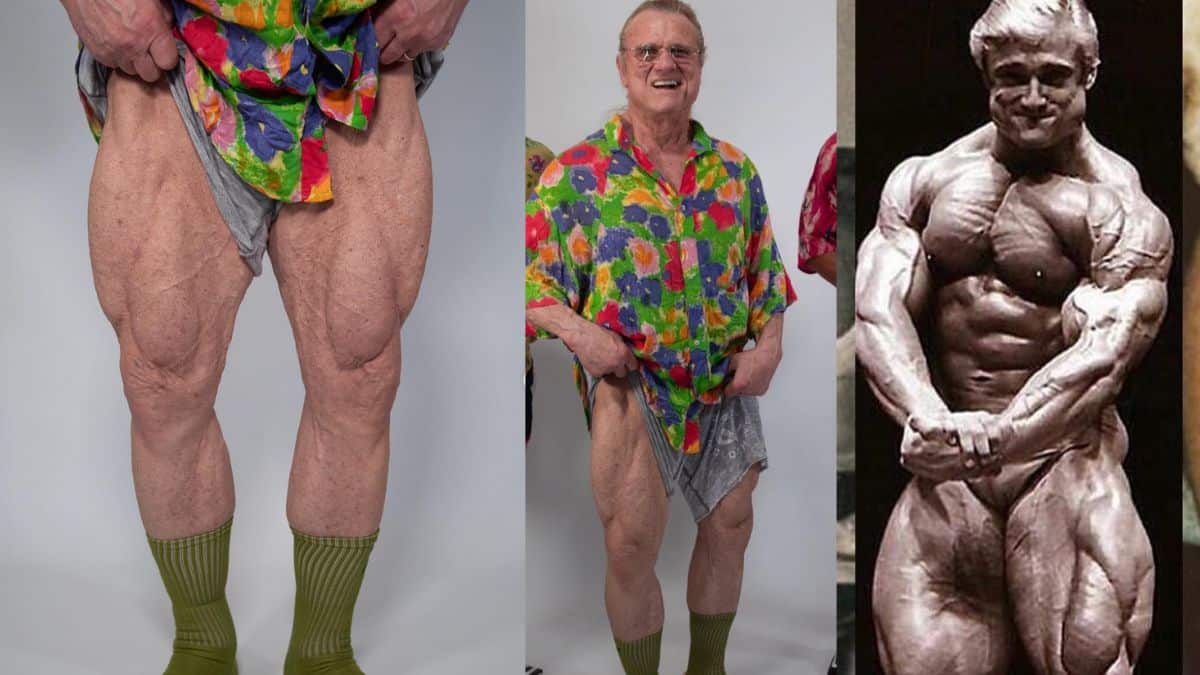
In a recent interview, he didn’t mince words. According to him, most lifters today have traded good form for convenience, favoring glutes and lower backs over the quads.
But what does proper squatting look like in Platz’s eyes — and how can you fix your form to maximize results, protect your knees, and truly target your quads?
Let’s break it down.
Jump to:
Why Tom Platz Hates Modern Squat Technique
Platz is adamant: today’s squat form has been “bastardized.” The legendary bodybuilder claims the movement has drifted far from its original purpose — a quad-dominant lift that builds power, symmetry, and knee stability.
“I never had a knee problem in my life because of perfect, pure technique,” Platz said. “Modern squatting is all about a hip thrust. People use their buttocks and lower back too much — not the quads.”
His critique centers on the shift in torso angle. Most lifters today lean forward at nearly 45 degrees, turning the squat into a hinge-heavy movement. But according to Platz, that’s not a squat — at least not one that will develop world-class legs.
Instead, he advocates for a squat that mimics the style used by Olympic lifters: upright torso, deep range of motion, and full engagement of the quads.
What Tom Platz Considers “Perfect” Squat Form
Platz’s approach to squatting isn’t just about angle. It’s a full system that demands discipline and attention to detail.
Here’s how he breaks it down:
- Stance: Shoulder-width, with feet flat and heels firmly planted.
- Back angle: As close to upright (90 degrees) as possible, or just slightly tilted forward by 4–5 degrees.
- Knee tracking: Knees travel over the toes — not behind them — to engage the quads fully.
- Depth: Deep squats, hitting parallel or below, to maximize muscle fiber activation.
- Tempo: A slow, controlled descent lasting about 3 seconds.
- Eccentric focus: Emphasis on the lowering phase, often with a pause at the bottom.
This tempo and control increase time under tension — a proven method for muscle growth — and ensure the quads do most of the work.
Biomechanics Matter — But There Are Workarounds
Not every lifter has the body type to replicate Platz’s near-perfect squat mechanics.
Those with longer femurs often struggle to keep their torso upright without falling backward. That’s because the bar must stay over the center of mass — and for lifters with long legs, that often means leaning forward.
However, there are practical fixes:
- Raise your heels using plates or squat wedges to improve dorsiflexion and stay more upright.
- Strengthen your core and upper back to support a taller posture.
- Work on ankle mobility to allow greater knee travel over the toes.
By making these changes, most lifters can shift some emphasis back to the quads — even if they can’t mimic Platz’s exact form.
High Bar vs. Low Bar: Does It Really Matter?
Platz’s preferred style closely mirrors the high bar squat, which places the bar higher on the traps and encourages a more vertical torso.
In contrast, the low bar squat — popular in powerlifting — positions the bar lower across the rear delts, pushing the hips back and emphasizing glutes and lower back.
So which is better?
“A recent study comparing high bar and low bar squats found both target the quads to a high degree, with only negligible differences in muscle activation,” said PT and Men’s Health fitness writer Kate Neudecker.
Low bar may be slightly easier on the knees due to reduced knee flexion, but high bar squats allow for more forward knee travel — which may actually be beneficial for quad activation if your knees are healthy.
Ultimately, the best style is the one that suits your anatomy, goals, and injury history.
Want Platz-Like Quads? Train Like He Did
Technique aside, Tom Platz’s results came from brutally hard training. If you’re inspired by his method, consider incorporating these principles into your squat workouts:
- ✅ Shoulder-width stance
- ✅ Full range of motion (deep squats)
- ✅ Slow, controlled descent (~3 seconds)
- ✅ Pause at the bottom to increase tension
- ✅ Drive through the heels, not the lower back
- ✅ Focus on the eccentric phase
Platz’s quads weren’t built by chasing numbers. He prioritized form, tempo, and mind-muscle connection — often squatting for high reps (sometimes 20+), with flawless control.
“The way people usually squat is this,” Platz once said, mimicking a hip-hinging movement. “But I squat with my legs. My back is not the prime mover.”
The Bottom Line
There’s no single “perfect” squat — but there is a better one for you.
If quad development is your goal, or you’re chasing longevity in your lifting career, take a page from Tom Platz’s playbook:
- Go deep.
- Stay upright.
- Embrace control.
While modern squatting has evolved to suit powerlifting and performance sports, the old-school bodybuilding squat still reigns supreme for leg hypertrophy — when done right.
Implementing just a few of Platz’s tweaks could help you unlock better gains, healthier knees, and yes — maybe even legendary quads.