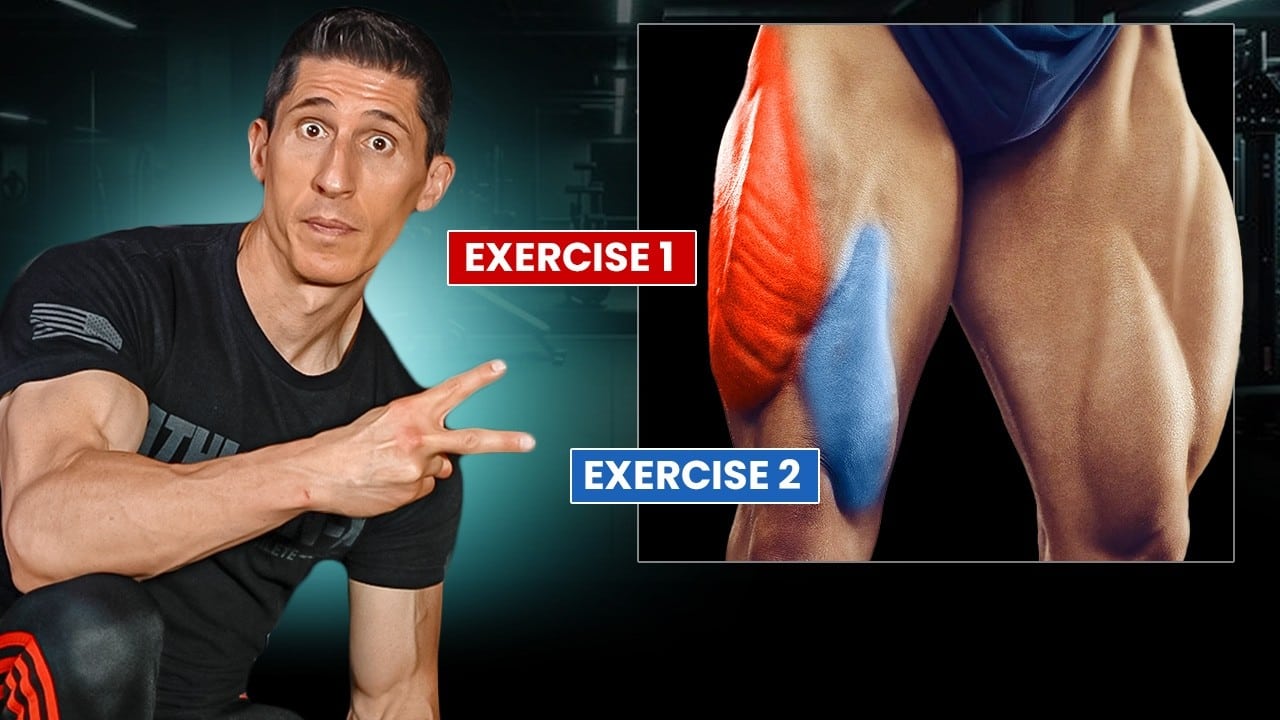
Two moves can cover quad growth for most lifters.
Front squats and Bulgarian split squats, done in specific positions, shift more work to knee extensors.
Small tweaks in bar placement, trunk angle, and tempo flip the stimulus fast.
Expect stronger, fuller quads without sprawling leg-day menus.
Here’s how to set up, why physics says it works, and ways to progress safely.
Jump to:
- Key takeaway: Position choices decide quad stimulus, not exercise names
- Why bar placement changes which muscles do the work
- Front squat: cues that load quads, not hips
- Bulgarian split squat: single‑leg quad emphasis
- Programming that prioritizes knee extensor growth
- Form cues that keep stress where you want it
- Pain, equipment, and modifications
- Evidence snapshot
- Quick checklist before each set
- Bottom line for busy lifters
Key takeaway: Position choices decide quad stimulus, not exercise names
Front squats prioritize quads by shortening the hip moment arm and lengthening the knee moment arm.
Bulgarian split squats emphasize quads when the torso stays tall while the front knee drifts forward.
As coach Jeff Cavaliere notes, “The position makes a huge difference.”
He adds, “Because of the more upright torso, that distance between the hips and the bar is shortened… now the distance between the knee and the bar is increased.”
Why bar placement changes which muscles do the work
Balance requires the load to stay over midfoot.
Shifts around that vertical line alter moment arms at hips and knees.
Low-bar back squats push the bar behind midfoot, forcing more forward lean.
That increases hip extensor demand while reducing knee torque, so glutes and hamstrings carry more load.
Front squats bring the bar forward, encouraging an upright torso.
Hip torque drops while knee torque rises, making quads do a larger share.
Biomechanics research aligns with this mechanism.
Front squats show greater knee extensor moments with lower spinal loads versus back squats, while low-bar squats increase hip moments compared with high-bar variations.
Front squat: cues that load quads, not hips
Upright posture stays non‑negotiable.
Keep ribs down, chest proud, elbows high, and bar directly over midfoot.
Step-by-step setup
- Foot stance: roughly shoulder width, toes slightly out.
- Bar rests on front delts, close to neck without choking.
- Inhale, brace 360 degrees, drive elbows forward and up.
- Descend between hips, knees forward as heels stay heavy.
- Reach depth where thighs pass parallel while posture remains tall.
- Stand by pushing the floor away as elbows keep pointing forward.
Wrists or shoulders unhappy? Use smarter grips
Classic clean grip needs big wrist extension and lat/triceps mobility.
Many lifters lose elbow height and fold forward when that mobility runs out.
- Strap assist: loop straps around the bar, hold tails with neutral wrists, then drive elbows up. Quote from Cavaliere: “Now with a neutral wrist position, all that extreme extension… is not going to be needed.”
- Cross‑arm: workable, yet internal rotation can irritate cranky shoulders and create bar unevenness.
- Thumb‑hook method: thumbs to throat, palms facing each other, chest up to “dig” the bar in. Cavaliere’s tip: “Your thumbs are acting like support hooks.”
Common errors that kill quad tension
- Torso dump forward: brings hips back, shifts work posteriorly.
- Elbows dropping: cascades into rounding and lost bar path.
- Heels lifting: reduces stability and knee tracking control.
- Rushing depth: stops short of sufficient knee flexion.
Mobility primers that help posture
- Ankles: calf eccentrics, knee‑over‑toe rocking drills.
- Wrists/forearms: prayer stretch, banded joint distraction.
- T‑spine: foam roller extensions, open‑book rotations.
- Lats/triceps: bench lat stretch with deep breathing.
Bulgarian split squat: single‑leg quad emphasis
Rear‑foot elevated split squats create large knee angles without a bar on the spine.
Quad demand skyrockets when the chest stays tall while the front knee travels forward.
Cavaliere stresses, “Your only focus should be on keeping your chest as high as possible.”
He warns that rounding forward “is going to take away the work that the quads are doing and shift it to the posterior chain.”
Exact setup for consistent reps
- Bench height: about knee level suits most lifters.
- Rear foot: laces down or toes tucked, whichever feels stable.
- Front foot: step out far enough that the heels stay heavy at depth.
- Posture: ribs stacked over pelvis, eyes forward, chest up.
- Descent: sit straight down as the front knee moves past toes.
- Ascent: push through midfoot and big toe while staying tall.
One‑and‑a‑half reps for more quad time‑under‑tension
Drop to full depth, rise halfway, return to the bottom, then stand tall.
Slow the middle range to amplify burn and control.
Use light loads first.
Tempo work punishes quads quickly while sparing joints from heavy spikes.
Frequent mistakes and quick fixes
- Torso lean: reduces knee angle. Fix by lifting sternum and squeezing the back glute lightly for balance.
- Short stride: caps knee travel. Adjust stance until full depth feels natural.
- Front heel pop: shift weight midfoot to heel, then lower load.
- Rear foot agony: move closer, change foot position, or pad the bench edge.
Programming that prioritizes knee extensor growth
Two days per week work well for most trainees.
Use one strength‑biased day and one hypertrophy‑biased day.
Day A: strength focus
- Front squat: 4–6 sets of 3–5 reps, RPE 7–9, long rests.
- Bulgarian split squat: 3–4 sets of 6–8 reps per side, moderate load.
- Optional knee‑dominant accessory: leg press or hack squat, 2–3 sets of 8–10.
Day B: hypertrophy focus
- Front squat (paused 1–2 seconds in the hole): 3–4 sets of 5–8 reps.
- Bulgarian split squat, one‑and‑a‑half reps: 3 sets of 8–10 per side.
- Quad finisher: sissy squat pattern or heels‑elevated goblet squat, 2 sets of 12–15.
Weekly progression made simple
- Add 2–5% load when reps hit the top of range with clean form.
- Or add one rep per set until caps are reached, then bump load slightly.
- Deload every 4–6 weeks by trimming sets in half.
Form cues that keep stress where you want it
- Bar over midfoot always.
- Chest high without flaring ribs.
- Knees track over second and third toes.
- Heels planted, big toe engaged.
- Breathe deep into sides and back, then brace before each rep.
Pain, equipment, and modifications
- Knees cranky at end‑range: elevate heels with weightlifting shoes or small plates to gain dorsiflexion while reducing compensation.
- Back sensitivity: favor front squats, goblet squats, and split squats to lower spinal loading.
- Limited balance: hold onto a rack post during Bulgarian split squats until control improves.
- No bench handy: use a low box or step, or perform front‑foot elevated split squats instead.
- Mobility barriers: spend 5–8 minutes on ankles, hips, and T‑spine before heavy sets.
Evidence snapshot
- Front squats deliver comparable or greater knee extensor demand with reduced lumbar compressive forces relative to back squats. Source: Gullett JC et al., Journal of Strength and Conditioning Research, 2009.
- Low‑bar back squats increase hip extensor moments while high‑bar and front variations raise knee moments. Source: Glassbrook DJ et al., Sports Medicine, 2017.
- Split‑squat variations produce high quad loading when trunk remains upright and the front knee travels forward, with strong glute medius demand for pelvic control. Sources include peer‑reviewed kinetic and EMG analyses in lower‑body unilateral patterns.
Quick checklist before each set
- Pick a stance that lets knees travel while heels stay down.
- Stack ribs over pelvis and set a tall chest.
- Place the bar or dumbbells so balance centers over midfoot.
- Control the descent, pause softly, drive up without jerking.
- Stop one rep before form breaks, then rest long enough to repeat quality.
Bottom line for busy lifters
Front squats plus Bulgarian split squats cover quad strength and size efficiently.
Maintain upright posture, allow knee travel, and use grips that keep elbows high, just as Cavaliere teaches.
Layer tempo, pauses, and steady progression.
Expect measurable improvements without marathon leg sessions.