Strong legs do not require a barbell on the back or a bar pulled from the floor.
Unilateral strength work can match lower-body muscle growth while dropping spine stress and injury risk.
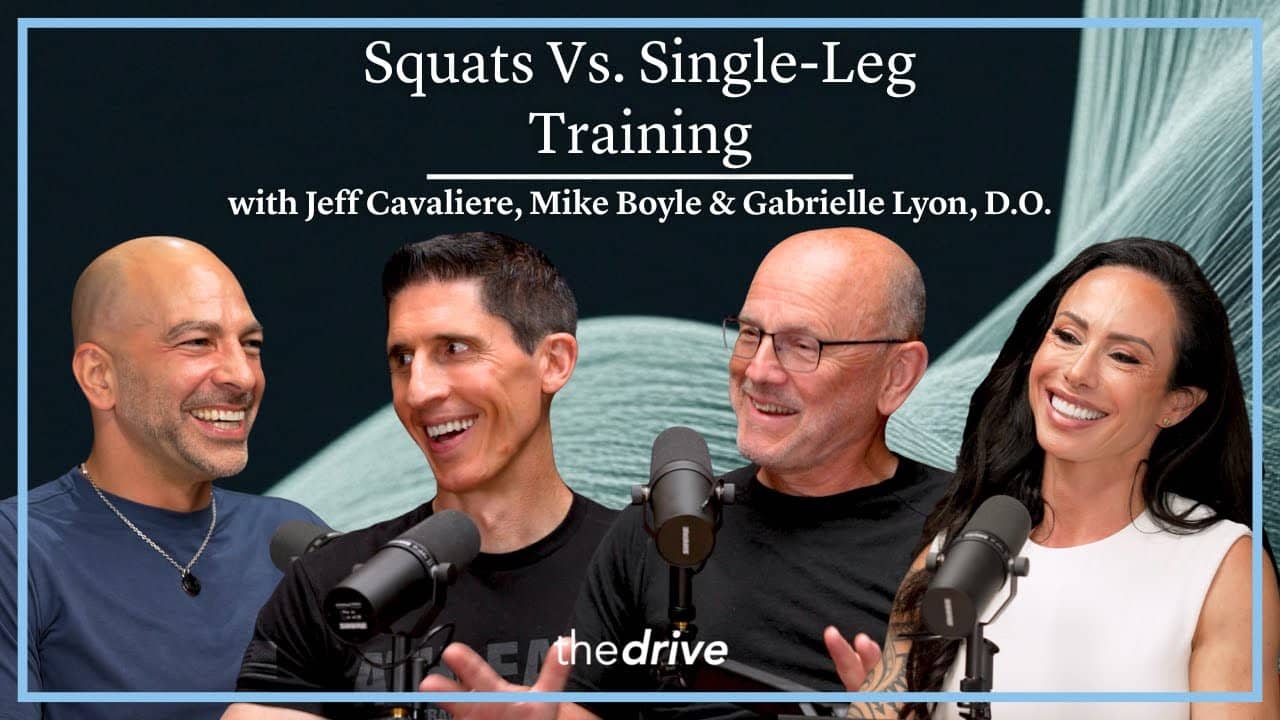
Coaches who once lived under the “squat, bench, deadlift” banner now program split squats, step-ups, and lunges as staples, not accessories.
Results support that shift, from research on the bilateral deficit to field tests with high-level athletes.
Readers will see why one-leg training works, when barbells still make sense, and exactly how to build a powerful, muscular lower body with smarter choices.
Jump to:
- Key takeaway: one-leg strength can equal or surpass two-leg strength for hypertrophy goals
- Why this works: the bilateral deficit, neurology, and load distribution
- Real-world proof from coaches who changed course
- Evidence snapshot: muscle growth, strength, power, and joint stress
- Advantages patients feel quickly
- Common objections, answered
- Who should still barbell back squat or conventional deadlift?
- Learned safely: progressions that remove fear and pain
- Exact programming for muscle and joint health
- Sample two-day unilateral plan
- Form cues that protect knees, hips, and the back
- Pain and history considerations
- Teaching barbell squats safely when required
- Simple metrics that prove progress without back squats
- What changed the minds of seasoned coaches
- Bottom line for patients and lifters
- Selected sources
Key takeaway: one-leg strength can equal or surpass two-leg strength for hypertrophy goals
Single-limb lifts create high mechanical tension through larger ranges of motion with less total load on the back and hips.
That combination drives hypertrophy while protecting sensitive structures like discs and joints.
In practice, rear-foot elevated split squats, step-ups, lunges, and single-leg hinges deliver comparable muscle stimulus to bilateral squats or deadlifts.
Programming variables make the difference, not the presence of a barbell.
Why this works: the bilateral deficit, neurology, and load distribution
The bilateral deficit shows combined force from right plus left often exceeds the force produced when both limbs work together at once.
Studies document this across grip, leg extension, and multi-joint tasks, suggesting neural constraints during bilateral efforts (e.g., Howard & Enoka 1991; Kuruganti & Murphy 2008).
Unilateral tasks also shift load toward the target limb while reducing axial compression.
Greater hip and knee flexion angles lengthen quads and glutes, increasing tension per rep without piling plates on the spine.
Real-world proof from coaches who changed course
Peter Attia described early years spent chasing heavy numbers, followed by a back injury and a pivot born from necessity.
He noted, “I had to discover single-leg training,” after deciding the risk no longer made sense for long-term health.
Strength coach Mike Boyle reported that testing stunned his staff.
“The numbers started to smack us in the face,” he said, after athletes split squatted loads equivalent to their front squats.
Jeff Cavaliere echoed the shift, stating, “We do so much single-leg training… because that’s how we’re wired.”
Collectively, those experiences match research trends and the lived outcomes of elite sport settings.
Evidence snapshot: muscle growth, strength, power, and joint stress
Comparable hypertrophy: Controlled trials show unilateral lower-body programs build quadriceps and glute size on par with bilateral plans when volume and effort match (McCurdy et al., 2005; Muehlbauer et al., 2012).
Strength specificity: One-leg training raises unilateral strength substantially and transfers meaningfully to bilateral tasks, while bilateral training transfers less to unilateral tasks (McCurdy et al., 2005).
Power and speed: Trap-bar deadlifts produce higher peak power and velocity versus straight-bar pulls, with lower lumbar moments (Swinton et al., 2011; Camara et al., 2016).
Muscle activation: Split-squat variations show high EMG for glute max, glute med, and quads, rivaling squat patterns with reduced spinal load (McCurdy et al., 2010).
Advantages patients feel quickly
Less back irritation due to lower axial loading and improved pelvis control.
Joint-friendly ranges allow depth without compensations from limited ankle or thoracic mobility.
Built-in balance work sharpens gait, change of direction, and fall resilience, especially important with aging.
Side-to-side deficits surface fast, enabling targeted fixes before pain returns.
Common objections, answered
“Stability limits load, so stimulus suffers”
Longer range, higher local tension, and closer proximity to failure offset lighter external loads.
Hands can add load via dumbbells or a safety bar to raise stimulus once technique stabilizes.
“Unilateral training won’t build ‘real’ strength”
Strength is task-specific.
For sport, sprinting, cutting, and jumping rely on single-limb force, so unilateral gains transfer directly.
“Legs will grow unevenly”
The opposite often happens.
Unilateral sets reveal discrepancies and enable precise volume on the weaker side to even size and strength.
“Athletes still need back squats”
Some do for position tests or powerlifting.
Many teams now emphasize split squats, step-ups, trap-bar pulls, and Olympic derivatives for similar outcomes with fewer backs flaring up.
Who should still barbell back squat or conventional deadlift?
Competitive powerlifters, weightlifting athletes, and lifters who enjoy the lifts and tolerate them well.
Those groups can still benefit from a unilateral foundation to stay balanced and resilient.
Learned safely: progressions that remove fear and pain
Squatting patterns
- Goblet squat to box, then free goblet squat.
- Front squat for a barbell option, if shoulders and thoracic extension permit.
- Safety-bar squat for friendlier hand and spine positions.
Split-squat and lunge chain
- Split squat (bodyweight) holding supports as needed.
- Loaded split squat with dumbbells.
- Rear-foot elevated split squat (RFESS) with fractional loading.
- Walking lunge or forward lunge for capacity and coordination.
- Front-foot elevated split squat to emphasize quads through knee flexion.
Hinge chain
- Hip hinge drill using a dowel for three-point contact.
- Dumbbell Romanian deadlift.
- Single-leg Romanian deadlift with light load.
- Trap-bar deadlift once mechanics look clean and pain-free.
Exact programming for muscle and joint health
Weekly structure
- Two to three lower-body sessions across seven days.
- Alternate emphasis: Day A quad-dominant, Day B hinge/glute-dominant, Day C mixed.
Volume and intensity
- Main unilateral lift: 3–5 sets of 6–10 reps per side at 1–2 reps in reserve.
- Secondary pattern: 3–4 sets of 8–12 reps per side.
- Accessories: 2–3 sets of 12–20 reps for calves, adductors, abductors, hamstrings.
Tempo and range
- Use a 2–3 second lower, brief pause near the bottom, strong concentric drive.
- Chase depth that preserves heel contact and torso control.
Rest and progression
- Rest 90–150 seconds between hard sets.
- Add 2.5–5 lb per dumbbell weekly or increase reps by 1–2 when technique remains crisp.
- Progress range before load if knee or hip comfort requires it.
Sample two-day unilateral plan
Day A — Quad focus
- RFESS: 4 x 6–8 per side.
- Front-foot elevated split squat: 3 x 8–10 per side.
- Walking lunge: 3 x 10–12 steps per side.
- Leg extension or Spanish squat: 2–3 x 12–15.
- Standing calf raise: 3 x 12–15.
- Side plank with hip abduction: 2–3 x 20–30 seconds per side.
Day B — Hinge and glute focus
- Single-leg Romanian deadlift: 4 x 6–8 per side.
- Single-leg hip thrust or barbell hip thrust: 3–4 x 8–12 per side.
- Step-up (knee height box): 3 x 8–10 per side.
- Cable pull-through or 45° back extension: 2–3 x 10–15.
- Seated calf raise: 3 x 12–15.
- Copenhagen plank (short lever): 2–3 x 20–30 seconds per side.
Form cues that protect knees, hips, and the back
- “Tripod foot” on the stance leg: big toe, little toe, heel share pressure.
- Knee tracks over second or third toe, not collapsing inward.
- Ribs stacked over pelvis, chin tucked slightly, eyes fixed on a point ahead.
- For hinges, push hips back while keeping a soft knee and long spine.
- Hold dumbbells at sides before progressing to goblet or front rack loads.
Pain and history considerations
Back pain history favors goblet squats, split squats, step-ups, and trap-bar pulls due to lower shear forces and better torso positions.
Knee sensitivity often improves with vertical shin angles, heel wedges for ankle mobility, slow eccentrics, and isometrics like Spanish squats.
Hip discomfort responds to stance width adjustments, slight toe-out, and biased glute work through hip thrusts and abduction holds.
When pain spikes, reduce depth, use tempo, and stay close to failure within a tolerable range.
Teaching barbell squats safely when required
Use goblet squats first to groove posture and hip-knee timing.
Box squats teach depth control and consistent bracing without fear of falling backward.
Front squats encourage upright torso and demand less shoulder rotation than high-bar back squats.
Safety-bar squats offer a middle ground for lifters with limited thoracic extension or cranky shoulders.
Simple metrics that prove progress without back squats
- RFESS 10-rep load increases of 5–10% across six weeks.
- Single-leg RDL grip load climbs while maintaining pelvic control.
- Step-up height rises while keeping smooth knee tracking and soft landings.
- Symmetry gap narrows to within 5–10% between sides on key lifts.
- Subjective back comfort improves session to session.
What changed the minds of seasoned coaches
Boyle’s staff saw athletes split squat loads matching front squats, undermining the case for mandatory heavy back squats.
Attia’s own back history mirrors many patients who flourish once unilateral work replaces spine-heavy habits.
Cavaliere emphasizes practical teaching and load placement, often starting with goblet squats to keep mechanics honest.
Those converging paths highlight one core message: outcomes matter more than tradition.
Bottom line for patients and lifters
One-leg strength training can fully develop quads, hamstrings, and glutes without barbell back squats or conventional deadlifts.
Programming with intent, progressing loads, and respecting mechanics build muscle, protect joints, and preserve athleticism for decades.
Selected sources
Muehlbauer, T. et al. Effects of single-leg strength training on lower-limb performance. Scand J Med Sci Sports. 2012.
Howard, J. D., & Enoka, R. M. Maximum bilateral contractions are modified by neurally mediated interlimb effects. J Appl Physiol. 1991.
Kuruganti, U., & Murphy, T. Bilateral deficit in human voluntary contractions. Eur J Appl Physiol. 2008.
McCurdy, K. et al. The effect of unilateral vs. bilateral resistance training on strength and power. J Strength Cond Res. 2005.
McCurdy, K. et al. Comparison of lower extremity EMG during unilateral squat variations. J Strength Cond Res. 2010.
Swinton, P. A. et al. A biomechanical analysis of straight and hexagonal barbell deadlifts. J Strength Cond Res. 2011.
Camara, K. D. et al. An examination of muscle activation and power during hex vs. straight bar deadlifts. J Strength Cond Res. 2016.