Poor posture has become an epidemic in modern society, and most people don’t realize how bad it’s gotten until they see themselves in a photo.
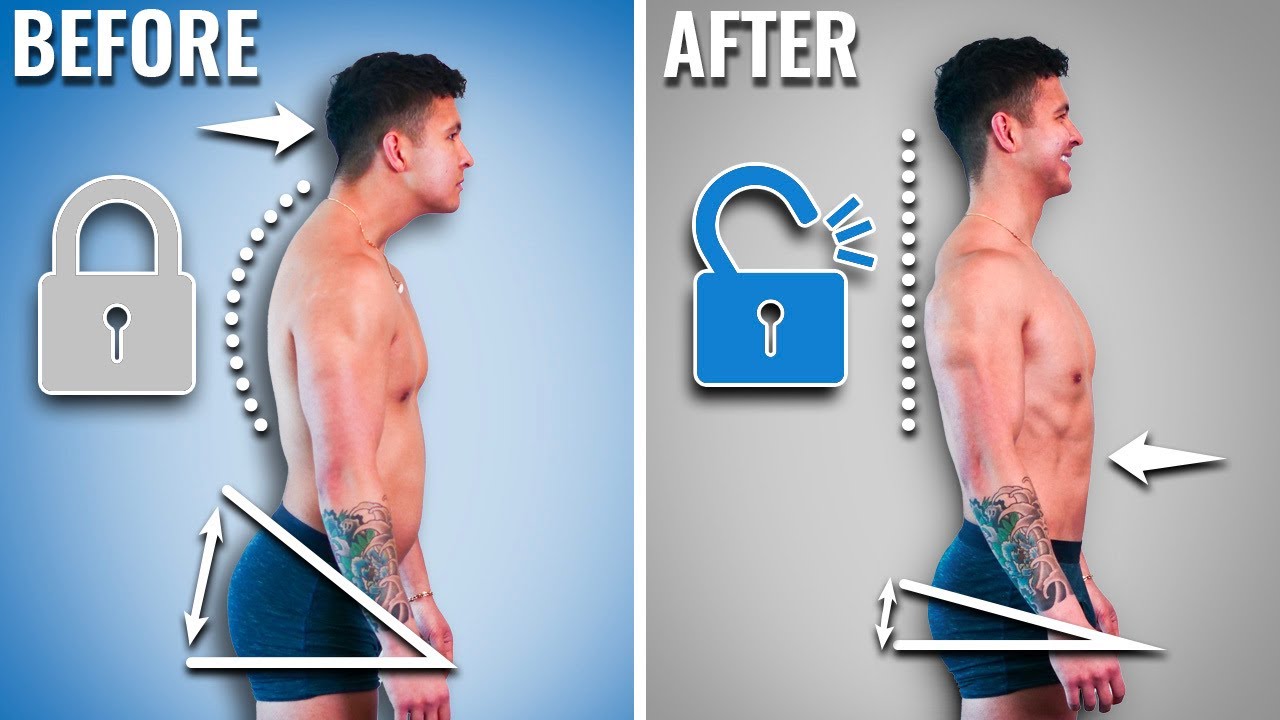
The forward head, rounded shoulders, and anteriorly tilted pelvis—what some fitness experts jokingly call “Donald Duck posture”—might seem permanent, but it’s completely reversible.
Popular fitness coach Jeff Nippard recently shared his evidence-based five-minute posture routine that targets the exact muscle imbalances causing these postural issues.
Best of all? It requires minimal equipment and can be done anywhere, twice daily for maximum results.
Jump to:
- Why Your Posture Got So Bad in the First Place
- Exercise 1: Band Pass-Throughs for Tight Chest and Shoulders
- Exercise 2: Thread the Needle for Mid and Upper Back Mobility
- Exercise 3: Prone Y-Raises to Strengthen Weakened Back Muscles
- The Movement Principle: Don’t Undo Your Progress
- Exercise 4: Elevated Hip Flexor Stretch
- Exercise 5: Glute Bridges with Proper Activation Cues
- The Complete Five-Minute Protocol
Why Your Posture Got So Bad in the First Place
Studies reveal most people sit for six to eight hours daily, typically in a slouched position. Interestingly, Nippard points out that this position isn’t inherently harmful—some research suggests it might even enhance focus.
This slouching position isn’t necessarily bad. Some studies suggest it might even help you focus more. In fact, I’m slouching right now as I write the script for this video.
The real problem emerges when people remain locked in this hunched position for hours daily. Your body is an adaptation machine—over time, it tightens certain muscles and weakens others to become more efficient at maintaining that slouched posture.
This creates predictable muscle imbalances that pull your body out of alignment. Fortunately, five targeted exercises can systematically reverse these adaptations.
Exercise 1: Band Pass-Throughs for Tight Chest and Shoulders
This movement opens tight chest and front shoulder muscles that pull your shoulders forward. While you can use a towel, blanket, or broomstick, Nippard highly recommends using a resistance band for optimal results.
How to perform it:
- Start with hands inside the band, palms facing away from your thighs (or use a very wide overhand grip on a towel/stick)
- Keep arms straight and move them in a circle up and behind your body
- Let shoulder blades and traps shrug slightly on the way up
- Allow shoulder blades to come down and back as arms travel behind
- Engage your core to prevent lower back arching
The band’s advantage is that you can widen it by pulling apart during tight spots. Some clicking in the shoulder or inability to keep one arm fully straight is completely normal and will improve over time.
As your initial grip becomes too easy, loop the band around your palms to shorten it or take a narrower grip with your stick or towel.
Exercise 2: Thread the Needle for Mid and Upper Back Mobility
Before strengthening weakened upper body muscles, you need to unlock your tight mid and upper back. This exercise creates mobility where you need it most.
Start on all fours with hands under shoulders and knees under hips. For enhanced effectiveness, place a foam roller, ball, or folded pillow between your legs and squeeze it.
The movement pattern:
- Engage core to straighten your back and push the floor away
- Take a big exhale as you reach your left arm under and across your body as far as possible
- Allow your right arm to bend slightly—you should feel a deep stretch in mid/upper back and potentially lats
- Bring left hand behind your neck, push floor away with right hand
- Follow your elbow with your eyes as you rotate it toward the ceiling
- Hold briefly at the top, then return and reach further than last time
Don’t be surprised if one side feels significantly tighter. Consistent practice will correct this imbalance over time.
Exercise 3: Prone Y-Raises to Strengthen Weakened Back Muscles
Opening tight muscles provides only temporary relief. To maintain results and fix posture permanently, you must strengthen weakened back and shoulder muscles that pull you upward.
Lay on your stomach with forehead on or just above the floor, hands behind your head. Pull elbows back, imagining you’re squeezing shoulder blades together.
Once you’ve gone as far as possible, extend arms straight out to make a capital Y shape with palms facing down. Keep arms straight and elevated as high as possible above the floor.
The complete movement:
- Slowly move arms in a big circle around your body
- As arms come below T-shape, internally rotate so palms face ceiling
- When hands are close to legs, bend elbows and place back of hands on lower back
- Lean one hand on top of the other
- Reverse the circle, extending arms back to Y shape, then starting position
Nippard acknowledges this is quite difficult. If you’re struggling, simplify by keeping arms in T-shape with thumbs up, raising arms as high as possible using mid-back muscles. Hold for several seconds while squeezing shoulder blades together for 5-10 reps until you build strength for the full exercise.
The Movement Principle: Don’t Undo Your Progress
Before addressing lower body imbalances, Nippard emphasizes a crucial point: don’t complete this routine and immediately return to sitting for hours.
This routine will work wonders if you do it consistently, but to fix your posture for good and honestly just feel better day to day, you need to make an effort to move more.
Break up sitting with standing, go for more walks, or incorporate strength training. Studies have shown lifting weights can improve flexibility just as much as stretching does—making resistance training a powerful tool for both posture correction and overall body transformation.
Exercise 4: Elevated Hip Flexor Stretch
The main lower body muscle needing strengthening is the glutes, which become weak from prolonged sitting. However, first loosen your hip flexors—research suggests tight hip flexors can inhibit glute activation.
Start on all fours and set your right knee close to a wall or elevated furniture like a bench, couch, or chair. Use hands to place your back foot up on the wall or bench.
Important positioning note: The closer your knee is to the wall or bench, the more stretch you’ll create in your quads. If you’re quite tight, start with your knee further away.
Step your other foot forward so your shin is vertical and straighten hips in front of you. Use hands to help you into half-kneeling position.
Brace core and level hips as if holding a bowl of water and preventing it from spilling forward. You should immediately feel a deep stretch in quads and hip flexor of the back leg.
The stretch intensity should feel like 4 or 5 out of 10. To lessen it, lean forward; to deepen it, push your butt back toward your back foot—just don’t arch your lower back.
Exercise 5: Glute Bridges with Proper Activation Cues
This final exercise strengthens the glutes, but proper form is essential for maximum activation.
Lay on your back with knees bent and feet flat. Angle elbows away from you and push them down into the ground. Engage core to flatten lower back against the floor without arching.
The activation sequence:
- Squeeze butt muscles hard, then lift hips while keeping glutes contracted
- At the top, avoid arching lower back
- Keep core engaged and tilt hips back by squeezing glutes hard
- Imagine holding a hundred dollar bill between your glutes and preventing it from falling
- Hold for five seconds before lowering for another rep
Troubleshooting: If you feel this more in quads than glutes, walk feet further away. If you feel it more in hamstrings, move feet closer in.
Over time, progress to single-leg variations to increase difficulty and correct strength imbalances between glutes.
The Complete Five-Minute Protocol
Nippard recommends performing this complete routine at least twice daily for optimal results. The exercises work synergistically—mobilizing tight muscles while strengthening weak ones to pull your body back into proper alignment.
Combined with increased daily movement and potentially a structured strength training program, these five exercises can systematically reverse years of postural adaptation from prolonged sitting.
The key is consistency. Your body adapted to poor posture over months or years—give it time to adapt back to proper alignment through daily practice and increased overall movement throughout your day.