Alan Ritchson didn’t just play Jack Reacher, he looked like he could flatten an entire bar of thugs.
In a recent YouTube video, a coach from the RP Hypertrophy team dissected why that physique works so well on screen.
Spoiler: arms aren’t the star of the show.
Two unusual exercises and a five-day program promise to build a similar look.
Curious which muscles do the heavy lifting?
Jump to:
Why Ritchson’s Upper Body Looks So Intimidating
Ritchson stands 6’3″ and carries well over 200 pounds. Height is genetic, so that part is off the table.
If you want something simple that actually works, this is one of the most effective tools I’ve used to build strength, conditioning, and endurance without needing a full gym setup.
- Full-body training with one weight using swings, squats, and presses
- Solid cast iron build that feels stable and lasts for years
- Comfortable grip that makes high-rep workouts easier to handle
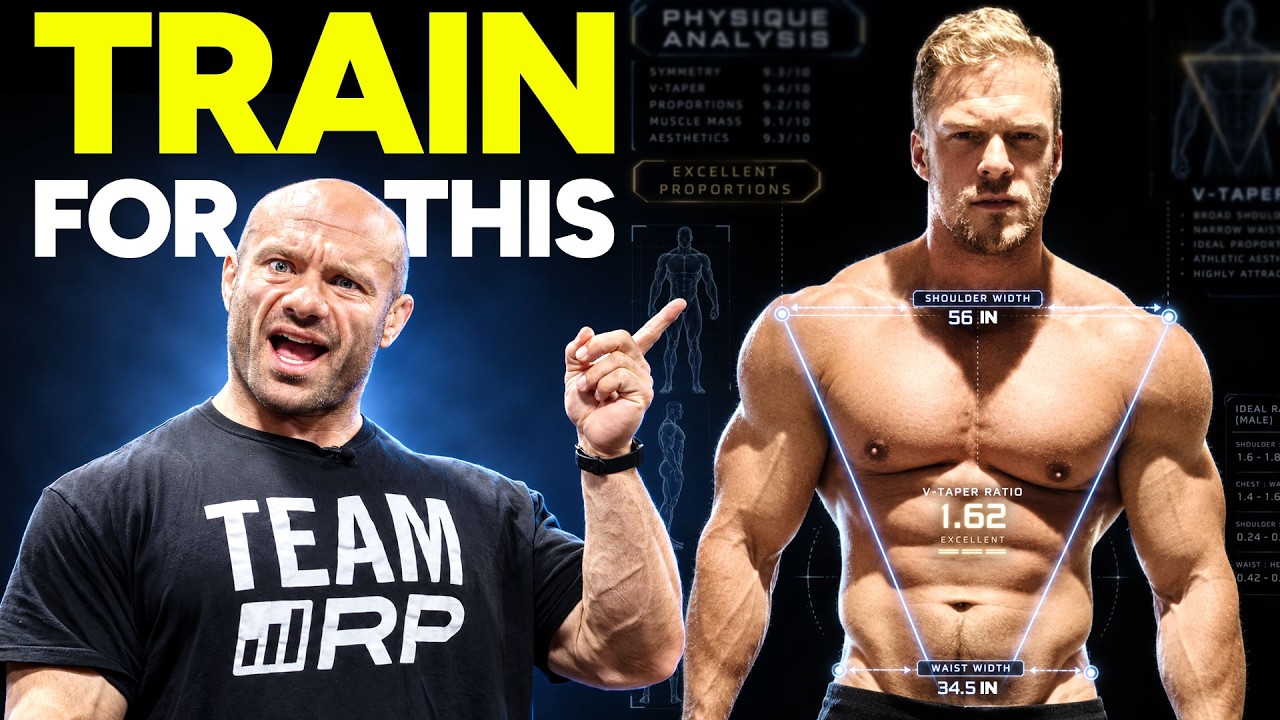
His standout features, according to the coach, are his chest and shoulders. They’re so developed that his big arms look almost ordinary beside them.
The fact that he has big delts and a big chest make him look armor-plated up top.
That width creates an upside-down Dorito silhouette, the classic action-hero shape. Without it, the coach argues, Ritchson simply wouldn’t read as the guy who beats everybody up.
Genetics Versus Training: A Reality Check
Tempted to copy Ritchson’s exact workouts? The coach warns against it, for two reasons.
- Genetics drive a lot. The coach’s own chest and quads exploded early, while his biceps demanded a fight for every inch.
- Training clues are murky. His review of Ritchson’s routine showed general upper-body work, not a chest-and-delt specialization.
It’s so easy to look at someone’s standout muscle groups and think, “Man, they must really focus on these.” That’s sometimes true, but not dependably so.
Translation: build the look by training smart, not by copying a celebrity.
Chest Training: Heavy, Deep, and Less Often
The chest is big and strong, and it stretches deeply under load. That means it responds well to heavy presses through a full range of motion, ideally for 6 to 12 reps.
Deep stretching under heavy load also causes plenty of muscle damage. Pecs therefore need more recovery time than many other muscles, and there’s a limit to how many hard sets fit in one session.
If you want something simple that actually works, this is one of the most effective tools I’ve used to build strength, conditioning, and endurance without needing a full gym setup.
- Full-body training with one weight using swings, squats, and presses
- Solid cast iron build that feels stable and lasts for years
- Comfortable grip that makes high-rep workouts easier to handle
The Low Incline Dumbbell Out Press
This is the coach’s own twist on pressing, so treat it as a promising experiment rather than a research-proven staple. Here’s how it works:
- Lie on a low incline bench and lower the dumbbells deep, until their inner edges reach outside your chest.
- Pause at the bottom of the stretch.
- Slowly push the weights out a few inches, not up or down.
- Press back up. Total time from bottom to top: about 3 seconds.
The idea is to pile tension onto the pecs at their longest position while the triceps get less stretch. Warm up thoroughly and drop the load from your usual pressing weight, since tension at the bottom is intense.
Side Delts: The Lonely Muscle That Needs Attention
Rear delts get plenty of work from back training. Front delts get hammered during pressing.
Side delts create the rounded, capped look, yet they get ignored. The coach compared them to a goth girl sitting alone at a party, desperate for company.
Unlike pecs, side delts can’t stretch deeply under load. The shoulder joint can also grumble under ultra-heavy lateral work. Their best growth comes from higher reps, higher volume, and frequent sessions.
The Standing Lateral Partial Rep Superset
- Stand holding two dumbbells and lean forward roughly 10 degrees.
- Raise straight arms to the sides with pinkies pointing up, which shifts work away from the front delts.
- When you can no longer reach parallel, keep going with partial reps. Each one will rise lower than the last.
- Stop once you can’t even reach about 45 degrees.
Many lifters match their full-range rep count with partials. Add both together and log them as one set. Expect a serious burn.
If you want something simple that actually works, this is one of the most effective tools I’ve used to build strength, conditioning, and endurance without needing a full gym setup.
- Full-body training with one weight using swings, squats, and presses
- Solid cast iron build that feels stable and lasts for years
- Comfortable grip that makes high-rep workouts easier to handle
The Five-Day Program Built Around Chest and Shoulders
Great exercises alone won’t do it. The coach insists results come from an organized, consistent program.
Volume is king and frequency is the ticket to volume.
- Chest: six exercise slots weekly, building from roughly 12 to 30 weekly sets.
- Side delts: seven slots, one on Monday, Wednesday, and Friday, plus two each on Tuesday and Thursday, for roughly 14 to 35 weekly sets.
- Upper back and arms: plenty of work for that big upper-body look.
- Legs: maintenance only, with two or three sets per exercise.
- Forearms and calves: left out to limit fatigue and gym time, though you can add them.
Those top-end numbers sit at the extreme of what most lifters can handle. Ramp up only while recovery keeps pace, and drop sets if soreness lingers.
Exercise Choice Matters Less Than Structure
There’s nothing magic about exercise selection, including our special moves.
Swap in movements based on equipment, enjoyment, and joint comfort. Keep the weekly structure intact.
How to Progress
- Rep range: anywhere from 5 to 30, with 10 to 20 usually best for technique, focus, and joint recovery.
- Starting sets: one for true beginners, two for most people, three for experienced upper-body trainers.
- Effort: begin about three reps from failure, then add 2.5 to 5 pounds or one rep weekly.
- Timeline: expect to hit near-failure effort around weeks four to eight.
Add sets slowly on chest, delts, and upper back. Keep quads and hamstrings at two or three sets so recovery bandwidth stays available for the upper body.
Recovering Without Stalling
One muscle fried while the rest feel fine? Run a half-half-half session: half the sets, half the weight, half the reps per set. Next session, do about two-thirds of normal sets.
When your whole body feels cooked after about four to six weeks, take a full deload.
If you want something simple that actually works, this is one of the most effective tools I’ve used to build strength, conditioning, and endurance without needing a full gym setup.
- Full-body training with one weight using swings, squats, and presses
- Solid cast iron build that feels stable and lasts for years
- Comfortable grip that makes high-rep workouts easier to handle
Eating to Build the Look
Bulking slowly is my big recommendation for this.
- Bulk: gain around half a pound weekly for 12 to 16 weeks. Faster gains mostly add fat.
- Mini cut: afterward, lose about one pound weekly for 4 to 8 weeks.
- Cut-phase training: switch to a general whole-body split to preserve muscle.
- Repeat: return to the chest-and-shoulder emphasis once lean again.
Eat well, sleep well, and train hard. You won’t look exactly like Ritchson, since genetics and height have a say, but you can build notably bigger pecs and shoulders.