Smashing every workout, chasing soreness, and still not seeing changes in the mirror?
On a recent episode of the On Purpose podcast, physical therapist Dr. Shannon Ritchie explained why so many people stall.
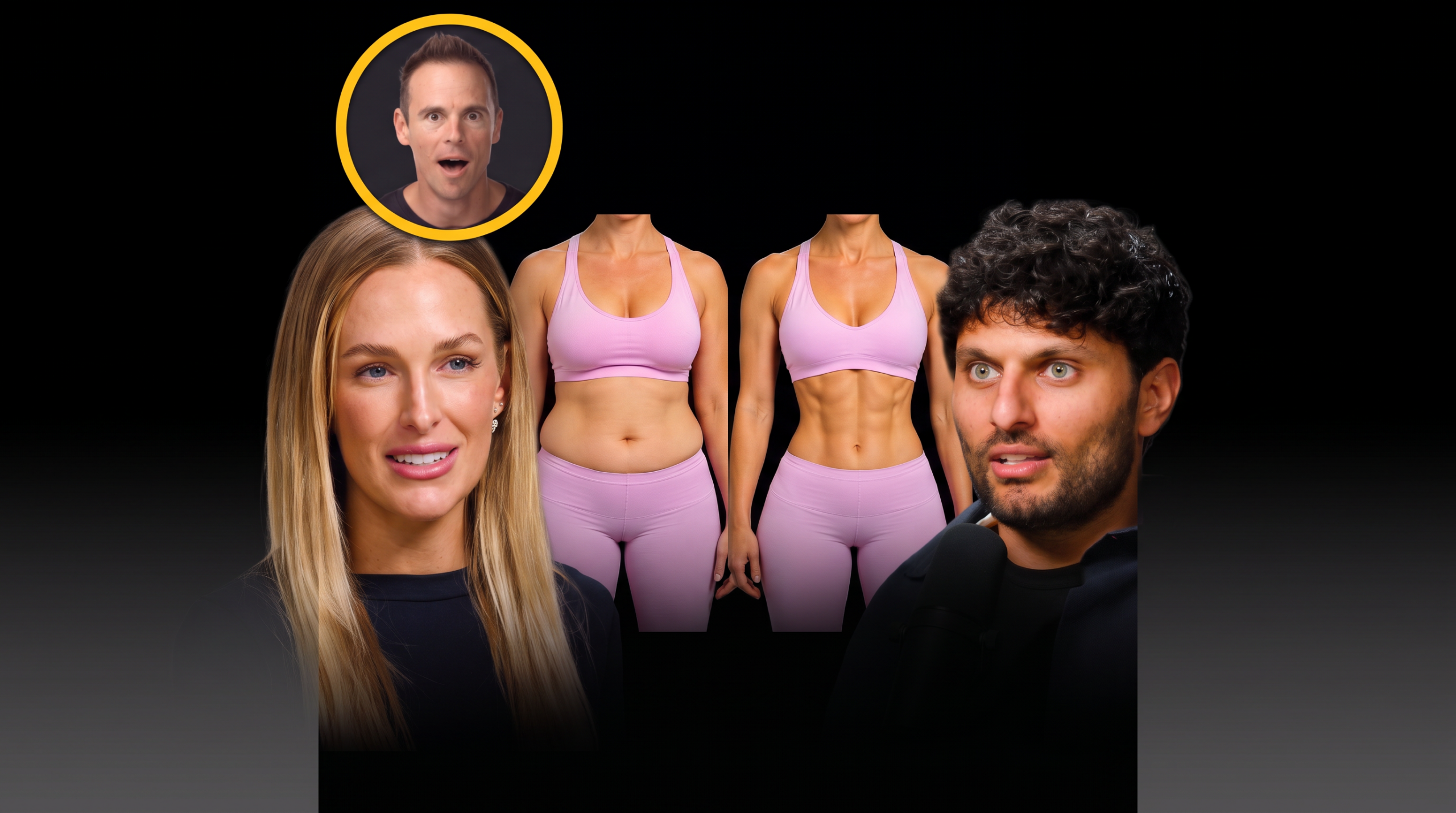
Her answer: effort isn’t the problem. The type of effort is.
After years of burnout and chronic pain, Ritchie slashed her sessions from 60 minutes to about 35 and reports adding 8 lb of muscle while losing 5 lb of fat in a year.
Ahead: a four-letter formula, a sneaky 5-second trick, and the myths holding your progress hostage.
Jump to:
The REPS Formula for Building Muscle
Ritchie boils muscle growth down to four principles. Her confidence is striking.
If you’ve followed these four things, I can pretty much guarantee you will see muscle growth.
- R = Repetitions: finish every set at failure, or one to three reps shy of it. Anywhere from 4 to 30 reps works.
- E = Exercise selection: train one muscle group at a time, and pick moves that feel good in your body.
- P = Protein: 0.75 to 1 g per pound of body weight daily.
- S = Structure: hit each muscle two or so times weekly, on non-consecutive days, across three to five workouts.
Ritchie notes she isn’t formally trained in nutrition. The protein range comes from the registered dietitians she works with, so personal needs may vary.
Fatigue Is Not Failure
Here’s the mistake Ritchie sees constantly. People stop when a set feels tiring, not when a muscle truly can’t continue.
Fatigue does not reliably build muscle, failure does.
She admits to falling for it herself, holding lunges for minutes in group classes. Lots of burn. Lots of shake. Not much stimulus.
Try the 5-Second Rest Test
Her fix is simple enough to try at your next session.
- Complete your final rep.
- Set the weight down and shake out for about 5 seconds.
- Pick it back up and attempt more reps.
- Three or more reps? That was fatigue, not failure. Go heavier or push further next time.
Why do those last reps matter? Ritchie says they recruit type two muscle fibers, which kick in under high mechanical tension.
It’s not about the number, it’s about proximity to failure.
She even skips rep counting. Grab a weight that feels challenging, then do as many reps as possible.
Why Cardio Alone Won’t Melt Fat
Ritchie calls “tons of cardio” a pervasive myth. Studies, she says, consistently show underwhelming weight loss when cardio is added without nutrition changes.
Our body doesn’t like large energy deficits. So, as we add more exercise, your body adapts to burn fewer calories in other places.
Appetite often compensates too, and many people overestimate calories burned. The result? Hard work, minimal change.
Her advice: treat nutrition as the primary fat-loss tool, and lean on strength training to protect muscle. She says up to 25% of weight lost can come from muscle without it.
Keep the Deficit Slight
Crash dieting backfires, according to Ritchie. She cites a metabolic scientist’s line that hunger always wins, since aggressive deficits crank up cravings.
A very slight deficit, or even maintenance calories, supports body recomposition: losing fat while building muscle. Cardio still has a role, just not the starring one.
Recovery Is Where the Magic Happens
Ritchie frames training as a loop: stimulus, recovery, adaptation. Skip the middle step and the third never arrives.
Your body does not adapt when it is over stressed. It adapts when it gets the appropriate stress, it has time to recover.
- Take two rest days weekly. Stay active, but skip structured sessions.
- Leave about 48 hours between sessions for the same muscle.
- Aim for twice-weekly frequency. Ritchie points to a recent meta-analysis calling it the sweet spot for growth.
Stop Chasing Soreness
Light to no muscle soreness is ideal.
Soreness feels satisfying, yet Ritchie says studies show it’s a poor indicator of growth. Constant soreness usually signals too much, too soon.
How Many Sets?
- Minimum effective dose: about four hard sets for each muscle weekly.
- Her sweet spot: six to eight sets.
- Beyond roughly 10: diminishing returns.
Myths Worth Retiring
“Lifting Heavy Makes Women Bulky”
Ritchie calls this false. Substantial muscle takes months to build, and bulky physiques take years of high-volume training.
Feeling bigger? She suggests an unintentional calorie surplus could be adding fat alongside muscle. Tracking food for a week can be illuminating.
“No Pain, No Gain”
Ritchie’s replacement is what she calls gentle consistency. Workouts should be challenging, never destroying.
“Target Your Problem Areas”
You can’t preferentially choose where you lose fat. Fat loss happens systemically across your whole body.
No Gym? No Problem
Rep ranges stretch from 4 to 30, so light weights can work if sets end near failure. Bodyweight counts too.
Push-ups are her example: if you can exceed 30, the move is too easy and needs added load. Lunges often do.
Hate an exercise? Swap it. Ritchie hasn’t squatted in over five years because of how her proportions load her back.
That’s your body proportions. There’s nothing wrong with you. You can just choose a different exercise and carry on.
Patience, Age, and Strength
- Give it 8 to 12 weeks. Muscle growth takes about that long to show.
- Beginners progress faster. Newbie gains mean far less stimulus delivers results.
- No age cutoff exists. Recovery demands rise over time, so early muscle is a bank worth building.
- Same principles apply across decades, even during perimenopause, per Ritchie.
She also cites a recent paper following over 5,000 women aged roughly 60 to 99 for eight years. The strongest lived longest, even compared with highly active peers.
Ditch the Calorie Obsession
Ritchie once did jumping jacks at night to hit a watch’s calorie target. Today she uses her Oura Ring only to spot long-term lifestyle patterns.
Her suggested baseline: food, strength training, and roughly 7,500 daily steps, which she links to positive health outcomes.
We have the rest of our lives to work out.