A popular strength coach just said something guaranteed to irritate plenty of gym-goers.
On a recent episode of the Judinhard podcast, host Jud Linhard, 46, argued that compound lifts bring exactly one real perk for muscle growth.
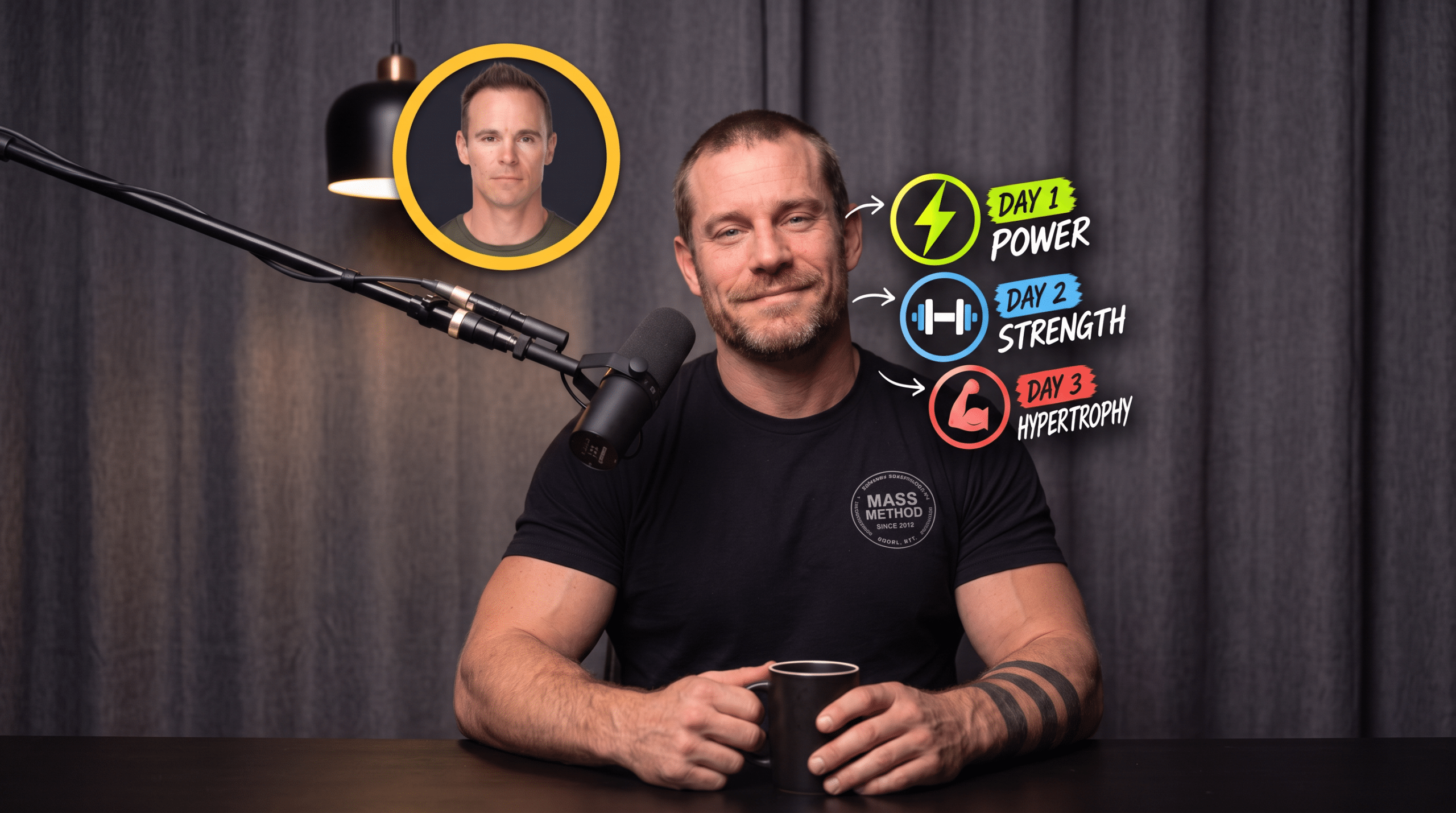
Just one.
His full answer also reshapes how to order workouts, rotate exercises, and add weight without wrecking your tendons.
Ready for the details?
Jump to:
The Compound Lift Claim That Ruffles Feathers
For hypertrophy, really the only benefit you’re getting from compound movements is you don’t have to spend forever in the gym to get that volume.
A back squat hits more than quads, so weekly volume stacks up faster. Leftover quad work can then come from auxiliary exercises.
Strength and athleticism tell a different story. Linhard stressed that compounds offer “a lot more” there.
When Starting With Isolation Makes Sense
Linhard still opens most sessions with compounds. Occasionally, though, he pre-fatigues a muscle first.
- Chest day: a few easy sets of machine flies
- Leg day: light leg extensions before squats
- Bonus: warms up whichever joint feels most vulnerable
If you start the exercise with leg extensions, then you won’t have to do like 315… You can do like 225 maybe.
Lighter loads mean less stress on cranky knees while the quads still reach failure. Athletes should skip this trick, however.
If you care about performance and athleticism, then doing isolation movements first is going to interfere with your strength output.
Worth remembering: this is a coach’s practical experience, not a verdict from one definitive trial. Treat it as a tool to test, not a commandment.
Training Three Days a Week: Two Smart Setups
Three weekly sessions are common, and total body workouts deliver three training stimuli per week. Linhard offers two flavors.
Option 1: Power, Strength, Hypertrophy
- Day one (power): Olympic lifts, weighted jumps, medicine ball throws, or fast band reps
- Day two (strength): loads around 80% or more, fewer than six reps
- Day three (hypertrophy): higher reps, lighter percentages
Another version keeps every day total body but tilts emphasis toward legs, pull, or push.
Option 2: The Two Pattern Protocol
Warming up for every movement pattern gets tedious for experienced lifters. Linhard’s fix splits training into four patterns: push, pull, squat or lunge, and hinge.
Pick two per session, such as squats with bench press. Day two covers the leftover pair.
Then sprinkle in “frills”: something from another pattern needing little warm-up, like chin-ups, hip thrusts, or push-ups to failure. Supersetting saves time, and one or two single-joint moves finish things off.
Who Should Choose It?
Linhard calls his cutoffs arbitrary, yet offers guidelines. Volume tolerance shrinks for these lifters:
- Anyone over 40
- Those with more than 10 years of consistent training
- Men, who he says handle less volume than women
Total body three times weekly suits younger, newer, typically female lifters. Experience is also specific: a veteran runner new to weights is still a weight training novice.
How Often Should Exercises Change?
There’s really not such a thing as like muscle confusion.
Yet repeating four lifts forever “leaves some stuff on the table.” His middle path: choose three favorite variations per pattern, each stable, loadable, and pain-free.
- Squat: back squat, front squat, Zercher squat
- Lunge: walking lunge, Bulgarian split squat, front-foot-elevated reverse lunge
- Hinge: trap bar deadlift, Romanian deadlift, frog stance deadlift
- Push: close grip bench, incline dumbbell press, standard bench
It’s just attacking the movement pattern in a subtly different way that really shores up any weak links.
Linhard rotates weekly because boredom strikes. Sticking with one variation for a month works equally well.
Stepped Progression: Patience Beats Ego
Beginners can add weight roughly every other week thanks to fast neural gains. Advanced lifters? Linhard calls that approach “a recipe for disaster.”
His alternative runs on a four-to-seven rep range with a four-set maximum.
- Start with a load you can lift for four reps on one set.
- Next week, chase another rep or another set, leaving one rep in the tank.
- Stay at that weight until four sets of at least seven reps feel doable.
- Only then move up.
You are getting stronger even though you’re not moving more weight right away.
Sometimes a single weight lasts six months. The payoff, per Linhard: tendons and muscles adapt together.
The Tendon Warning for Enhanced Lifters
Linhard, who uses TRT, credits patient loading for never suffering a major tendon rupture. His concern centers on lifters whose strength outpaces connective tissue.
The biggest risk for steroids isn’t, you know, roid rage or heart attack or any of that. It’s tendon rupture.
Consider that his observation from coaching, not a clinical finding. Anyone using performance-enhancing drugs should discuss risks with a physician.
Cranky Tendons: Isometrics and Slow Warm-Ups
For tendinitis, Linhard starts with isometric holds. Move to the point where the tendon hurts, hold 30 to 45 seconds, then ease slightly deeper.
Repeat at least twice daily. Consistency is the hard part.
Doing it a couple times a week is not going to cut it.
Next comes his slow-flow warm-up. Reduce speed, not only load: crawl through early sets, pause at the bottom, and “scrub” a joint angle by moving half an inch either side before sinking deeper.
Reinjury often strikes on the first working set, when lifters rush out of the hole. Persistent or worsening pain deserves a professional evaluation.
Can’t Reach Your Chest on Bench?
There’s nothing out there that says, unless you’re a powerlifter competitor, that the bar has to touch your chest.
Arm length and grip width dictate how far a bar travels, so chest contact is not a universal “full” range. Linhard shares four workarounds:
- Block or yoga block press: heavy dead-stop reps without deep shoulder stress
- Fat grips: adds roughly half an inch of clearance
- Dumbbells: rotate wrists and tuck elbows to open shoulder space
- Bands or chains: load shifts away from the uncomfortable bottom
Dumbbells, he says, feel “a lot more comfortable for older people than barbells.” Pair heavy partial-range work with slow, larger-range dumbbell pressing.
Quick Takeaways
- Hypertrophy only: exercise order is flexible
- Performance goals: compounds first
- Over 40 or advanced: two patterns per day
- Progress: earn every jump in weight
- Tendon trouble: isometrics daily, warm up slowly