Stiffness in hips, tightness in the back, endless stretching that never quite delivers relief—sound familiar?
The problem might not be that someone isn’t stretching enough.
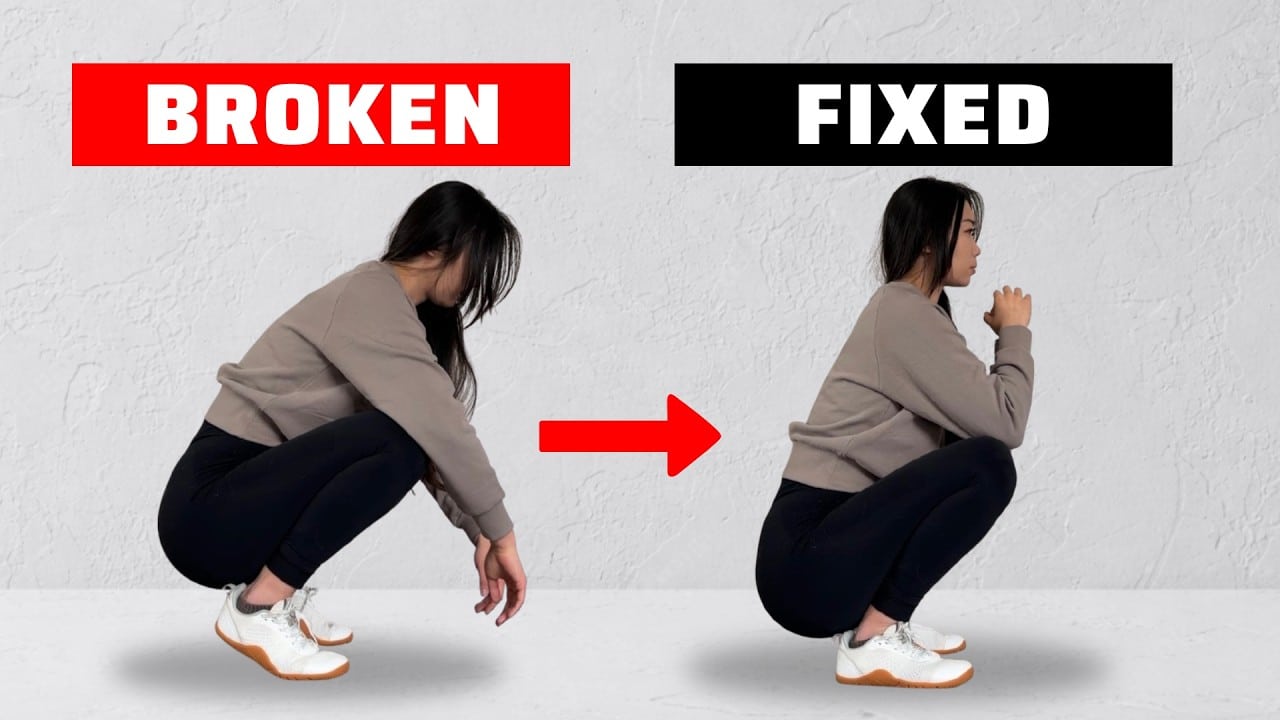
Instead, they may be missing the right positions that restore how the body was actually designed to move.
Three simple movements can unlock hips, spine, and shoulders—and with consistency, the body can feel dramatically different within 30 days.
Jump to:
The Deep Squat: A Position the Body Was Built For
The deep squat isn’t just an exercise. It’s a fundamental human position designed for resting, moving, and loading.
Despite common misconceptions, deep squats are not bad for the knees. What actually harms joints is never taking them through their full range of motion, which leads to stiffness, weakness, and instability over time.
A proper deep squat restores hip mobility, ankle motion, knee stability, and even reduces stress on the lower back.
Why Your Squat Won’t Look Like Everyone Else’s
Here’s what most people miss: individual structure changes how balance works in a squat.
Some people need a wider stance with toes pointed outward. Others can stay upright easily but require more ankle mobility. There’s no single “perfect” squat form that works for everyone.
Instead of forcing a textbook position, find a stance where the body feels stable, relaxed, and balanced over the midfoot.
How to Build Depth Safely
If heels lift or the chest collapses forward, the body simply needs more time in the position.
Start by sitting in the bottom of a squat with heels elevated if necessary. Hold for about 60 seconds, gently shifting side to side while breathing deeply.
Practicing this daily—slowly reducing support—allows hips, knees, and ankles to relearn that this position is safe and natural. Once comfort builds at the bottom, everything from walking to lifting starts to feel easier.
The World’s Greatest Stretch: Restoring Rotation
Modern life quietly steals something critical from the body: rotation.
Sitting facing forward, driving facing forward, working and scrolling in fixed positions—all of this causes the thoracic spine to stiffen and hip flexors to shorten. The lower back then compensates, leading to chronic tightness and discomfort.
That’s where the world’s greatest stretch comes in, restoring thoracic rotation and length through hip flexors simultaneously.
How to Perform the Movement
- Step into a long lunge position
- Bring the elbow down toward the ground first
- Rotate the same arm open toward the ceiling
- Follow the movement with the eyes
A stretch should be felt through the front of the hip and rotation through the midback.
This isn’t just stretching. It’s teaching the spine to rotate where it’s supposed to, so the lower back doesn’t have to pick up the slack.
Take a few slow reps on each side—no rushing, just controlled movement with full exhales. Done consistently, this can make posture feel lighter, stride smoother, and the back far less restricted.
The Dead Hang: Underrated and Powerful
The last movement might be the most underrated, yet also one of the most powerful: the dead hang.
Shoulders were designed to hang, reach, and climb. Yet most adults never do it anymore.
When hanging is reintroduced, remarkable things happen:
- Spinal decompression: The spine gently lengthens
- Improved flexibility: Tight chest and lat muscles begin to open
- Strength gains: Grip and shoulder strength improve
- Postural restoration: Space is created from the top down
Proper Hanging Technique
Hang with relaxed shoulders, ribs down, and steady breathing.
Build toward one full minute. If that feels too challenging at first, lightly tap feet down between short hangs to build strength gradually.
Progress comes quickly here. Just a few minutes daily can noticeably change how shoulders, neck, and back feel.
Don’t Overcomplicate Recovery
When the body feels stiff, tight, or locked up, simplicity wins.
Random stretches scattered throughout the day rarely address the root cause. But returning to fundamental human positions—squatting deeply, rotating fully, and hanging freely—can restore movement quality from the ground up.
These three movements aren’t flashy. They won’t show up in trendy workout programs or promise overnight transformations.
But they work. Practiced consistently over 30 days, they can unlock mobility, reduce pain, and bring back the freedom of movement that modern life slowly erodes.
The body wasn’t designed to stay in one position all day. Give it the positions it was built for, and everything else starts to fall into place.