You’ve probably watched elite runners float across the ground, barely making a sound, their stride smooth and seemingly effortless.
It’s easy to assume they were just born that way — natural talents gliding past the rest of us.
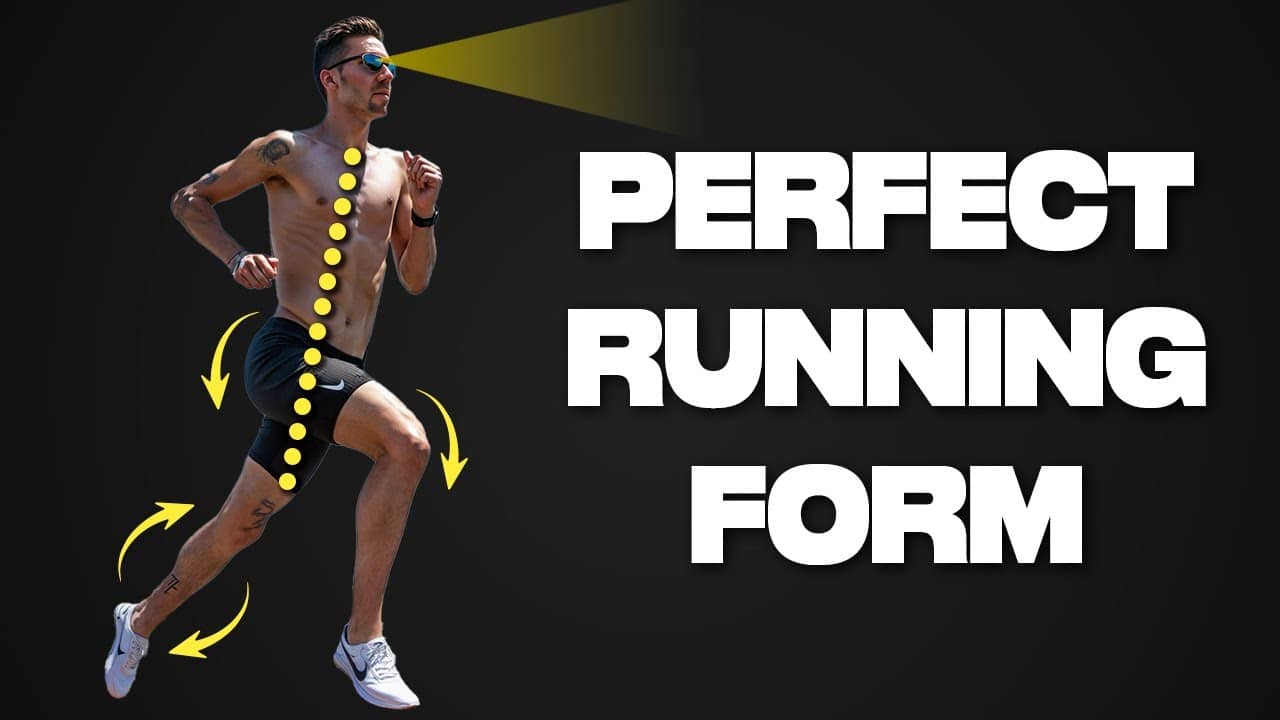
But the truth is, perfect running form isn’t something you inherit. It’s something you train.
No matter your speed, pace, or experience, improving your technique can help you run faster, smoother, and with less pain.
After coaching thousands of runners and racing against world-class athletes, one coach believes there are five key elements to excellent running form — and every runner can learn them.
In this guide, you’ll discover how to build proper form from the top down, avoid common mistakes, adjust for different speeds, and sync your breathing for more powerful running.
Jump to:
- What is “Perfect” Running Form?
- Start at the Top: Head, Shoulders, and Arms
- Use Gravity to Your Advantage
- Fix Your Landing: Let the Ground Come to You
- Five Common Running Form Mistakes (And Easy Fixes)
- Breathe with Your Stride
- How to Maintain Form at Different Speeds
- Simplified Summary: Your 5-Step Running Form Checklist
What is “Perfect” Running Form?
Perfect doesn’t mean pretty.
It means efficient, injury-minimizing, and energy-saving.
In short, perfect form minimizes wasted energy, reduces your injury risk, and maximizes forward momentum.
Surprisingly, achieving that doesn’t start with your feet — it starts at the top.
Start at the Top: Head, Shoulders, and Arms
Head Position
Your head should stay aligned with your spine and gaze directed straight ahead (not down at your feet).
Looking down pulls your posture forward, creating tension in your upper spine and increasing fatigue.
Keep your ears aligned with your shoulders to avoid slouching forward.
Shoulders and Arms
Many runners, especially those with desk jobs, carry unnecessary tension in the shoulders.
“Shrugging your shoulders while running is like driving with the parking brake on,” explains the coach. You burn energy without gaining speed.
Shoulders should stay loose and relaxed. If you feel tension building mid-run, shake your arms out for a few seconds, then return to your rhythm.
Elbows should stay near your sides with your thumbs facing up, and fists gently closed — not clenched.
One useful cue: Imagine holding potato chips in each hand that you don’t want to crush… but you also don’t want to drop them.
Use Gravity to Your Advantage
You’ve likely heard the cue “Run tall.” But what does it mean, exactly?
It means imagining a string from your chest gently pulling you upward. This naturally aligns your spine, opens up the hips, and helps you maintain better balance.
If you sit a lot during the day, tight hip flexors may make this position feel difficult. That’s also why many runners lean too far forward from the hips.
Instead, use a posture drill to learn this forward lean from the ankles:
- Stand with hands on your hips.
- Rise gently onto the balls of your feet.
- Fall slightly forward while maintaining a straight posture.
This lean should feel subtle, almost like falling, not a deep bend — and it allows gravity to help, not hinder, your stride.
Fix Your Landing: Let the Ground Come to You
Many runners focus on their foot strike: heel, midfoot, or forefoot. But there’s a more important factor — where that foot lands relative to your body.
“Foot strike only matters when it causes overstriding,” the coach explains.
If your foot lands too far ahead of your body, it creates a breaking force that slows you down and increases joint impact.
Your foot should land under your center of mass — ideally below your hips.
Heel striking ahead of your body increases injury risk. Transitioning to a midfoot strike can naturally encourage better alignment and reduce overstriding.
Five Common Running Form Mistakes (And Easy Fixes)
1. Overstriding
Landing with your foot too far ahead increases impact and reduces efficiency.
Fix: Visualize your feet landing behind, rather than ahead, of your body.
2. Tense Shoulders
Shoulders creeping upward wastes energy and tightens your neck and upper back.
Fix: Practice shoulder rolls and mid-run arm shakes to release tension.
3. Clenched Fists
Tight hands create tension up the arm and shoulder.
Fix: Use the “potato chip rule” — hold your hands loose enough not to break it, but tight enough not to drop it.
4. Slouching
A slouched upper body limits breathing and disrupts balance.
Fix: Imagine that pulley lifting from your chest and check your upright posture during runs.
5. Crossing Midline
When your hands cross the center of your body, it creates imbalance.
Fix: Keep your arms in parallel lines, hands moving forward and back — not side to side.
If this feels difficult, weak hip abductors could be a root cause. Add side-lying hip abduction exercises:
- Do 3 sets of 10 reps, 3 times per week.
Breathe with Your Stride
If your breathing feels random or panicked, your body is working overtime — especially near the end of longer runs.
Elite runners often sync their breathing with their steps — not by accident, but as a trained strategy.
Rhythmic breathing improves oxygen intake and distributes impact forces more evenly across your body.
A common technique is the 3:2 pattern: inhale for three steps, exhale for two.
Here’s how it works:
- Inhale: Left foot, right foot, left foot.
- Exhale: Right foot, left foot.
This creates a rhythmic pulse that stabilizes your form. Modify the numbers if needed — just maintain a rhythm you can control.
How to Maintain Form at Different Speeds
For many runners, good form falls apart at slower speeds. There’s less momentum, and the temptation to slouch increases.
But the best runners maintain form integrity — no matter the pace.
Here’s how:
- Shorten your stride at slower speeds.
- Keep your step rate (cadence) relatively high — aim for 170–180 steps/minute, but adjust based on comfort.
- Maintain the same posture and arm mechanics, regardless of pace.
As your fitness improves, your ability to hold form under fatigue and across speeds will, too.
Simplified Summary: Your 5-Step Running Form Checklist
- Run tall: Think pulley from your chest, not your head.
- Relax: Keep shoulders and arms loose; avoid clenching.
- Lean slightly: Forward from the ankles — not hips — and let gravity pull you.
- Land beneath you: Aim for midfoot strike under your center of mass.
- Breathe rhythmically: Sync breath with your stride using a consistent pattern.
Perfecting your form won’t happen overnight. But small changes compound with time — leading to smoother runs, fewer injuries, and better performance.
And if you’re constantly feeling winded, learning how to breathe while running may unlock a whole new level of endurance.
Practice these techniques consistently — and over time, even your slowest runs will start to feel smoother and stronger.