Fitness isn’t just about lifting heavy weights or running marathons.
True fitness requires balance across multiple domains—strength, mobility, endurance, and even cognitive flexibility.
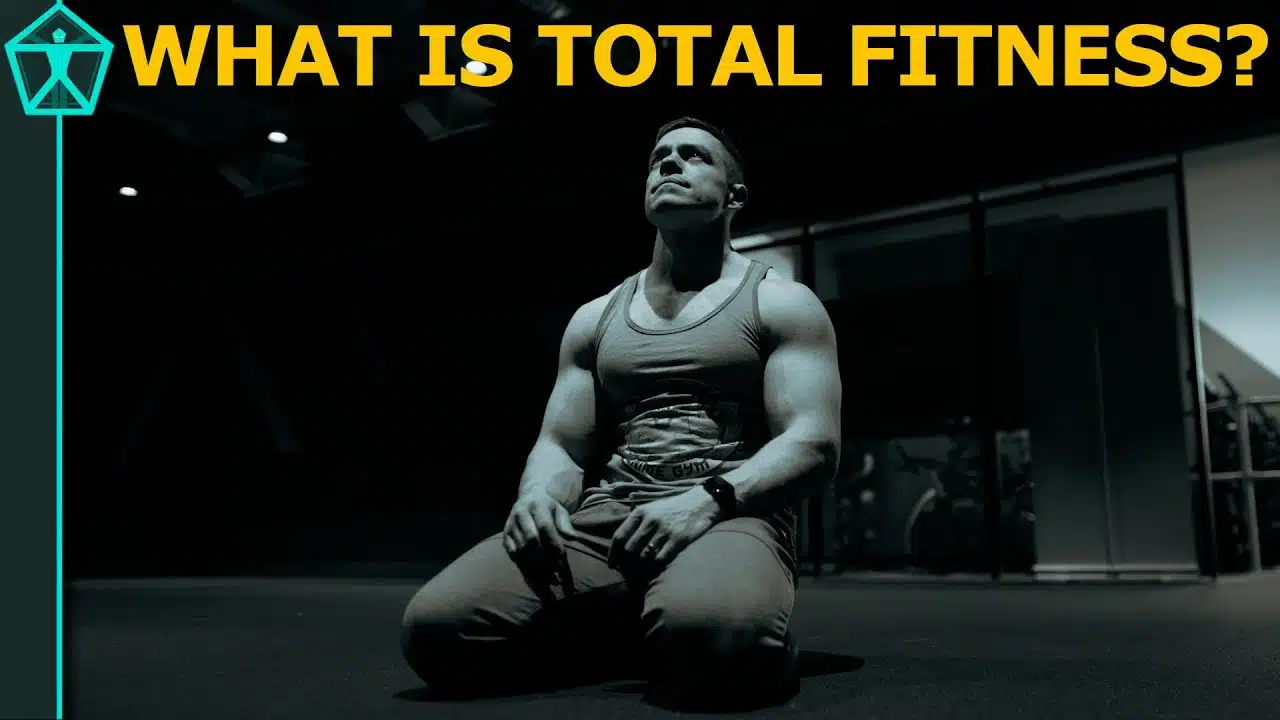
In a recent video reflecting on 2024, popular fitness YouTuber Adam Sinicki laid out his updated framework for what he calls “complete fitness,” and it’s far more nuanced than most training programs account for.
Here’s what you need to know about building a body that’s truly adaptable to everything life throws at you.
Jump to:
- Strength Isn’t Just About How Much You Lift
- Endurance Has Three Energy Systems
- Elasticity and Tendon Strength Matter More Than You Think
- Fluidity: Learning What NOT to Move
- Mobility Is More Than Stretching
- Cognitive Flexibility and Movement Vocabulary
- Health Is the Foundation of Everything
- How to Actually Train All This
- The Takeaway: Adaptability Over Optimization
Strength Isn’t Just About How Much You Lift
Sinicki makes clear that strength is essential, but it’s not a one-dimensional trait.
Being able to bench press 300 pounds means little if you can’t touch your toes or climb stairs without getting winded. Real strength must account for movement patterns, muscle balance, and different types of force production.
Being excessively strong while being unable to bend down and touch your toes or getting out of breath climbing the stairs is simply not fitness.
Cover All Movement Patterns
According to Sinicki, you need strength across all basic movement patterns: horizontal push, vertical push, horizontal and vertical pulls, hinges, lunges, squats, and more.
But even that’s not enough. What about straight-arm strength? Neck strength? Calf development? Every muscle group matters, not just for aesthetics but for preventing imbalances, pain, and injury.
Train Different Types of Strength
Strength also comes in multiple forms:
- Absolute strength: Maximum force production
- Explosive strength: Generating power quickly
- Relative strength: Strength relative to body weight
- Strength endurance: Sustaining force over time
- Eccentric strength: Controlling lengthening movements
- Isometric strength: Holding positions under tension
To develop these qualities, Sinicki recommends training all angles at all speeds—heavy lifts, explosive movements, endurance sets, and static holds.
Endurance Has Three Energy Systems
Just like strength, endurance isn’t singular.
Your body relies on three distinct energy systems: the ATP system for explosive bursts, the glycolytic system for moderate efforts, and the aerobic system for sustained activity. Training only one leaves gaps in your fitness.
Sinicki suggests mixing explosive training, bodybuilding-style rep ranges, steady-state cardio, and interval training to develop all three systems.
Local vs. Systemic Endurance
Another key distinction: local endurance versus systemic endurance.
Muscle fiber type conversion, new blood vessel formation, and mitochondrial adaptation can make specific muscles more fatigue-resistant. That means you might have great endurance in your legs but poor endurance in your grip or core.
The solution? Train multiple movement patterns that recruit different muscle groups throughout your body.
Elasticity and Tendon Strength Matter More Than You Think
Sinicki emphasizes something often overlooked: tendon strength and elasticity.
Tendons allow you to store and return energy efficiently—think of how a kangaroo bounces or how sprinters explode off starting blocks. This quality, called the stretch-shortening cycle, improves jump height, running speed, and injury resilience.
Strong tendons will allow you to exert more strength while simultaneously improving your elasticity, running speed, jump height—they are even more important for avoiding injury.
To train tendons specifically, use longer rep ranges, work in stretched positions, and incorporate negatives or eccentric-focused exercises.
Don’t Forget Fascia and Bone
Fascia—the connective tissue wrapping muscles and organs—plays roles in force production, proprioception, and elasticity. Similarly, bone strength declines with age but responds positively to explosive and plyometric movements.
Both fascia and bone benefit from varied loading patterns across different angles and positions.
Fluidity: Learning What NOT to Move
One of Sinicki’s most interesting points involves fluidity and muscle relaxation.
Elite athletes—martial artists, pitchers, sprinters—can generate explosive power partly because they’ve learned to relax antagonist muscles during movement. Untrained individuals co-contract everything, wasting energy and looking stiff.
Learning what not to move is often much harder than learning what to move.
Practicing skills like jump rope, martial arts, or rope flow can improve this quality dramatically. Sinicki notes his own jump rope technique improved significantly over 2024 by focusing on this principle.
Mobility Is More Than Stretching
Poor mobility often results from learned movement patterns and irradiation—unwanted muscle activation—rather than structural limitations.
Your muscles have literally learned not to relax into certain positions. Improving mobility requires decoupling these movements, practicing precise technique, and calming your central nervous system.
Sinicki advocates for active mobility work that teaches control and awareness, not just passive stretching.
Cognitive Flexibility and Movement Vocabulary
Sinicki introduces an often-neglected aspect: cognitive flexibility.
This includes body awareness, coordination, balance, and even mental state regulation. Can you hinge your hips properly? Retract your shoulder blades? Anteriorly tilt your pelvis?
These skills form your movement vocabulary, which prevents injury, improves performance, and accelerates skill acquisition.
Cognitive flexibility also encompasses sports vision, working memory, decision-making, and emotional regulation—all critical for high performance.
Health Is the Foundation of Everything
Sinicki argues passionately that you cannot be fit if you are not healthy.
He goes so far as to say performance-enhancing drugs are “not functional” because they compromise long-term health. True fitness must support organ health, vascular health, and metabolic processes.
You are not functional if your heart stops beating.
Prioritize nutrition, recovery, stress management, and habits that support longevity alongside your training.
How to Actually Train All This
Sinicki acknowledges this framework sounds overwhelming. The good news? Anything is better than nothing.
Instead of micromanaging protocols, focus on varied, compound, and expressive movement. Trail running, martial arts, kettlebell training, dance, gymnastics—these activities naturally train multiple qualities simultaneously.
Start With Your Biggest Weakness
Where are you most deficient right now? Mobility? Strength? Endurance? Health markers?
Address that first, and other attributes will improve as well. For most people, common weak points include:
- Poor posture from excessive sitting
- Weak hip abductors and adductors
- Low energy from inactivity
- Limited shoulder or hip mobility
Sinicki himself focused on fixing back pain in 2024 and made progress on hand balancing, jump rope, boxing, and his physique. For 2025, he’s targeting overhead mobility, running form, fluidity, and rebuilding his squat and deadlift numbers.
The Takeaway: Adaptability Over Optimization
Training every conceivable aspect of fitness to perfection is impossible and unrealistic.
Instead, Sinicki suggests embracing variety and letting go of rigid optimization. Move often, move differently, keep learning, and leave no stone unturned.
True fitness isn’t about being the best at one thing—it’s about being adaptable, resilient, and capable across the board.
The body doesn’t work in neat categories. Strength becomes endurance becomes explosiveness. Muscle becomes fascia becomes tendon becomes bone. Train the spectrum, not the silos.